

9 Ways to Practice Self-Care
and Boost Job Performance
See also: Self-Regulation | Self-Management
The modern workplace often champions a culture of relentless hustle, incorrectly framing self-care as an indulgent luxury that fundamentally opposes high performance. This dangerous misconception assumes that human energy is a limitless resource that can be infinitely tapped without consequence.
In reality, self-care and professional success are inextricably linked. Treating your physical, emotional, and cognitive health as an afterthought guarantees eventual burnout, significantly damaging your long-term career trajectory, diminishing your creative output, and eroding your overall life satisfaction.
To achieve sustainable success, you must shift your perspective. By utilizing evidence-based psychological frameworks, you can fiercely protect your well-being while simultaneously sharpening your focus and increasing your professional output. Here are nine strategic ways to practice self-care without sacrificing your job performance.

9 Strategies for Sustainable High Performance
-
Respect the Law of Diminishing Returns
The human brain is simply not designed to maintain peak cognitive productivity for eight to ten uninterrupted hours. In economics, the Law of Diminishing Returns states that beyond a certain point of input, the output yields progressively smaller improvements. This applies directly to your working hours.
Pushing yourself past your natural cognitive limits does not result in better work; it results in plummeting efficiency, increased frustration, and costly errors that take twice as long to fix the next day. True self-care involves recognizing your limits. By working intensely for focused bursts and then stepping away, you ultimately produce higher-quality work in less time.
-
Align with Your Circadian Rhythm
You cannot hack your way out of biological necessity. Consistent, high-quality sleep is the foundation of cognitive function, emotional regulation, and memory consolidation. However, simply getting eight hours in bed is not enough; you must align those hours with your body's natural circadian rhythm.
Going to bed and waking up at the exact same time every day—even on weekends—anchors your internal clock. This routine ensures you spend adequate time in deep REM sleep, allowing you to wake up naturally energized. Prioritizing the importance of sleep is the single most effective performance-enhancing decision you can make for your career.
-
Implement "Attention Restoration Theory"
Taking a break to scroll through social media or read the news does not actually rest your brain; it simply shifts your cognitive load from one screen to another. Attention Restoration Theory (ART) posits that exposure to natural environments allows the brain's executive functioning centers to completely power down and recover.
To practice highly effective self-care during the workday, you must leave your desk. Take a 20-minute walk outside, eat your lunch in a nearby park, or simply sit by a window without your phone. Utilizing proper relaxation techniques and focusing on natural stimuli effortlessly restores your directed attention, allowing you to return to your tasks with renewed focus.
-
Establish Rigid Micro-Boundaries
With the rise of remote work and constant connectivity, the line between professional and personal life has severely blurred. To protect your mental health, you must practice "psychological detachment" from work by establishing rigid micro-boundaries.
This means turning off your email notifications the moment you finish work, never checking Slack from your bed, and refusing to mentally rehearse tomorrow's meetings while eating dinner with your family. Creating a firm work-life balance signals to your nervous system that you are safe and off-duty, which is critical for lowering daily cortisol levels.
-
Master the Art of Strategic Refusal
Your time and energy are finite resources. Taking on every single project, agreeing to every meeting, and constantly acting as the office problem-solver is a guaranteed recipe for resentment and exhaustion. Self-care requires you to guard your bandwidth fiercely.
You must learn to say "no" to tasks that do not align with your core responsibilities or goals. Cultivating strong assertiveness allows you to decline requests politely but firmly. By saying no to the non-essentials, you give yourself the time and energy required to perform exceptionally well on the tasks that truly matter.
-
Optimize Your Nutritional Psychology
Food is not just physical fuel; it is the building block of your neurotransmitters. The gut-brain axis relies on steady, high-quality nutrients to regulate your mood, focus, and stress tolerance. Relying on heavy, sugar-laden foods or excessive caffeine causes dramatic spikes and crashes in your blood sugar, leading to brain fog and mid-afternoon lethargy.
Proper nutrition is a fundamental act of self-care. Prioritize complex carbohydrates, lean proteins, and omega-3 fatty acids to sustain a steady supply of energy to your brain. When you are properly fueled, your capacity to handle complex, high-stress professional situations drastically improves.
-
Practice Somatic Decompression
When you experience stress during a difficult meeting or a tight deadline, your body prepares for a physical "fight or flight" response. If you remain seated at a desk all day, those stress hormones become trapped in your body, leading to chronic muscle tension and anxiety.
You must complete the stress cycle through movement. Caring for your body through somatic decompression—whether that is a vigorous gym session, a quick yoga routine, or simply shaking out your limbs—processes the adrenaline out of your system, creating a clear separation between the stress of the workday and the peace of your evening.
-
Audit Your Digital Consumption
Information overload is a massive drain on your cognitive reserves. Constantly reacting to pings, emails, and group chats shatters your concentration and forces your brain to constantly switch contexts, which is incredibly exhausting.
Take control of your digital environment. Utilize website blockers to restrict access to distracting sites during deep work sessions. Implement "batch processing" for your emails—checking them only twice a day rather than keeping your inbox permanently open. Controlling the flow of information to your brain prevents cognitive fatigue and significantly boosts your daily output.
-
Prioritize Proactive Over Reactive Rest
Most professionals wait until they are completely exhausted, sick, or emotionally depleted before they finally decide to take a break. This is reactive rest, and it requires significantly more time to recover from a state of total deficit.
High performers utilize proactive rest. By leveraging effective time management, they schedule their downtime in advance. Book a long weekend away before you feel burnt out. Block out an hour of uninterrupted reading time on a Sunday. By resting proactively, you maintain a consistent, high baseline of energy, ensuring your job performance never has to suffer from a sudden crash.

Further Reading from Skills You Need
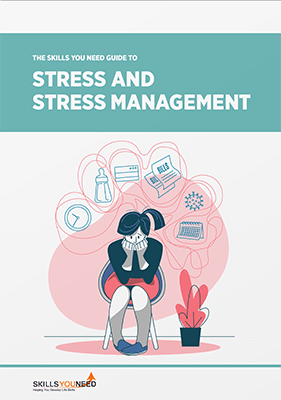
The Skills You Need Guide to Stress and Stress Management
Understand and Manage Stress in Your Life
Learn more about the nature of stress and how you can effectively cope with stress at work, at home and in life generally. The Skills You Need Guide to Stress and Stress Management eBook covers all you need to know to help you through those stressful times and become more resilient.
Conclusion
Practicing self-care does not mean lowering your professional standards; it means fundamentally changing how you fuel the engine of your success. When you consistently run on empty, your work will inevitably suffer from a lack of creativity, patience, and precision. True ambition requires sustainability.
By taking small, deliberate steps—protecting your sleep, establishing firm emotional boundaries, and prioritizing proactive rest—you build an impenetrable foundation of resilience. You will quickly discover that when you genuinely care for your holistic well-being, your capacity to perform, innovate, and succeed at work expands exponentially.
About the Author
Dr. Arthur Sinclair is an organizational psychologist and corporate wellness consultant. He specializes in helping high-performing executives and creative professionals eradicate burnout by building sustainable, psychology-backed daily routines.