

6 Ways to Quickly Cut Stress in Any Situation
See also: Developing ResilienceStress affects us all, and it certainly does not confine itself to just one area of our lives. Whether you are navigating intense pressure in the workplace, managing complex dynamics at home, or simply dealing with the fast-paced nature of modern life, feelings of overwhelm can strike at any moment.
While chronic workplace stress often requires long-term structural changes to your routine, acute stress—the sudden, intense feeling of panic or frustration when things go wrong—requires immediate intervention.
If something is playing on your mind, spiking your heart rate, and threatening to derail your day, you need practical tools to regain your equilibrium. Fortunately, you do not need hours of free time to reset your nervous system. There are highly effective, straightforward ways to quickly refocus, calm your mind, and prevent a temporary setback from ruining your day.
Here are six actionable strategies you can use to rapidly cut stress in almost any situation.
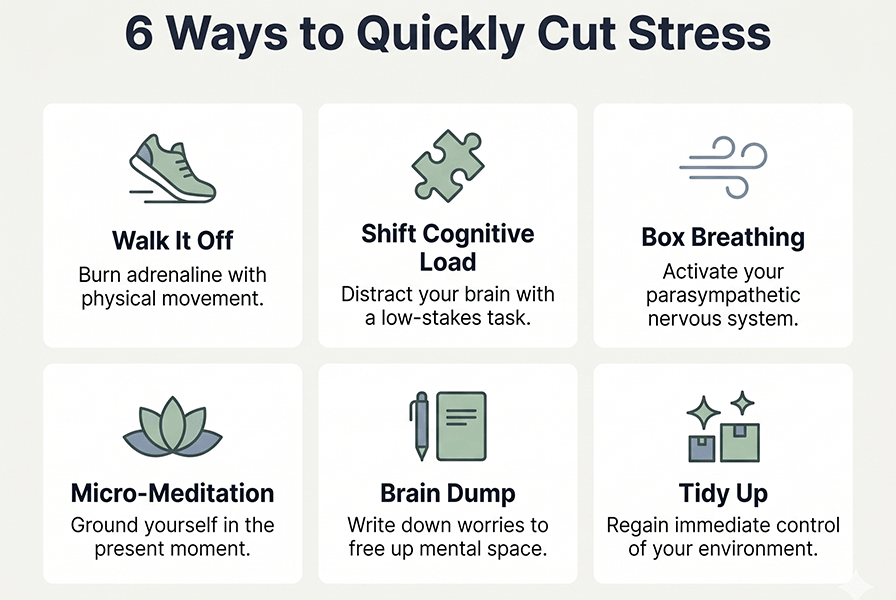
6 Proven Ways to Quickly Cut Stress
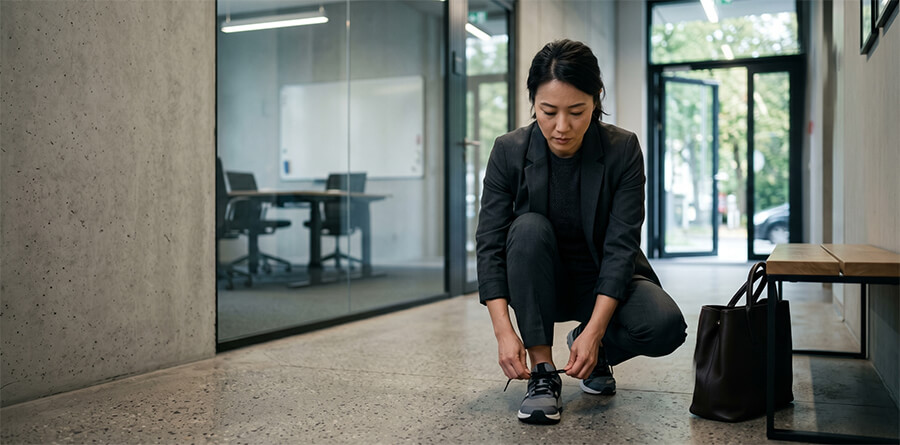
Walk It Off (The Physiological Reset)
Exercise is universally cited as one of the most effective ways to boost your mood, but you do not need to run a marathon to reap the benefits. When you experience acute stress, your body releases adrenaline and cortisol, preparing you for a "fight or flight" response. The physical act of walking helps to literally burn off this excess chemical energy.
Furthermore, walking provides "bilateral stimulation"—the rhythmic, alternating movement of the left and right sides of your body. This type of movement has been shown to help the brain process emotional distress and soothe an overactive nervous system. Even a comfortable, ten-minute stroll away from your desk or house can be enough to ensure that your mind calms down and the immediate panic dissipates.
If you can, step outside. Exposure to natural light and fresh air shifts your sensory input, pulling you out of your internal ruminations. If you have colleagues or friends nearby, walking with them can yield even more significant benefits. Social interaction is an excellent stress-reliever in its own right; simply feeling supported makes you more resilient and ready to tackle the challenges waiting for you upon your return.
Shift Your Cognitive Load
When we are stressed, our brains tend to fixate on the problem, trapping us in a negative feedback loop of rumination. To break this cycle, you must deliberately shift your cognitive load by completely distracting yourself with an unrelated, engaging task. The goal is to occupy your working memory so fully that it temporarily cannot process the stressful thoughts.
If you are frustrated by a complex work project, stepping away to do something entirely different is crucial. This could mean reading a chapter of a compelling book, completing a crossword puzzle, or playing a short, strategy-based game that requires your full attention. The key is to choose an activity that requires focus but has very low stakes. By giving your brain a temporary, achievable challenge, you generate a small release of dopamine upon completion, which counteracts the stress hormones and allows you to return to your original task with a fresh, reset perspective.
Activate the Parasympathetic Nervous System
For something that we do without even thinking about it, controlling our breathing has an incredibly profound impact on our mood. We use breath control for everything from anger management to public speaking, and it is the single fastest way to cut acute stress.
When you are stressed, your breathing becomes shallow and rapid, which signals to your brain that you are in danger. By actively slowing down your breathing rate—particularly by making your exhales longer than your inhales—you stimulate the vagus nerve. This sends a direct biological message to your brain that it is time to calm down, activating the parasympathetic nervous system (the "rest and digest" mode).
Try the "Box Breathing" technique: inhale deeply through your nose for four seconds, hold your breath for four seconds, exhale slowly through your mouth for four seconds, and hold empty for four seconds. Repeat this cycle four times to instantly lower your heart rate and blood pressure.
Utilise Micro-Meditation
Meditation and mindfulness are widely recognized as some of the most trusted methods for beating stress and anxiety. However, many people mistakenly believe that to meditate effectively, you must sit in silence for an hour in a perfectly calm environment. In reality, micro-meditations can be done anywhere, at any time.
Just three to five minutes of intentionally focusing on the present moment can pull you out of a stressful spiral. If you cannot close your eyes, try a grounding exercise like the "5-4-3-2-1" method. Silently name five things you can see, four things you can physically feel, three things you can hear, two things you can smell, and one thing you can taste. This forces your brain out of the anxious future or the regrettable past, anchoring you firmly in the safety of the present moment. You can employ this technique in a waiting room, on a stressful commute, or right at your desk.
Perform a Brain Dump
The act of writing is surprisingly powerful. When we are stressed, our worries tend to bounce around inside our heads, feeling infinitely large and unmanageable. This constant mental juggling consumes a massive amount of cognitive energy.
By writing down exactly what is troubling you, you engage in "cognitive offloading." Getting your stressors out of your head and onto a physical piece of paper forces you to articulate them clearly. Often, seeing a problem written down makes it immediately feel smaller and more manageable. It is like having a discussion with yourself; once the issues are externalised on the page, your brain stops treating them as active threats and can instead shift into problem-solving mode. Do not worry about spelling or grammar—just write until your mind feels lighter.
Regain Micro-Control by Tidying
When you are highly stressed, it is usually because you feel a loss of control over your circumstances, your workload, or your environment. One of the fastest ways to counteract this feeling is to exert control over something small and immediate.
Taking ten minutes to tidy your desk, organize your digital files, or clean your kitchen provides immediate psychological relief. Tidying is a low-stakes, highly visual task with a guaranteed positive outcome. It does not require intense mental focus, allowing your subconscious mind to untangle complex problems while your hands are busy. By transforming a chaotic external environment into an orderly one, you send a soothing signal to your brain that order has been restored, which naturally reduces internal anxiety.

Further Reading from Skills You Need
The Skills You Need Guide to Stress and Stress Management
Understand and Manage Stress in Your Life
Learn more about the nature of stress and how you can effectively cope with stress at work, at home and in life generally. The Skills You Need Guide to Stress and Stress Management eBook covers all you need to know to help you through those stressful times and become more resilient.
Conclusion
Stress can quickly derail even the calmest, most highly organized individuals. The most significant barrier to alleviating acute stress is not knowing what to do in the exact moment panic strikes, leading to a feeling of helplessness. By keeping these quick, actionable strategies in your mental toolkit, you can actively break the cycle of anxiety.
Whether you choose to walk off the adrenaline, shift your cognitive load, or ground yourself through mindful breathing, the key is taking deliberate action. You only need to spend a few minutes applying any of these techniques to regain your focus, lower your heart rate, and confidently get your day back on track.
About the Author
Amy Deacon is an organizational psychologist, executive resilience coach, and speaker with over 15 years of experience helping professionals manage workplace anxiety and prevent burnout. She specialises in creating actionable, evidence-based solutions for individuals operating in high-stress environments. When she isn't coaching leadership teams, Amy enjoys trail running and spending tech-free weekends in the countryside.