

How to Balance Your Personal Life
with Running a Business
See also: Work/Life Balance
Starting and running a successful business is a monumental undertaking. For many entrepreneurs, their business becomes their entire life. You pour your heart, soul, and endless hours into getting your venture off the ground. But managing to maintain a fulfilling personal life while running a highly demanding business can often feel like an impossible task.
It is incredibly common for business owners to struggle in their personal lives. This happens because founders frequently sacrifice family time, hobbies, and personal health to build and maintain their professional success. However, having interests, relationships, and downtime completely separate from your working life is essential for a well-rounded existence and long-term mental health.
So, how exactly can you keep your personal life intact while meeting the relentless demands of running a business? The modern "hustle culture" narrative suggests that you must work around the clock to succeed, but this is a fast track to severe exhaustion. Real success requires sustainability. In this guide, we explore pragmatic, actionable strategies you can use to achieve this delicate balance, ensuring that both you and your business thrive.

The Trap of the Entrepreneurial Mindset
When you are employed by somebody else, you may not think anything of simply switching your phone off and stepping away from work for the rest of the day after you have clocked out. However, when you are self-employed or running your own business, the pressure changes. You are the ultimate decision-maker, the problem solver, and the face of your brand. This level of responsibility often creates a psychological trap where you feel you must always be available.
If you genuinely love to work all hours of the day and thrive on a frantic lifestyle, this may temporarily mask the problem. However, adrenaline eventually runs out. If you want to have the energy to pursue responsibilities outside of work, such as family, friendships, romantic relationships, or hobbies, you must actively dismantle the belief that your business will collapse if you take your eyes off it for a few hours.
Define Your Working Hours (and Fiercely Protect Them)
Defining your hours of work is the first critical step in building a barrier between your professional and personal lives. As an entrepreneur, your hours do not have to be a traditional nine-to-five, but they do need to have a clear beginning and a definitive end.
Set your office hours and communicate them clearly to your customers, clients, and vendors. By setting these expectations early, clients will understand that they should not expect a response to routine emails or messages outside of your designated time frame. If this turns a potential client away, so be it; you do not want to do business with people who blatantly disrespect your time and personal boundaries.
Equally importantly, share these working hours with your friends and family. Many people mistakenly believe that being your own boss means you can drop your work at any time to chat or run errands. By setting firm boundaries with your loved ones, you protect your focus during work hours. Conversely, when your work hours are over, you must hold yourself accountable to stop working. Allow yourself this time to recharge without guilt.
The Strategic Power of Delegation
Many founders suffer from "founder's syndrome," believing that nobody else can do the job as well as they can. If your business is going to grow, and if you are going to reclaim your personal life, you must master the art of delegating tasks.
If your business employs staff, delegation is a great way to step back, knowing that a competent team can hold down the fort. To do this successfully, you need to hire the right people, implement effective training programs, and most importantly, trust your employees to execute without micromanagement.
Delegation is not just about freeing up your weekend; it is essential for risk management. If you rely solely on yourself to handle every operational detail, what happens if you fall ill or face a personal emergency? Building a capable team ensures the business survives your absence.
If you are a solo entrepreneur, you can still delegate. Consider outsourcing administrative tasks, bookkeeping, or customer service to freelance professionals or virtual assistants. Your time is your most valuable asset; spend it on high-level growth, not data entry.
Leverage Technology and Passive Systems
You may be thinking that you simply cannot afford to step away because every hour away means lost revenue. If your income is strictly tied to your active hours, you will inevitably hit an earning ceiling and face burnout. To combat this, you need to implement automated systems and passive income streams.
Passive income is revenue that your business generates without requiring your direct, real-time involvement. For example, selling digital products, offering pre-recorded online courses, or running an automated e-commerce store. While these require significant upfront effort to build, they decouple your earning potential from your immediate time investment.
Similarly, use technology to automate your marketing and operations. Use scheduling tools for social media, set up automated email marketing sequences, and use customer relationship management (CRM) software to handle client onboarding. When your systems do the heavy lifting, you gain back hours of personal time.
Create Strict Physical and Digital Boundaries
In the digital age, your business is always in your pocket. To achieve balance, you must separate your physical and digital workspaces from your personal life.
If you work from home, create a dedicated physical workspace. When you leave that room, you leave work behind. Do not bring your laptop into your bedroom or your living room. The physical act of closing the office door sends a powerful psychological signal to your brain that it is time to switch off.
Digital boundaries are equally vital. Remove work-related communication apps like Slack or your business email from your personal phone, or at the very least, turn off notifications after your designated working hours. If you are constantly reacting to notifications during dinner or while watching a movie, you are not truly present in your personal life.
Schedule Personal Time as Non-Negotiable
Entrepreneurs are excellent at keeping appointments with investors, clients, and suppliers. Yet, they frequently cancel plans with their families, friends, or themselves at the last minute. If you want a balanced life, you must start treating your personal time with the exact same level of respect as your most important client meeting.
Block out time in your calendar for family dinners, exercise, hobbies, and date nights. When someone asks for a meeting during those blocked times, you simply say, "I have a prior commitment." You do not need to explain that the commitment is attending your child's school play or going for a run. By scheduling your personal life into your calendar, you guarantee it receives the time it deserves.
Build a Strong Support Network
Running a business can be deeply isolating. It is vital for your mental health to maintain open communication with other people. If you are suffering from extreme stress or feeling overwhelmed by your workload, confiding in a trusted friend, a business mentor, or a therapist can be incredibly beneficial.
Sometimes, business owners get stuck in their own echo chambers. Speaking with someone completely detached from your industry can help you see your challenges objectively. A strong support network will remind you that you are more than just your business title and help ground you in reality.

Further Reading from Skills You Need
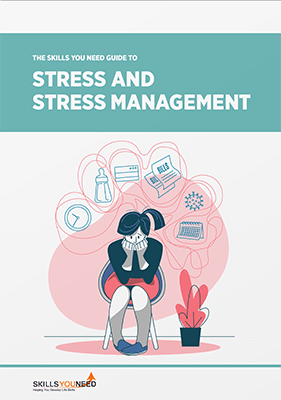
The Skills You Need Guide to Stress and Stress Management
Understand and Manage Stress in Your Life
Learn more about the nature of stress and how you can effectively cope with stress at work, at home and in life generally. The Skills You Need Guide to Stress and Stress Management eBook covers all you need to know to help you through those stressful times and become more resilient.
Conclusion
Balancing your personal life with running a business is not a one-time achievement; it is an ongoing practice of setting boundaries, managing expectations, and making deliberate choices about where you spend your energy. Your business is incredibly important, but it should be a vehicle that supports your life, not a master that consumes it.
By clearly defining your working hours, learning to delegate effectively, using modern automation, and treating your personal time as sacred, you can build a highly successful enterprise without sacrificing your health, your happiness, or your most important relationships. Remember that a rested, fulfilled, and balanced entrepreneur makes vastly better decisions than a burned-out one. Protect your personal life, and your professional life will inevitably benefit.
About the Author
James Daniels is a business consultant, executive coach, and serial entrepreneur with over 15 years of experience helping founders scale their operations sustainably. Having navigated his own extreme burnout early in his career, he now specialises in teaching leaders how to optimise their productivity while fiercely protecting their personal well-being. When he is not working with clients, James spends his weekends hiking and staying entirely offline.