

Stress and Stress Management
Start with: Stress Management TipsIt is generally accepted that a certain level of pressure can be a highly positive force, helping you to function effectively, meet difficult deadlines, and achieve your goals. It adds a necessary sense of urgency to whatever you are doing and provides essential motivation to act.
However, when pressure becomes excessive, prolonged, or unmanageable, it can quickly transform into stress. Stress is a distressed physical and psychological reaction that, if left unchecked, can cause significant short-term distress and severe long-term health problems.
Stress often arises from having too much to do in too little time, but it can equally be triggered by having too little to do, or by unpredictable personal and professional events that feel entirely beyond your control. Understanding the root causes and mechanics of your stress is the vital first step toward effective management.
Stress triggers several autonomic hormonal responses within the body, most notably the 'fight or flight' adrenaline and cortisol response. This evolutionary mechanism is perfect if you need to escape immediate physical danger, but it is highly counterproductive if you are trying to navigate a challenging meeting with your boss, focus on a complex task, or resolve a conflict with a loved one. Left unmanaged, chronic stress profoundly impacts your cognitive function and changes how you react to other people, thereby damaging your interpersonal relationships and your overall quality of life.
It is absolutely vital to learn to recognise your personal stress triggers and implement effective coping mechanisms. By actively managing your stress, you can prevent it from negatively affecting your daily life and making you physically unwell.

The 'Stress and Stress Management' section of SkillsYouNeed is divided into five core areas designed to help you deeply understand stress, identify your triggers, and build lasting mental resilience. Explore the sections below to find the specific guidance you need.
Introduction to Stress
Before you can manage stress, you must understand how it manifests in your life. For a comprehensive basic introduction to the mechanics and symptoms of stress, look no further than our page What is Stress?
This resource explains how stress arises and how to recognise its physical signs (such as headaches and fatigue), cognitive signs (such as poor focus and racing thoughts), and emotional signs (such as irritability and overwhelm). It also explores life events that typically prove particularly stressful, including the death of a loved one, divorce, moving house, or sudden job loss.
However, it is not always the monumental life changes that cause the most profound stress. Small, recurring frustrations, known as micro-stressors, can build up insidiously over time and cause significant psychological friction. Many of these micro-stressors are rooted in your daily relationships with other people at home or at work. You can find out more about identifying and neutralizing these daily frustrations in our guide to Understanding Micro-Stressors.
What are Your Stressors?
To find out more about what makes you stressed, try our interactive What’s Stressing You Out? Quiz.
You may also find it highly beneficial to systematically track your anxiety. Learn how to do this effectively on our page dedicated to Keeping a Stress Diary.
Furthermore, one modern area commonly associated with chronic anxiety is the misuse of digital devices and the expectation to be "always on." You can find out more about establishing healthy digital boundaries in our article on Stress and Technology.
Taking Control: Avoiding and Managing Stress
One of the most psychologically distressing elements of anxiety is the feeling that you are entirely losing control of your circumstances. It is therefore crucial to take proactive control of your daily life and put an active system in place to manage your baseline stress levels, rather than simply reacting when things go wrong.
Our practical guide on Dealing with Stress provides ten actionable top tips on how you can regain your footing. For a deeper dive, the page on Avoiding and Managing Stress provides detailed information about structural lifestyle changes you can make to avoid unnecessary pressure entirely.
It is also important to recognize the physical components of anxiety. Stress is heavily linked to your physical intake. A nutrient-rich, balanced diet can help your nervous system manage stress better, whereas heavy reliance on caffeine, sugar, and processed foods will often exacerbate the physical symptoms of panic. For more about this crucial link, see our page on Stress, Nutrition and Diet.
The state of your physical environment directly impacts your mental clarity. A tidy, well-ordered home or office space is much more conducive to calm and well-being. If you feel overwhelmed by your environment, read our guides on Decluttering Your Living Spaces and Decluttering Your Mind.
Finally, remember that specific times of the year carry heavy cultural expectations. Family get-togethers and the festive season are often characterised by a mixture of financial tension, fatigue, and social pressure. For strategies on staying calm during the holidays, explore Avoiding Stress at Christmas.
Workplace Stress and Bullying

While personal life events are challenging, there is no doubt that chronic workplace stress is a major source of misery for millions of people worldwide. The modern workplace, with its blurred boundaries and remote work demands, is a breeding ground for anxiety.
Stress at work leads to severe problems not only for the individual concerned, but for their colleagues through strained working relationships, and for the organization through decreased productivity and high turnover. Explore the systemic causes in our overview of Workplace Stress.
One of the most effective ways to avoid workplace stress at an organizational level is through considered Work Organisation and Design. Alternatively, employees can use Job Crafting—a process of redesigning your own work to better fit your skills and values, thereby increasing daily satisfaction. We also address the severe psychological impact of toxic environments in our guide to navigating and stopping Workplace Bullying.
The ultimate consequence of excessive, unmanaged workplace stress is burnout—a state of profound emotional, physical, and mental exhaustion. Our comprehensive guide on Avoiding Burnout sets out protective measures you can take. You can also explore structural lifestyle changes in our guide to achieving a sustainable Work-Life Balance.
Relaxation Techniques

You cannot simply think your way out of stress; you must allow your body to physically process and release the tension. Our foundational page on Relaxation Techniques introduces the science behind the parasympathetic nervous system and provides tips for learning how to consciously unwind.
You can find out more about specific, targeted practices for relaxation in the following dedicated resources:
An Introduction to Yoga for Wellbeing explores how combining physical postures with breathwork lowers cortisol levels and builds physical resilience.
Yoga Nidra outlines the practice of 'yogic sleep,' a powerful meditation technique for deep physical and mental stress relief.
Mindfulness teaches the core skill of living in the present moment, observing your thoughts without judgement, and stepping off the treadmill of constant anxiety.
Aromatherapy explores the fascinating physiological effect that scent and smell have on the brain's limbic system and emotional regulation.
Music Therapy investigates the impact of sound frequencies and tempo on your state of mind and physical tension.
Self-Hypnosis provides a safe, simple technique to help you bypass a racing conscious mind and implant positive, calming suggestions.
Laughter as Therapy explains the chemical benefits of joy, showing how a genuine laugh can immediately release endorphins and break a stress cycle.
Living with Stress
Finally, it is vital to remember that a life completely free of pressure is neither possible nor desirable. It is not always a bad thing to feel under pressure. Certain levels of stress, known as 'eustress,' act as a catalyst for growth, helping to improve performance, focus, and drive. Navigating stressful events successfully also helps to vastly improve our long-term coping skills.
Use the interactive curve below to see how different levels of pressure affect your performance and when positive 'eustress' tips over into burnout.
For more about how to reframe your mindset and use anxiety to your advantage, read our guide on Harnessing Stress and Pressure.

Further Reading from Skills You Need
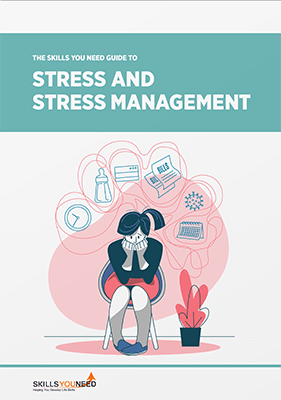
The Skills You Need Guide to Stress and Stress Management
Understand and Manage Stress in Your Life
Learn more about the nature of stress and how you can effectively cope with stress at work, at home and in life generally. The Skills You Need Guide to Stress and Stress Management eBook covers all you need to know to help you through those stressful times and become more resilient.
Conclusion
Understanding and managing stress is a lifelong skill, not a one-time fix. As your life circumstances change, your stressors will evolve, and so too must your coping strategies. The goal is not to eliminate all pressure from your life—which would leave it dull and stagnant—but to build a robust toolkit of physical, emotional, and organizational techniques that allow you to handle challenges with grace.
By regularly returning to the resources in this hub, auditing your environment, and actively practicing relaxation techniques, you can ensure that stress acts as a motivator rather than a master. Take control of your well-being today, one small, mindful step at a time.
A Word of Warning
Self-help techniques and lifestyle adjustments can be extremely helpful in managing mild to moderate levels of stress, and many people find them entirely sufficient to enable them to manage high levels of pressure.
However, if you or someone you know is really struggling with severe stress, debilitating anxiety, or signs of deep burnout, you must seek professional help from a doctor, licensed therapist, or qualified counsellor. Left untreated and unmanaged, chronic stress can be extremely damaging to your long-term physical and mental health.