

17 Stress and Burnout Management Tips
for a More Productive Life
See also: Dealing with Stress - Top Tips
In our hyper-connected, relentlessly fast-paced modern world, experiencing pressure is inevitable. A certain degree of acute stress can actually be beneficial, providing the adrenaline and focus necessary to meet difficult deadlines, navigate emergencies, or perform at our best.
However, when that pressure becomes chronic and inescapable, it rapidly depletes our physical and emotional reserves. Left unchecked, prolonged stress morphs into deep burnout—a state of profound exhaustion and cynicism—which can ultimately pave the way for severe anxiety and clinical depression.
Protecting your mental bandwidth requires an active, multi-faceted approach. You cannot simply "think" your way out of chronic stress; you must address it physiologically, cognitively, and environmentally. Below are 17 actionable, evidence-based strategies designed to help you effectively manage stress, build long-term resilience, and lead a healthier, more productive life.
A Crucial Distinction: Stress vs. Clinical Depression
While the lifestyle and cognitive tips below are highly effective for managing everyday stress and preventing burnout, clinical depression is a complex medical condition. If you are experiencing persistent feelings of hopelessness, severe lethargy, a total loss of interest in life, or suicidal thoughts, lifestyle changes are not enough. You must seek immediate support from a qualified medical professional, licensed therapist, or clinical counselor.

17 Strategies to Reduce Stress and Prevent Burnout
-
Master Diaphragmatic Breathing
When you are stressed, your breathing becomes shallow and rapid, signaling to your brain that you are in physical danger. Diaphragmatic (or "belly") breathing reverses this process. By inhaling deeply through your nose so that your stomach expands, and exhaling slowly through your mouth, you manually stimulate the vagus nerve. This biological trigger actively shuts down the "fight or flight" response and engages your "rest and digest" parasympathetic nervous system.
-
Practice Progressive Muscle Relaxation (PMR)
Stress often manifests physically as tight shoulders, a clenched jaw, or tension headaches. PMR is a technique where you systematically tense and then completely release each muscle group in your body, starting from your toes and moving up to your face. This deliberate contrast teaches your body what true relaxation feels like and helps release deeply trapped physical anxiety.
-
Implement the "Brain Dump" Protocol
When you are overwhelmed by a massive to-do list, your working memory becomes severely taxed. The "Brain Dump" involves taking a blank piece of paper and writing down absolutely every task, worry, and obligation floating around in your head. Externalizing these stressors gets them out of your mind and onto the page, immediately reducing cognitive friction and making your problems feel finite and manageable.
-
Utilize the Eisenhower Matrix
Poor time management is a leading cause of workplace stress. The Priority (Eisenhower) Matrix forces you to categorize your tasks into four quadrants: Urgent & Important (Do immediately), Important but Not Urgent (Schedule), Urgent but Not Important (Delegate), and Neither (Delete). This merciless prioritization stops you from treating every minor email as an emergency.

-
Engage in Cognitive Restructuring
Stress is heavily influenced by how we interpret events. Cognitive restructuring is a psychological technique that involves catching negative, catastrophic thoughts (e.g., "If I fail this presentation, my career is over") and actively challenging them with objective evidence. Reframing your internal narrative from panic to pragmatism is essential for long-term emotional regulation.
-
Establish Fierce Emotional Boundaries
You cannot pour from an empty cup. Saying "yes" to every professional request and personal favor will rapidly lead to burnout. Learning the power of assertiveness and confidently saying "no" without over-apologizing is arguably the most important stress management skill you can develop. Your time and energy are finite resources; protect them ruthlessly.
-
Commit to Digital Minimalism
The constant barrage of notifications, news alerts, and social media updates keeps the human brain in a state of perpetual low-grade anxiety. Create strict digital boundaries: turn off non-essential push notifications, keep your phone out of the bedroom at night, and designate specific "offline" hours during your weekend to allow your nervous system to fully decompress.
-
Schedule Strategic Disengagement
True relaxation is not just pausing work to run household errands. You must schedule periods of "strategic disengagement"—time explicitly dedicated to zero productivity. Whether it is reading a fiction novel, sitting on a park bench, or taking a warm bath, allowing your brain to enter its "default mode network" is non-negotiable for burnout recovery.
-
Optimize Your Sleep Architecture
A lack of deep, restorative rest severely impairs the prefrontal cortex, leading to high irritability and an inability to cope with minor daily frustrations. Prioritize your sleep hygiene by maintaining a consistent bedtime, utilizing blackout curtains, and keeping your bedroom temperature cool. Sleep is the foundation upon which all other stress management techniques are built.
-
Move Your Body (Somatic Processing)
Exercise is the single most effective way to process and burn off the excess adrenaline and cortisol generated by stress. You do not need to become a marathon runner; simply taking a brisk 20-minute walk provides "bilateral stimulation" (alternating left-right movement), which helps the brain process emotional distress and clear a foggy mind.
-
Explore Nutritional Psychiatry
The vagus nerve connects your gut directly to your brain, meaning your diet heavily influences your mood. High sugar intake and heavily processed foods create physiological inflammation that mimics anxiety. Focus on a balanced diet rich in complex carbohydrates, leafy greens, and omega-3 fatty acids to stabilize your blood sugar and fortify your nervous system.
-
Stimulate the Vagus Nerve with Cold Exposure
If you are in the middle of an acute panic or high-stress moment, you can "shock" your nervous system into resetting by applying cold. Splashing freezing water on your face or holding an ice pack to the back of your neck triggers the mammalian dive reflex, which instantly forces your heart rate to slow down and halts hyperventilation.
-
Practice Grounding Mindfulness
Anxiety lives in the future, and depression lives in the past. Mindfulness pulls you forcibly into the present. Use the 5-4-3-2-1 grounding technique during stressful moments: silently identify five things you can see, four you can touch, three you can hear, two you can smell, and one you can taste. This breaks the cycle of rumination.
-
Cultivate Social Vulnerability
Isolation amplifies stress. Humans are highly social creatures, and sharing our burdens naturally lowers our internal pressure. Ditch the text messages and seek out face-to-face or voice contact with a trusted friend or family member. Simply verbalizing your stress to someone who actively listens provides immense psychological relief.
-
Audit Your Dopamine Sources
When stressed, many people turn to alcohol, smoking, or doomscrolling for relief. These habits provide an artificial spike in dopamine followed by a sharp crash, ultimately leaving you more anxious than before. Identify your unhealthy coping mechanisms and consciously replace them with healthier dopamine sources, like physical activity or creative hobbies.
-
Prioritize Micro-Joys
You do not need a two-week vacation to experience joy. Actively seeking out "micro-joys" throughout your day—enjoying a perfectly brewed cup of coffee, listening to your favorite song, or feeling the sun on your face for five minutes—acts as a continuous, low-level buffer against the grinding friction of chronic stress.
-
Seek Professional Coaching or Therapy
If you have implemented lifestyle changes and are still struggling with profound exhaustion, cynicism, or emotional numbness, do not try to "tough it out." Seeking help from an occupational psychologist, a career coach, or a licensed therapist is a sign of profound self-awareness, not weakness. Professionals can provide targeted frameworks to help you navigate specific environmental stressors.

Further Reading from Skills You Need
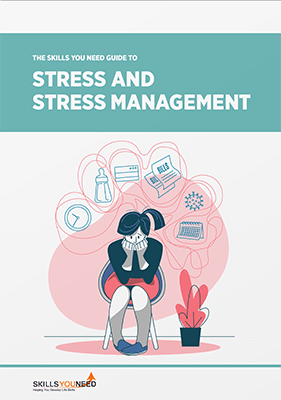
The Skills You Need Guide to Stress and Stress Management
Understand and Manage Stress in Your Life
Learn more about the nature of stress and how you can effectively cope with stress at work, at home and in life generally. The Skills You Need Guide to Stress and Stress Management eBook covers all you need to know to help you through those stressful times and become more resilient.
Conclusion
While experiencing stress is a normal part of a dynamic, active life, you do not have to accept chronic burnout as your default state of being. Managing your physical, emotional, and cognitive responses to pressure is an active, ongoing practice.
By slowly integrating these 17 strategies into your daily routine—setting fierce boundaries, optimizing your physiological health, and challenging negative thought patterns—you can build a robust internal defense system. You will not only safeguard yourself against deep exhaustion but also unlock the clarity and energy required to lead a truly productive, balanced, and deeply fulfilling life.
About the Author
Sarah Lin (MSc) is an occupational psychologist, wellness educator, and a frequent contributor to lifestyle publications. She specializes in creating actionable, evidence-based frameworks to help professionals prevent corporate burnout, establish firm emotional boundaries, and optimize their mental well-being. When she isn't writing or consulting, Sarah enjoys long-distance hiking and restoring vintage furniture.