


10 Tips for Moving Efficiently
See also: Organising SkillsMoving house is consistently ranked by psychologists as one of the most stressful life events a person can undertake. Whether you are relocating across the country for a lucrative new job, upsizing to accommodate a growing family, or downsizing for a peaceful retirement, the sheer physical and mental toll of packing up your entire life can quickly become overwhelming.
However, the success of your endeavor—and the preservation of your mental health—largely depends on how well you plan and prepare. While you cannot control external variables such as traffic, bad weather, or sudden closing delays, you maintain absolute control over how you organize your belongings and structure your timeline.
By applying solid project management principles to your relocation, you can completely neutralize the chaos. Use the following ten strategic tips for a fast, highly efficient, and stress-free move.
10 Strategies for a Smooth, Efficient Move
-
Designate, Donate, and Toss
The absolute first step to any major move is aggressive downsizing. There is zero logistical sense in spending your valuable time, physical energy, and financial resources transporting items you no longer use or need. As you sort through your belongings, have designated "donate" and "toss" boxes at the ready. This strategy forces you to engage your decision-making skills immediately, rather than pushing the choice onto your future self.
Tackle this decluttering using a strict room-by-room method to compartmentalize the task and prevent cognitive overload. Make a trip to the donation center after you finish each room so the clutter physically leaves your space. To further reduce your burden, you might also consider hiring professional cleaners from a company like Maids in Brown, which specializes in move out cleaning in Arlington. Outsourcing this final, exhausting step ensures every corner is cleaned to perfection, allowing you to concentrate entirely on logistics, paperwork, and settling into your new space.
-
Make a Master Moving Folder
A massive amount of paperwork goes into selling, buying, or renting a property. You will be juggling contracts, utility transfers, moving quotes, and financial documents. Protect yourself from administrative panic by honing your organising skills and creating a dedicated master moving folder.
Start collecting your new addresses, purchase agreements, lease documents, and utility shut-off confirmations, keeping them securely in one easily accessible physical binder. While digital records are important, it is incredibly wise to make hard copies of documents you have been storing on your mobile device. If your phone or laptop dies during the chaos of a twelve-hour moving day, or if you lose internet access in transit, you will be deeply relieved to have the paper versions in your hands.
-
Keep Clothes Exactly Where They Are
Efficiency in moving is all about eliminating redundant tasks. There is absolutely no need to painstakingly remove clothes from hangers, fold them into boxes, and re-hang them at your new destination. Instead of rearranging everything, simply transport them as they are.
Use clean, heavy-duty trash bags to group hanging items together in your closet. Get bags with durable drawstrings so you can tie them tightly around the hanger hooks, keeping each bundle secure and protected from dust. For dressers, use industrial plastic stretch wrap to secure individual drawers so they do not slide out. You can then move the dresser as a whole unit, or simply slide the wrapped drawers out, move the hollow frame, and slide them back in once they are on the moving truck.
-
Master the Physics of Packing: Heaviest on the Bottom
If you plan to load the moving truck yourself, understanding basic physics and weight distribution will make your job exponentially easier and significantly safer. Always pack heavier items at the bottom of your boxes, layering lighter, softer items on top to prevent crushing.
When loading the vehicle, pack the heaviest boxes and major furniture pieces toward the front of the truck (the area closest to the cab) to maintain the vehicle's balance and ensure safe driving dynamics. This method also naturally forces you to unpack the lighter bins first when you arrive. In doing so, you gradually warm up your muscles and boost your heart rate, which drastically reduces your risk of sustaining an entirely preventable musculoskeletal injury.
-
Implement a Visual Color-Coding System
Friends, family members, or hired movers will rarely pause to read small, scribbled handwriting on the side of a box while carrying a heavy load. What was carefully packed for the living room will inevitably end up lost in the guest bathroom—unless you use a highly visible, frictionless system.
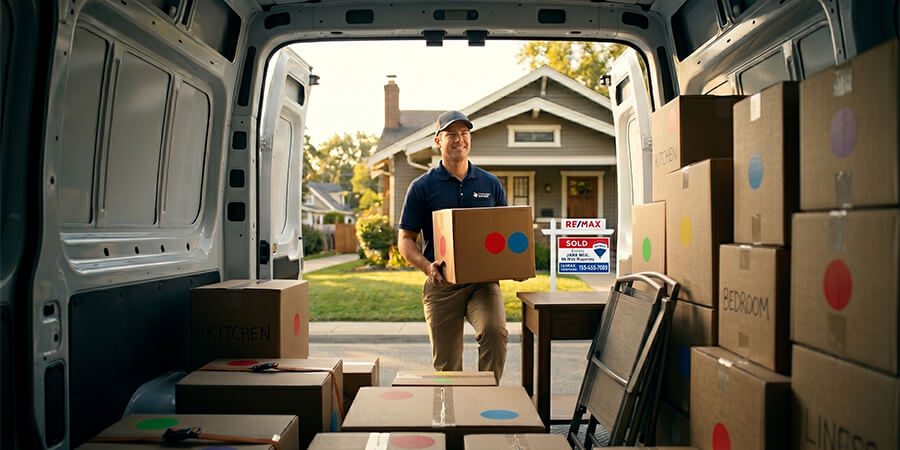
Color-coding your boxes is a brilliant logistical tip that saves hours of frustration. Label the top and multiple sides of each box with large, bright, colored stickers (e.g., blue for the kitchen, red for the master bedroom). When you arrive at the new property, place a matching sticker on the doorframe of the corresponding room. Your moving team will know exactly where to go without having to ask you a single question.
-
Establish a Central Box Zone in Each Room
Regardless of who is physically moving your belongings inside the new property, it is crucial that they place all boxes in the dead center of each room. Avoid the temptation to stack boxes against the walls, as heavy cardboard can easily leave scuffs, scratches, and structural marks on fresh paintwork.
Furthermore, lining the walls with boxes makes it incredibly difficult to place and assemble your large furniture. Couches, bookcases, and dressers need to go against the perimeter. By designating the center of the room as the "box drop zone," you keep the walls clear for immediate furniture placement, drastically speeding up the unpacking process.
-
Prioritize Equipment: Rent a Truck with a Ramp
If you are executing a DIY move to save money, renting a truck equipped with a pull-out loading ramp must be one of your top priorities. While it might be slightly cheaper to rent a flat-backed van, the sheer physical toll of lifting every single item waist-high is absolutely not worth the minor financial savings.
This one piece of equipment will conserve massive amounts of your energy. Instead of lifting every heavy box, mattress, and sofa over the back bumper, you simply use a dolly to roll them up a gentle incline. Conserving your physical stamina is the ultimate form of moving-day time management. Of course, if a DIY move feels like too much hassle, hiring an experienced regional provider such as Paultrans Umzüge | Umzugsunternehmen München can save you both the heavy lifting and the truck rental altogether.
-
Invest in Special Crating for Fragile Valuables
Whether you are moving small, delicate framed family photos or massive, expensive oil paintings, transporting art and mirrors requires specialized care. Properly packing artwork often requires rigid crating to prevent structural damage or shattered glass during transit.
Most professional moving companies offer custom crating services for an additional fee. However, if you are handling it yourself, you must use high-quality masking tape, heavy-duty bubble wrap, and specialized mirror boxes. For glass-framed items, place strips of masking tape in a large 'X' across the pane. This strengthens the glass and, should the worst happen during a bumpy ride, prevents it from shattering inward and destroying the artwork underneath.
-
The Hardware Strategy: Keep Track of Small Parts
Small components like nuts, bolts, washers, and Allen keys are notoriously easy to lose during a chaotic relocation. Yet, you will inevitably end up with a pile of loose parts if you need to disassemble bed frames, dining tables, or wall-mounted electronics.
To prevent total frustration on your first night, immediately place all hardware into clear, sealable plastic bags and label them meticulously with a permanent marker. Tape the specific bag directly to the underside of the furniture piece it belongs to. By attaching the hardware directly to the source, you ensure you can seamlessly reassemble your furniture without tearing through boxes looking for a missing screw.
-
Pack an "Open First" Survival Bag
The very last thing you want to do after a fourteen-hour day of intense physical labor is dig blindly through ten tightly taped boxes just to find a toothbrush or a clean shirt. You can entirely avoid this common pitfall by packing a dedicated "open first" overnight bag.
Treat this bag exactly as you would if you were going on a weekend vacation. Include a fresh change of clothes for each family member, cell phone chargers, essential prescription medications, basic toiletries, a roll of toilet paper, and some simple snacks. Pack your essential bedding in a clearly marked, easily accessible box so you can immediately make your bed. Having these basic necessities instantly available ensures your first night in the new home is comfortable, restorative, and completely stress-free.
Further Reading from Skills You Need

The Skills You Need Guide to Life
This two-part guide is an easy-to-read summary of the essential skills you need for a healthy mind and body.
The first eBook, Looking After Yourself, covers some of our most popular content and will help you to live a happier, healthier and more productive life.
The second eBook, Living Well, Living Ethically, considers how you can live your best life all the time. It helps you to answer the question: how can I avoid having too many regrets about my life?
Conclusion
Relocating your entire life does not have to be a miserable, chaotic ordeal. By treating your move as a structured project and utilizing the strategic tips above, you can make the entire process highly efficient and significantly less exhausting. The more micro-decisions you can make before the big day, the smoother the transition will be.
Start your decluttering, planning, and packing months in advance. Look for every opportunity to streamline your logistics, conserve your physical energy, and protect your mental bandwidth. With the right strategy and a bit of foresight, you can walk through the front doors of your new home feeling accomplished, relaxed, and ready for your next chapter.
About the Author
Alma Roman is a wellness consultant. With a background in behavioural psychology, she empowers individuals to live their most authentic, balanced lives by breaking down complex wellness topics into actionable advice. When Alma is not writing, you will find her practicing yoga, advocating for body positivity, or whipping up something highly nutritious in the kitchen.