


Building Essential Skills
for the Modern Workplace
See also: Problem Solving
The workplace isn't what it used to be. It's faster, more digital, and always evolving, shaped by new technologies, shifting employee expectations, and the rise of hybrid and remote work. Success today takes more than technical knowledge. Employees need digital fluency to navigate tools and platforms, human capabilities to collaborate and lead effectively, and the resilience to adapt to constant change.
But here's the rub: many teams just aren't there yet. Even with training budgets and workforce development programs, gaps remain—and they're not only technical. Too often, employees know the "what" of their roles but struggle with the "how" of working together, as well as finding their footing in a workplace that never slows down. This is why organizations look beyond traditional training and turn to modern learning solutions.

What’s really missing? The skills that make work work
Even with budgets going into training, skill gaps are still a thorn in every manager's side. That's because ticking the technical box isn't enough anymore. Today's benchmarks are things like running productive remote meetings, giving constructive feedback, learning new tools quickly, and adapting to shifting priorities without missing a beat.
Too often, employees are confident in their roles but come up short when asked to lead, adapt, or team up across departments. Soft skills like communication, decision-making, and digital confidence aren't nice-to-haves. When they're missing, performance stalls, morale dips, and teams struggle to keep up with the pace of change.
In fact, research from LinkedIn Learning shows that the top skills companies now seek are dominated by "human" capabilities like communication, leadership, and collaboration. These are the very skills employees struggle to build through traditional training formats, leaving a widening gap between what organizations need and what employees bring to the table.
Why the old-school approach doesn’t cut it
Traditional training formats (think one-off workshops and static seminars) weren't built for the demands of today. Here's where they fall short:
They're expensive to scale. Gathering hybrid teams in-person racks up time and cost.
They date quickly. Today's best practices become tomorrow's "remember when?"
They're hard to retain. Passive learning formats can't hold attention long enough to drive behavior change.
The result? Companies spend millions on training that looks impressive on paper but doesn't improve actual performance. Learners walk away with binders of information that never get opened again. The disconnect between training and application leaves employees disengaged and organizations frustrated, ultimately impacting employee retention.
LMS training: Where skill-building meets scale
A Learning Management System, or LMS training, allows employees to build and practice skills at their own pace. By focusing on continuous upskilling rather than one-off sessions, modern organizations are seeing immediate benefits. Here's what that looks like:
Digital skills for a digital world
Digital literacy goes beyond spreadsheets. LMS courses help people get comfortable using tools like databases, project management software, or even AI agents. They also support cybersecurity basics and data analysis, which every role touches now.
The real value lies in adaptability. When employees learn through an LMS, they're not just mastering one tool—they're learning how to confidently approach new technology. That mindset is what keeps companies competitive when the next tool, platform, or AI model hits the market.
Communication that connects
With hybrid and remote work here to stay, communication skills must be prioritized. LMS modules can guide employees through giving clear feedback, running virtual meetings, or collaborating across cultures.
These lessons become even more critical as organizations expand globally. A workforce spread across time zones and cultures needs a shared language of communication to prevent misunderstandings and keep projects moving forward.
Leadership that fits the moment
Leadership today is about navigating complexity, motivating diverse teams, and adapting on the fly. LMS platforms give emerging and current leaders the space to build those capabilities through practice.
Courses on strategic thinking, emotional intelligence, and hybrid team management come to life through immersive formats (think real-world case studies, branching scenarios, and simulations). Learners apply content in safe, structured environments and learn from their mistakes.
For example, imagine a newly promoted manager struggling with team conflict. Instead of relying on guesswork, they can access an LMS module featuring a simulated argument between two team members. By choosing responses and seeing the immediate simulated consequences, the manager safely practices de-escalation and conflict resolution before ever stepping into the real meeting. This structured way to build confidence is invaluable before real-world stakes get too high.
Adaptability and resilience
Business changes fast. Employees need to learn how to pivot and stay calm under pressure. LMS courses on stress management, navigating uncertainty, and building mental flexibility help teams develop the mindset to handle whatever comes next.
Resilience is no longer seen as a "personal trait." It's a business necessity. Teams that can adapt quickly minimize downtime, keep morale steady, and protect the bottom line during periods of disruption.
Compliance and technical knowledge
Yes, soft skills are big. But so are hard requirements. LMSs also make it easy to keep employees up to date on compliance, safety, and role-specific knowledge with automated refreshers and real-time tracking.
This dual focus (covering both hard and soft skills) ensures employees are not just compliant, but also equipped to lead, collaborate, and innovate.
Making LMS training stick: Best practices that work
To turn training into real skills, design it with impact in mind. Some tried-and-tested tactics:
Keep it short and smart. Microlearning reduces overwhelm and supports just-in-time learning.
Make it interactive. Quizzes, polls, and branching exercises drive engagement and retention.
Bring in real scenarios. Employees remember lessons they've applied.
Foster peer learning. Discussion forums and feedback tasks turn colleagues into collaborators.
Recognize achievements. Digital badges, course completions, and internal shout-outs go a long way.
The key is consistency. A single course won't transform a skill gap, but ongoing opportunities to learn, practice, and receive feedback will. LMSs make that consistency possible by embedding training directly into the flow of work.
Further Reading from Skills You Need
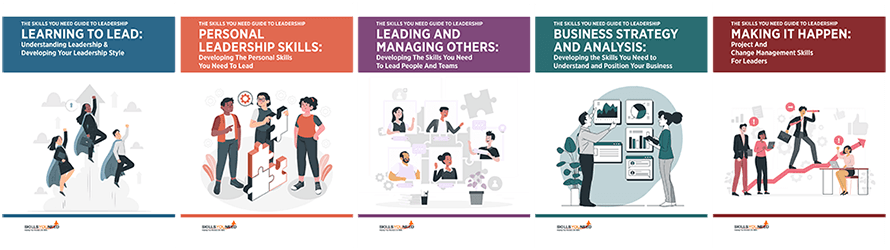
The Skills You Need Guide to Leadership eBooks
Learn more about the skills you need to be an effective leader.
Our eBooks are ideal for new and experienced leaders and are full of easy-to-follow practical information to help you to develop your leadership skills.
Conclusion: Training that fits the future of work
The pace of business isn't slowing down. Skill needs are shifting faster than job descriptions can keep up. But the right learning strategy (applied in a flexible LMS) can give your organization the edge.
By investing in workforce development, communication, leadership, and resilience through scalable learning programs, organizations prepare their workforce not only for today's challenges but for tomorrow's unknowns.
The future won't wait, which is why learning can't either.
About the Author
Sadie Smith is an experienced professional who transitioned into the digital marketing world from newspapers. She mostly specializes in local issues, and this gives a unique perspective when it comes to dealing with stories that need thorough research and a personal touch. She wears her heart on her sleeve and that makes her an excellent marketing expert.