

How Flexible Learning Helps Teens
Build Critical Skills
See also: Staying Motivated When Studying
Flexible learning gives teens the essential room to grow without putting their formal education on hold. A flexible schedule can make school feel manageable when modern life gets overwhelmingly busy, yet it still rigorously demands focus, discipline, and consistency.
With non-traditional or digital learning environments, teenagers learn how to plan their own time, keep track of complex deadlines, and stay genuinely responsible for their academic progress.
Between long commutes, demanding after-school activities, part-time jobs, and family responsibilities, a rigid 8-to-3 school schedule can often cause unnecessary stress. Flexible learning fits seamlessly into that real-life pace while keeping educational expectations impeccably high. As a result, teens stay on track academically while subconsciously building the critical soft skills that will eventually support them through college, their careers, and everyday adult responsibilities.
Smarter Time Use and Autonomous Planning
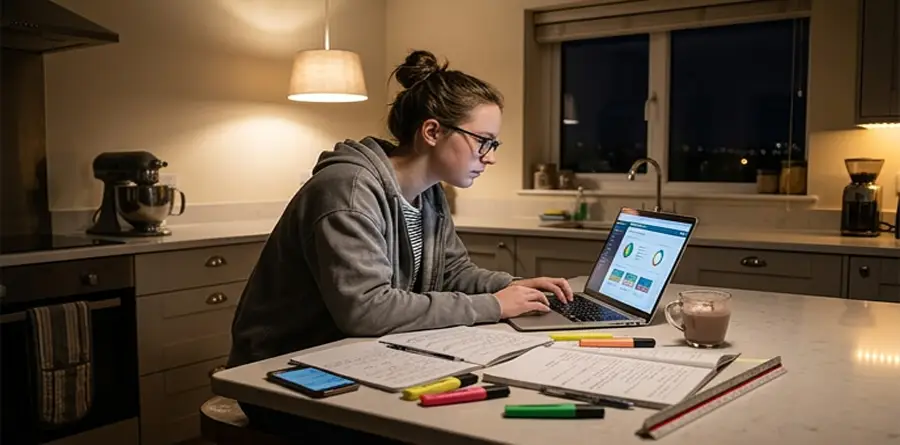
Time management transitions from an abstract concept into a tangible, daily reality when teens are given control over their learning schedule. Flexible learning turns the chaotic week into a blank canvas they can shape with intention. Instead of simply rushing to keep up with a fixed, externally dictated class pace, teens learn to map out what needs to get done and proactively decide when to do it. This simple, profound shift encourages long-term planning, cognitive patience, and follow-through.
A highly effective routine usually starts with small, autonomous choices. Teens can set their own daily targets, break massive assignments into micro-steps, and create a pattern for studying that fits their unique biological energy levels. Some students find they focus best early in the morning before the house wakes up, while others do their deepest, most creative work in the late afternoon. Flexible learning honors these natural rhythms.
Guided Home Learning and Real-World Application
Flexible learning works best when teens are given independence backed by structured support. This structure becomes particularly important when teens are tackling major, real-world milestones alongside their standard academic coursework. For example, learning to drive is a massive developmental step that requires significant time, focus, and energy. In regions with heavy commuting cultures, families frequently juggle school, extracurricular sports, and long drives between commitments.
Opting for flexible, state-approved educational modules—such as a Texas parent taught driver’s ed program—lets a teen complete necessary coursework at home under parental guidance. By managing a simple weekly plan for what to study, when to safely practice behind the wheel, and what hours to officially log, teens learn to integrate significant, legally required life skills into their schedule without burning out, while parents remain confidently in the loop.
Stronger Problem-Solving and Cognitive Patience
Problem-solving drastically improves when teens are given the psychological space to think deeply. Flexible learning often gives students the necessary time to review complex instructions, revisit difficult recorded lessons, and try again without feeling rushed by a ringing school bell. This slower, much more thoughtful pace can effectively turn frustration into deep understanding, since teens can focus purely on the specific part of a concept that actually challenges them.
When a teen struggles with a mathematical equation or a complex essay prompt, adaptive online learning helps them respond with a strategy instead of panic. They can pause and rewatch a lesson, read a different text-based explanation, or practice with supplementary examples. Each independent step builds resilience and teaches them how to source solutions on their own. These robust habits matter in every single part of adult life, since real-world workplace challenges rarely come with perfect instructions or instant answers from a teacher.
Clear, Professional Daily Communication
Flexible learning forces teens to communicate more often and much more clearly. Because they are not sitting in a physical room where a teacher can read their body language, students need to proactively ask questions, follow detailed formatting instructions, and keep track of digital feedback. This steady, professional rhythm builds practical communication skills that show up immediately in jobs and everyday life.
Many flexible programs rely heavily on written communication, so teens practice clarity through direct emails, discussion board posts, and assignment notes. They learn exactly how to explain what they need, describe what they have already completed, and respond thoughtfully to constructive guidance. These habits support lifelong professionalism, as teens begin to understand the critical nuances of tone, timing, and respectful follow-up.
Genuine Digital Confidence and Information Literacy
Teens build highly marketable digital skills incredibly quickly when modern online tools become part of their daily learning ecosystem. Cloud-based research, digital file organization, and basic software troubleshooting develop naturally through routine, daily use. Those hard skills matter far beyond secondary school, since almost all modern careers and university training programs depend entirely on navigating complex digital systems.
Adaptive learning also drastically improves how teens evaluate the information they consume. Online research requires rigorous good judgment, so students actively practice checking sources, comparing competing ideas, and spotting unreliable or biased content. This high-level digital literacy supports smarter, more analytical decisions, especially in a modern world saturated with fast, noisy, and often misleading information.
Confident Self-Advocacy and Boundary Setting
Adaptive learning places teens in the driver's seat, meaning they get significantly more chances to speak up in highly useful ways. They start noticing exactly what helps them learn (e.g., visual aids, silence) and what slows them down (e.g., multitasking, loud environments). This self-awareness matters deeply, as it turns vague academic frustration into clear, targeted action. Teens learn how to advocate for themselves by asking for clarification, requesting deadline extensions when genuinely needed, and articulating exactly where their logic got stuck.
Self-advocacy also shows up powerfully in personal goal-setting. Teens can look at a busy week ahead, decide what they realistically want to finish, and choose a pace that preserves their mental health. When they track their own progress, they start making far better decisions about their effort. A teen who sees a pattern of late, stressful submissions can adjust their schedule early, instead of waiting until burnout forces a change.
Practical Team Skills in Distributed Environments
Flexible and remote learning still heavily includes collaboration, even when students are not sitting in the same physical room. Virtual group projects, digital peer reviews, and shared cloud documents teach teamwork in a highly modern format. Teens learn how to coordinate clashing schedules, divide tasks equitably, and meet shared asynchronous deadlines, which perfectly mirrors how modern, remote, and hybrid corporate workplaces operate today.
Teamwork actually becomes much more visible when communication is written and tasks are digitally tracked. Teens can clearly see who contributed to a document, who followed through on their promises, and what still needs urgent attention. This digital clarity encourages profound personal responsibility, since the work does not disappear into a fleeting classroom moment; it stays permanently documented, and the entire team depends on it.
Emotional Resilience and Adaptability
Perhaps the most understated benefit of flexible learning is the development of emotional resilience. When a teenager is not micromanaged by a bell schedule, they inevitably experience moments of procrastination, failure, and miscalculation. However, because the environment is flexible, they also have the psychological safety to recover, pivot, and try again without public embarrassment.
This cycle of failing, self-correcting, and ultimately succeeding builds a deep, internal resilience. They learn that a bad study day does not equal academic ruin, provided they adapt their plan for the following day. This adaptability is the cornerstone of adult mental health.
Final Thoughts
Flexible learning helps teens build critical, lifelong soft skills in a way that feels highly practical and steady. Time management improves naturally through real, consequential scheduling decisions. Problem-solving strengthens when teens get the quiet room to work through cognitive challenges instead of rushing past them to keep up with the class.
Digital confidence grows through the daily use of enterprise-level tools that support research and organization. Ultimately, teens who embrace flexible learning build the self-advocacy, emotional resilience, and modern teamwork skills that higher education and the future workforce actively demand.
About the Author
Sarah Jenkins is an Educational Consultant and Adolescent Development Specialist. With over fifteen years of experience working with alternative education models and digital learning platforms, Sarah helps families and school districts design flexible curriculums that prioritize both academic rigor and soft-skill development. She frequently writes on topics regarding student autonomy, digital literacy, and preparing teenagers for the modern workforce.