

Emotional Intelligence in Dating:
Read Signals, Respond Well
See also: Navigating Dating and Dating Apps
You know when someone’s words don’t match what they really mean? Their tone is off, or they smile but seem distant. That’s emotional intelligence, and it’s especially important when dating.
Here’s what the research shows: emotional intelligence really does make a difference in relationships. A review published in Personality and Individual Differences looked across a large number of studies and found a clear link between emotional intelligence and relationship satisfaction. In other words, people who are better at understanding and handling emotions (their own and their partner’s) tend to feel better in their relationships. It also makes sense in real life: when you communicate better, show more empathy, and handle conflict without immediately getting defensive, dating starts to feel a lot less stressful and a lot more connected.
What Is Emotional Intelligence, Anyway?
Think of emotional intelligence as your ability to notice, understand, and manage feelings, not just yours but also the other person’s. It is basically awareness. Real awareness.
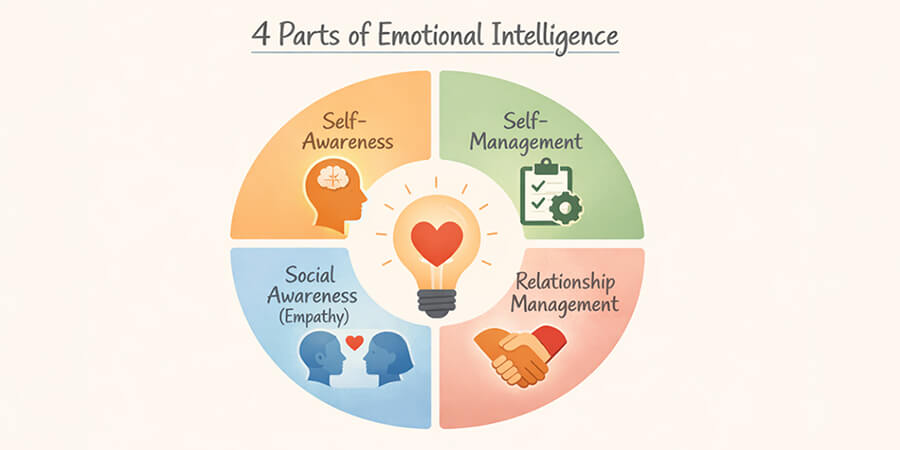
Emotional intelligence breaks down into four core parts. First, there’s self-awareness: knowing what you’re feeling and why. Then comes self-management: managing your reaction when someone doesn’t text you back right away, for example. Third is social awareness (also called empathy): actually understanding where the other person is coming from. Finally, there’s relationship management: using all that information to interact in ways that strengthen your connection rather than damage it.
The good news? You don’t need to be born with these abilities. You can develop them.
Why Your Emotions Are Reading Signals Too
When you’re dating someone new, your brain is constantly processing signals. Your date touches your arm during a story, what does that mean? They were quieter than usual... are they bored, stressed about work, or having second thoughts? Your gut reaction is valuable, but without emotional intelligence, you might misread the room entirely.
Here’s where emotional capacity in a relationship becomes crucial. Your emotional capacity is basically how much emotional information you can handle and process without simply shutting down or overreacting. If you have a strong emotional capacity, you can notice that your date seems withdrawn, consider multiple reasons why (tired? worried about family? needing space?), and respond with curiosity instead of defensiveness.
Without this skill, you might assume the worst. You might pull away yourself, create distance, or push for reassurance you don’t actually need. That’s how relationships spiral based on misunderstandings.
How to Read What’s Really Happening
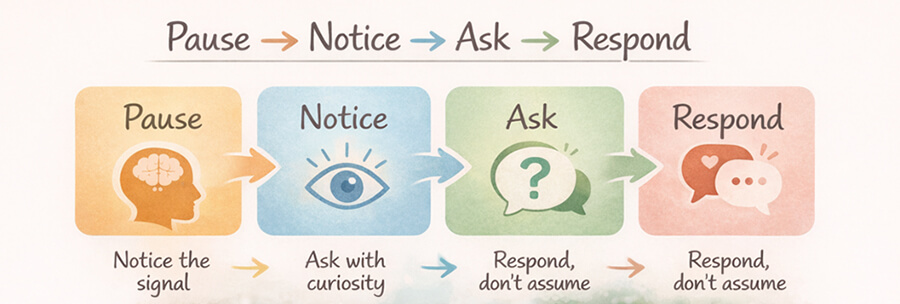
Reading emotional signals starts with paying actual attention. Put your phone down. Watch their face, not just their mouth, but their eyes. Listen to their tone. Notice if there’s alignment between what they’re saying and how they’re saying it.
Examples of emotional intelligence in relationships include:
If your date seems off, ask, You seem quiet tonight... is everything okay? Don’t make it about yourself.
If they are giving short answers, think maybe they are tired or stressed, not just blowing you off.
Spot when they’re nervous. It might mean they care more than they let on.
Get excited with them! Don’t act cool just to look cool.
If plans change and they’re disappointed, get that. Don’t tell them they’re being silly.
These aren’t some big gestures you should worry about, but rather small moments where you show that you are actually tracking what’s going on with them.
Communicating With Emotional Intelligence Makes Everything Easier
So you’ve read the signals. Now what? The next step is responding in a way that shows you actually understand them.
Say your date seems anxious about introducing you to their buddies next week. Someone without emotional awareness might say, You’re acting strange or just ignore it. A person trying to talk with emotional awareness might instead say, I sense you’re nervous about next week. Is there something specific bothering you? You’ve pointed out what you see, and you’ve started a chat instead of judging.
This approach does something powerful: it makes the other person feel understood. When people feel understood, they relax. They open up. They actually invest more in the relationship because they sense that you see them.
The Psychology Today piece on why emotional intelligence matters in relationships breaks down how this kind of communication reduces defensiveness and creates safer spaces for vulnerability. For deeper insights into how dating dynamics work in the modern landscape, TheDateDigest offers research-backed analysis of relationship trends and emotional patterns.
The Role of Self-Awareness in Dating
There’s one thing that people often miss. You can’t read someone else’s emotions clearly if you are not clear on your own. If you’re insecure about whether they like you, you’ll unconsciously interpret everything through that lens. A delayed text becomes proof they’ve lost interest. A serious comment about work becomes a criticism of you.
Essential relationship skills start with understanding yourself. What are your triggers? When do you get defensive? What does rejection actually feel like for you, not theoretically but in your body? Once you know these things, you stop projecting them onto every interaction.
Self-awareness also means knowing when you’re at your limit emotionally. If you’ve had a brutal week at work, you might not have the bandwidth to navigate a difficult conversation well. Recognizing that is also a part of emotional intelligence. You can say, “I’m exhausted today. Can we talk about this tomorrow when I’m more present?” instead of having a conflict when you’re already burned out.
Building High Emotional Intelligence in Your Dating Life
Developing high emotional intelligence takes practice. If you’re wondering how to be emotionally intelligent in a relationship, the answer starts with small daily habits like self-check-ins, active listening, and staying curious during difficult moments. Start small. Before your next date or interaction, pause and check in with yourself. What are you feeling? Excited? Anxious? Hopeful? Just naming it gives you more control over it.
During conversations, resist the urge to immediately respond or defend. Listen. Actually listen. Then, reflect back what you heard: “So what I’m hearing is that you felt hurt when I canceled last minute. That makes sense.” This way, you will both acknowledge their feelings and show you understand their perspective.
When conflict arises (and it will), stay curious instead of becoming certain. Replace defensiveness with questions. “Help me understand why that bothered you?” versus “That shouldn’t have bothered you.” One shuts down the conversation. The other opens it up.
The Digital Layer
Dating now includes texting, Instagram stories, and all kinds of digital communication. This makes emotional intelligence even more necessary, not less. You lose facial expressions and tone, so misunderstandings happen faster. The APA Monitor on digital relationships shows that couples who discuss their communication preferences and check in about digital interactions report higher satisfaction and fewer conflicts.
If your date stops texting, don’t freak out. Just ask, “Hey, I noticed you’re not texting as much... is everything okay?” That’s how to handle feelings when your relationship is partly online.
Final Thoughts
Why This Matters More Than You Think
Relationships go south when people stop understanding each other. What makes a relationship strong, instead of rocky, is when one person (or better yet, both) really pays attention to what the other person is feeling and responds kindly.
Emotional intelligence in a relationship transforms dating from a performance where you’re trying to seem cool or interesting into an actual human connection. You get to be yourself, imperfectly and fully, because you’re with someone who’s actually paying attention to who you are.
What You Can Do Right Now
Start with one simple practice. In your next conversation with someone you’re dating, try to notice one thing about their emotional state that goes beyond their words. What’s their energy like? What feeling are they not saying out loud? Then respond to what you notice with genuine curiosity, not judgment.
That single shift, from interpreting signals through your own fears to actually understanding what’s happening with them, changes everything.
The best relationships are built on mutual understanding, and that’s something you can absolutely learn, develop, and get better at with intention and practice.

About the Author
Jasper Reed is a senior dating trends journalist who covers modern relationships, emotional intelligence, and the psychology behind attraction. He translates research into practical advice readers can use right away, with a focus on healthy communication, empathy, and navigating today’s digital dating culture.