


Balancing Personal Style and
Conflict Resolution in Shared Spaces
See also: Group Dynamics
Rediscover harmony in your shared space by blending individual tastes into a design that respects both personalities from day one. This comprehensive guide shows you practical conflict-resolution techniques, creative collaboration tips, and hands-on tools for designing a home that unites your unique styles gracefully.
Merging personal styles under one roof can often feel like walking a precarious tightrope. One person might love bold, maximalist geometrics and vibrant colors, while the other leans heavily toward soft, minimalist florals and muted earth tones. Finding a middle ground sometimes means negotiating much more than just paint swatches and fabric textures; it means negotiating boundaries, identities, and personal comfort. But when you actively approach interior decor as a chance to practice empathy, active listening, and compromise, you end up with not only a gorgeous room but also a significantly stronger bond. Here is how to balance personal style and conflict resolution in shared spaces so that every mural, furniture piece, and accent tells both of your stories without constant spats over wallpaper samples.

The Psychology Behind Decorating Disputes
Why do we argue so passionately about throw pillows, rug textures, and wall colors? For most of us, our home is our ultimate sanctuary. It is the one place where we have complete control over our environment, and the way it looks is deeply tied to our sense of self, personal identity, and emotional regulation. When someone challenges our design choices, it can unconsciously feel like they are rejecting a fundamental part of who we are.
Understanding this psychological undercurrent is the first and most crucial step in resolving design disputes. If your partner or roommate strongly dislikes a specific pattern you selected, they aren't necessarily criticizing your taste or attacking your personality; they are simply trying to protect their own sense of comfort and sanctuary. By recognizing that design preferences are highly emotionally charged, you can shift the conversation from a competitive "win-lose" argument over aesthetics to a collaborative discussion about how you both want the physical space to make you feel emotionally.
The Art of Sharing Your Walls
The moment two people decide to invest in a large-scale design feature is usually the exact moment they sign up for a crash course in collaboration. Turning to custom wall murals early on in the process can help bridge massive style gaps instead of forcing a rigid, cookie-cutter compromise that leaves nobody truly happy.
It is incredibly helpful to consciously apply conflict resolution skills during this phase, remembering at all times that disagreements are not failures or relationship red flags. Instead, they are valuable opportunities to listen closely, articulate your own underlying needs, and build a lasting understanding of how your partner experiences the world around them.
Embrace Conflict as Creative Fuel
Instead of awkwardly sidestepping disagreements or yielding just to keep the peace, try using your differing opinions as creative springboards. When one partner reacts to a maximalist botanical print with, "That is way too loud for a living room," the other might respond with curiosity rather than defensiveness, asking, "What level of color or pattern would feel relaxing to you?"
Phrasing matters immensely. Learn to share specifics rather than blanket statements. Maybe one person deeply craves the visual calm of muted tones after a stressful workday, while the other thrives on the vibrant, inspiring energy of bright patterns. Sketch your ideas side-by-side, with each person presenting their own digital mood boards. The inherent challenge of finding intersections between two contrasting styles can spark highly original ideas that neither person would have hit upon solo. This might eventually lead to a beautifully textured mural combining dusty rose leaves with pale, calming geometric accents.
Start by independently listing your absolute non-negotiables and your nice-to-haves.
Invite your partner to do the exact same exercise without judgment.
Look actively for subtle overlaps: shared color palettes, overarching themes, or even preferred tactile textures.
This deliberate process sharpens problem-solving abilities and reinforces the concept that you are a team tackling a project, not opponents fighting over territory.
Navigating "Ours" Versus "Mine"
It is often tempting to declare entire rooms or zones as strictly "yours" and "mine" to avoid arguments, but that rigid division often breeds long-term resentment and creates a visually disjointed house. Instead, think of your walls and rooms as shared canvases with designated micro-territories.
In a shared living room, you might split the function of a large bookshelf wall: one person gets the top shelves to display an eclectic vintage collection, while the other gets the lower shelves for an organized vinyl record setup. Then, you purposefully choose a unifying design element—like an overarching paint color or a continuous mural—that stretches across both sections, creating visual flow. When one person gets a sudden impulse to change their micro-territory, the other might picture how their own items will look against the new backdrop. Having partial, integrated ownership fosters individual expression without turning the entire room into a territorial battleground.
Tools for Harmonious Decision-Making
When you hit a complete standstill, having a structured framework can save the day. Here are a few practical strategies and tools to keep your design negotiations smooth and highly productive:
Virtual previews: Many modern suppliers offer advanced online mock-up tools. You can drag a sample mural or paint color into a photo of your actual wall, tweak the brightness, and allow both people to see what works objectively before committing any money.
Timed brainstorming: Set a 10-minute timer. Each person pitches one idea per minute without any interruption. Absolutely no immediate critiques are allowed. By the end of the session, you have several fresh concepts on the table, and neither person feels talked over or dismissed.
The "yes, and" rule: Borrowed from improvisational theater: when one partner suggests, "Let's use navy blue palm leaves," the other responds, "Yes, and what if we introduce soft rose gold accents to warm it up?" This affirmation-and-addition framework keeps the mood highly constructive and prevents defensive walls from going up.
Mood playlists: Music can be a powerful emotional setter. Before making major aesthetic decisions, curate a playlist that captures the exact vibe you want for the room (e.g., chill acoustic for a tranquil bedroom, upbeat pop for a lively kitchen). Listening together can help you both tune into the same emotional wavelength before looking at samples.
Budget transparency: Financial stress is a massive trigger for conflict. Be completely open about costs from the beginning. Set a hard limit that you are both comfortable with, and treat the budget as a mutual boundary rather than a weapon to shut down the other person's ideas.
Bringing it All Together: Your Conflict-Free Feature Wall
By now, you have successfully balanced the "ours" versus "mine" dynamic, fostered creative friction rather than destructive arguments, and armed yourselves with effective decision-making tools. Here is a simple, structured roadmap to officially launch your shared design project without the usual stress:
Define your shared, overarching purpose. Will this wall energize your morning routines, anchor cozy family gatherings, or serve as your tranquil at-home wellness nook?
Gather inspiration completely separately, then swap mood boards over a relaxed cup of coffee.
Use virtual preview apps to narrow down your massive list to your top three contenders.
Hold a fun "final pitch" round: each partner presents why their favorite choice best meets the shared purpose you defined earlier.
Apply the "yes, and" rule to merge specific elements if you find yourselves split between two great options.
Always order a physical sample or small paint swatch before going all in to ensure the lighting works for both of you.
When a shared design finally goes up on the wall, it represents vastly more than just a pretty backdrop; it is tangible proof that your shared values of design, quality, and mutual respect can coexist beautifully.
Further Reading from Skills You Need
The Skills You Need Guide to Interpersonal Skills eBooks.
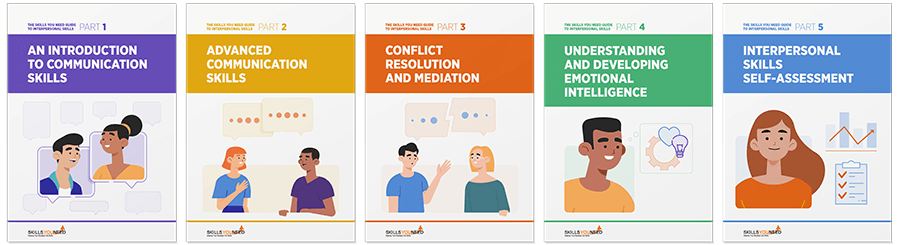
Develop your interpersonal skills with our series of eBooks. Learn about and improve your communication skills, tackle conflict resolution, mediate in difficult situations, and develop your emotional intelligence.
Conclusion
Now that your feature wall or shared room is beautifully in place, make sure to give yourselves a mini-celebration. Reflecting on the collaborative process can be incredibly valuable for the future of your relationship. Every time you walk by that shared space, you might be reminded not only of the gorgeous design choice but of how you successfully navigated disagreements, listened deeply, and emerged as a stronger team.
Conflict resolution isn't a one-off task; it is an ongoing, lifelong skill set. The next time you remodel the kitchen or tackle the bedroom decor, lean heavily on these exact same habits: deep empathy, crystal-clear communication, and a genuine willingness to build upon each other's unique ideas. If a minor spat sneaks in, simply recall the beautiful shared masterpiece born from a few good discussions and a cooperative spirit.
By consciously weaving soft skills into your design journey, you will uncover decorative delights and deepen the emotional connection that truly turns a mere house into a comforting home. Remember, each decorative decision is also an opportunity to practice patience and celebrate the small victories. In nurturing both your physical space and your interpersonal partnership, you will quickly find that every wall you transform also strengthens the foundational trust of your relationship.
About the Author
Sadie Smith is a freelance writer and certified relationship mediator who loves exploring the fascinating intersection between human psychology and interior design. When she isn't writing about how to peacefully cohabitate, you can usually find her attempting (and occasionally failing) to keep her overly ambitious collection of indoor ferns alive, or scouring local flea markets for the perfect mid-century lamp.