

Building a Fulfilling Retirement Lifestyle
See also: Understanding ContentmentMost of us understand the importance of good financial planning to enable us to retire comfortably. However, far fewer of us consider the importance of planning your retirement more generally. Emotional preparation for leaving work is important, taking into account issues such as loss of identity and how you will cope without the structure of working.
Another aspect that is really important is thinking about how you will build a fulfilling retirement lifestyle. In other words, you need to consider how you will spend your time during retirement, in a way that will fulfil your needs. This is clearly very much an individual issue—but there are also some aspects that seem to be common to all of us.
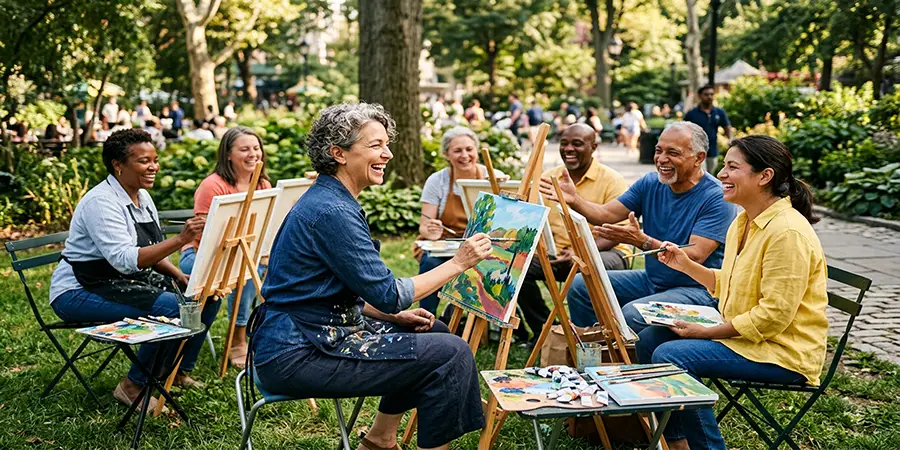
What Do We Mean by a ‘Fulfilling Lifestyle’?
Generally, when we talk about a ‘fulfilling lifestyle’, we mean one that makes us feel good about ourselves and others, and about our place in the world.
Does that mean ‘happy’? Yes and no. As our page on Happiness explains, happiness is a very subjective concept. The pursuit of happiness is also a very Western issue. Possibly a more enlightened concept is the idea of contentment, or being happy with what you have.
Our page on Contentment explains that there are two possible strategies for well-being:
The ‘More’ strategy seeks well-being through having ‘more’: more money, more leisure time, more activities. It is therefore an approach that requires external validation, and also clearly has limits to what you can actually obtain.
The ‘Enough’ strategy seeks well-being through seeing that you have ‘enough’. This requires you to look inside yourself, rather than seeking external validation.
The ‘Enough’ strategy seems more sustainable generally—but perhaps particularly during retirement when you may need to retrench a bit financially. The first step is therefore to consider yourself, and what you personally really need to feel content about your life and your contribution to the world. The answer may surprise you.
What Fulfils Us?
There is a very interesting long-term study that has been going on for the best part of 50 years.
It suggests that the single factor that has the biggest influence on both our health and our happiness is the number and quality of our relationships with others.
In other words, we don’t really need ‘stuff’. We don’t even need all that much money. What we really need is good-quality relationships with other people.
What are the Pillars of a Fulfilling Lifestyle in Retirement?
Questions for Retirement
Retirementpathways.co.uk suggests that two key questions for retirement are:
How do I stay connected, purposeful, and fulfilled?
Will I still feel valued?
It seems likely that the pillars of a fulfilling lifestyle in retirement are similar to those at any time of life:
Being and staying healthy, both mentally and physically;
Having strong social relationships and the right contact with the right people;
Creating the right level of structure and formality for you;
Being able to keep learning and stay curious; and
Maintaining a positive mindset and being grateful.
It is worth unpicking each of those in turn and looking at how you can ensure that you achieve them.
What Can You Do to Ensure that You Stay Healthy?
Being healthy means both mentally and physically.
Fortunately, many of the same steps work to improve and maintain both physical and mental health. These include:
Eating a good balanced diet with plenty of fruit and vegetables, and avoiding ultra-processed foods as much as possible. There is more about this in our pages on Food, Diet and Nutrition.
Getting enough good-quality sleep, and our pages What is Sleep? and The Importance of Sleep provide more information about why this matters, and how you can help yourself.
Getting plenty of exercise, including a decent amount of vigorous and moderate exercise. There is more about this in our pages on exercise, including how to exercise safely and effectively.
You may also find it helpful to read our page on Aging Well for some age-specific tips on staying healthy.
How Can You Build Strong Social Relationships?
There is no question that it gets harder to build social relationships as you get older.
However, there are many organisations dedicated to helping older people to meet up and get to know new people. There are also many opportunities for older people to get involved in community activities via their hobbies or interests.
Opportunities range from formal to informal. You might, for example, look into courses and groups aimed at older people, such as those run by U3A, or the University of the Third Age, in the UK. There are also plenty of evening classes that are open to older people, but not specifically aimed at them. Both these will help you to keep learning as well as developing new social relationships.
You could also consider volunteering for a charity or community organisation. This will help you to get out of the house and meet other people who share your interests. It also means that you will be ‘giving back’, which many people find important.
It is also worth reaching out to old friends and reconnecting if you have lost contact.
It is easy to lose touch with people when you are all busy with children or work. Retirement is the ideal time to reconnect and rebuild relationships with people that you used to like spending time with. The internet and social media in particular are often vilified—but there is no doubt that they make finding old friends easy.
How Can You Create the Right Level of Structure in Your Life?
The right level of structure is a highly individual question—and therefore one that only you can get ‘right’.
If you have spent your working life getting up at the same time every day, and doing more or less the same thing every day at work, you may feel that less structure would be nice. You might, however, find that no structure at all leaves you floundering a bit, and not very comfortable. You may also find that you don’t get anything done, and this leaves you feeling frustrated.
If so, a good starting point might be to create yourself a routine for your mornings, or possibly a broad structure for your week and see how you feel. For example:
Try to get up at the same time each day, and then do something consistent: have breakfast or coffee, and read the paper, say, or go for a walk or take some other exercise.
Have a defined ‘thing’ that you do on each weekday. They don’t all have to be formal activities, or last very long, but it may be useful to have defined days. Perhaps Monday is the day that you read the newspaper right through before you do anything else, or Tuesday when you go shopping for anything that you need. On Wednesdays, you might meet a friend for a walk—not always the same friend, but it’s a social and exercise day—and so on. The idea is to give your week a bit of structure until you get used to retirement and can decide if that works.
Plan some things ahead, such as holidays or trips. This again will give your life some structure, without being too confining.
Put a few regular commitments into your diary. It can be helpful to have some formal commitments, such as a class or discussion group, or perhaps a slot at the gym or pool. Even just one formal activity a week will give your week some structure, and ensure that you keep track of what day it is.
All these suggestions will give you some structure without being too confining. You can then scale up or down as you need to make you feel comfortable with the level of structure in your life.
What Can You Do to Keep Learning and Stay Curious in Retirement?
There are many ways to keep learning and stay curious in retirement.
It is a time when you suddenly have more free time to engage with new or old hobbies and interests, or to embark on learning new skills. You might explore new parts of the world—or new bits of your own part of the world. You can also learn and stay curious by working part-time, doing some consulting in your former profession, or volunteering either with existing skills, or to expand your skill-set into new areas.
Crucially, you need to be interested in the world, and want to learn more. Curious people ask questions, and genuinely want to know the answers. They are keen to try new experiences and challenge conventional thinking. Paradoxically, doing these things also helps you to become more curious, and they can be a start on the way to ‘staying curious’.
For more about curiosity, and particularly the three areas that can help you to become more curious, you may like to read our page on Curiosity.
How Can You Build a Positive Mindset?
A positive mindset basically boils down to ‘looking on the bright side’.
It is easy, especially as you get older, to become a ‘grumpy old man’ (or woman), and only see how much poorer your life—or the world in general—is than it used to be. A positive mindset does the opposite. Instead of seeing the downsides of life, you look for the good, and be grateful for what you have.
Why does this matter? Because research shows that when we look for the positives, we are more open to opportunities and ideas. We are pleasanter to be around, and it is also better for our general well-being. The mind really is very powerful. You can talk yourself into feeling very down—but you can also talk yourself out of it.
Our page on Positive Thinking explains more about this idea.
For more ideas about how to build a fulfilling lifestyle, you may like to read our page on Improving Your Wellbeing.
A Final Thought
The precise elements of a fulfilling lifestyle will vary considerably from person to person.
That said, there are some common elements that most of us seem to need. These include at least a few good social relationships, to be learning or developing skills, and the ability to set out our own desired level of structure and choose our own activities: to have autonomy over our days.
The right attitude also seems to be important. Striving for contentment and being happy with what you have—rather than always looking for more—may be difficult, but it seems to be a good way to feel fulfilled.