

Beyond the Degree: Building the Soft Skills That Make Better Teachers
See also: Facilitation SkillsTeaching requires much more than subject knowledge and an understanding of classroom routines. Effective educators must listen carefully, communicate with different people, respond to changing situations, and recognize when learners need additional support. These abilities, often described as transferable soft skills, influence how successfully teachers connect with students and create positive learning environments. Online education degrees can provide opportunities to practice these skills, but developing them requires deliberate effort, constructive feedback, and reflection.
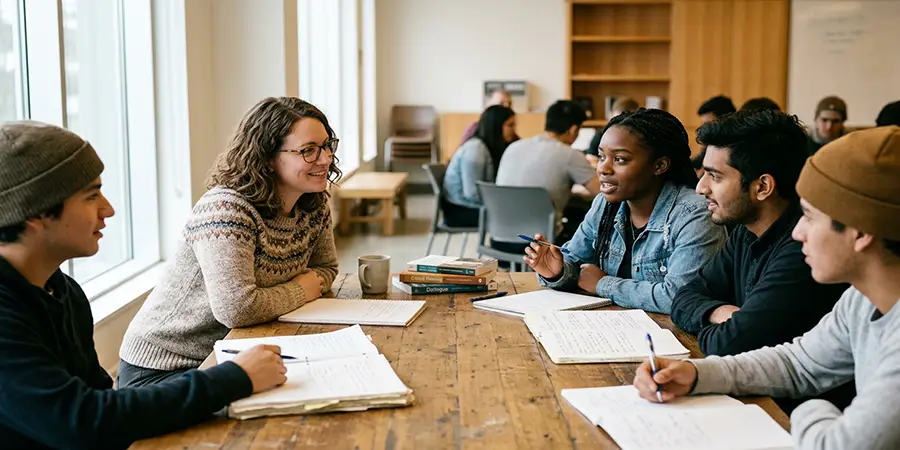
Building Soft Skills Through Online Learning
Online education degrees can offer aspiring educators opportunities to develop transferable skills through virtual discussions, collaborative assignments, independent study, and instructor feedback. However, these experiences are most valuable when students actively practice communication, empathy, adaptability, and self-management rather than simply completing course requirements. By approaching each activity as an opportunity to improve, future teachers can build habits that support effective teaching in different educational settings.
Communication: Learning to Listen Before Responding
Good teaching begins with communication, and effective communication involves more than explaining a lesson clearly. Teachers must listen to questions, recognize misunderstandings, give constructive feedback, and adjust their language to suit different learners.
Online learning provides several opportunities to practice these abilities. Discussion boards, group assignments, video meetings, and written feedback require students to express ideas clearly without relying entirely on face-to-face interaction.
A useful exercise is to summarize another person's contribution before responding. During a group discussion, for example, explain what you understood from a classmate's argument and ask a question if something remains unclear. This encourages active listening rather than simply waiting for an opportunity to speak.
This active listening practice for school staff offers useful techniques, including paraphrasing, asking clarifying questions, and acknowledging another person's feelings. These habits can help aspiring teachers communicate more thoughtfully with students, colleagues, and families.
Empathy: Understanding Different Learning Experiences
Students do not approach learning with identical abilities, experiences, confidence levels, or personal circumstances. An educator must recognize these differences without making assumptions about someone's motivation or potential.
Empathy helps teachers understand why a learner might struggle, hesitate to participate, or respond differently to an activity. Instead of immediately interpreting missed work as a lack of interest, an empathetic educator considers whether the student needs clearer instructions, additional support, or an alternative approach.
Future teachers can practice this skill through perspective-taking exercises. When reviewing a lesson, imagine how three different learners might experience it: someone who understands the material quickly, someone who needs additional explanation, and someone who lacks confidence speaking in groups. Identify what each learner might find challenging and how the activity could become more inclusive.
Online group discussions also provide opportunities to encounter different viewpoints. Listening without immediately judging or correcting others helps develop patience and respect, qualities that matter in diverse classrooms.
Adaptability: Responding When Plans Change
Even carefully prepared lessons do not always produce the expected results. A class may struggle with a concept, an activity may take longer than planned, or an explanation may fail to reach particular learners. Teachers must recognize these situations and adjust their approach.
Online education can introduce future educators to different instructional formats, including recorded lessons, live discussions, independent assignments, and collaborative activities. However, simply using these formats does not automatically develop adaptability.
A practical exercise is to prepare two versions of the same lesson. The first should explain a concept through direct instruction, while the second should use examples, discussion, or visual resources. Consider which learners might benefit from each approach and what adjustments would be necessary if students struggled.
After completing an assignment or presentation, identify one unexpected difficulty and write down how you would respond differently next time. Repeated reflective practice helps develop flexibility without abandoning clear learning objectives.
Self-Management: Developing Consistency and Accountability
Teaching involves competing responsibilities, including lesson preparation, assessment, communication, administrative work, and student support. Educators need to organize their time and maintain professional responsibilities even when workloads increase.
Online study can provide a useful environment for developing self-management. Students must often organize independent work, meet deadlines, and maintain progress without daily classroom reminders.
Try using a weekly planning exercise. Divide larger assignments into smaller tasks, assign realistic completion dates, and review progress at the end of each week. Record unfinished responsibilities and identify what prevented their completion.
Another useful technique is time-blocking, which involves assigning specific periods to focused work while allowing time for breaks and unexpected tasks. These practices develop accountability and help future educators establish routines that can transfer into professional responsibilities.
Collaboration: Learning Through Different Perspectives
Teachers rarely work entirely independently. They coordinate with colleagues, share resources, discuss student progress, and contribute to decisions that affect the wider learning environment.
Online group projects offer a setting to practice collaboration. However, successful teamwork requires more than dividing assignments between participants. Members must communicate expectations, respect different working styles, manage disagreements, and take responsibility for shared outcomes.
For practice, organize a small group project in which each participant takes a defined role. Rotate responsibilities in subsequent activities so everyone experiences planning, coordinating, researching, and presenting.
When disagreements arise, focus on the shared objective rather than defending individual preferences. Ask questions, consider alternative suggestions, and agree on a practical way forward. These experiences help develop professional cooperation and constructive conflict resolution.
Reflective Practice: Turning Experience Into Improvement
One of the most important skills for an educator is the ability to evaluate personal performance honestly. Teaching involves continuous decisions, and even successful lessons can reveal opportunities for improvement.
Online courses provide assignments, discussion responses, presentations, and instructor feedback that can support this process. However, completing these activities is not enough. Students must actively examine what they learned, how they responded to challenges, and which behaviors need improvement.
After each significant assignment, use three questions: What worked well? What could have been handled differently? What specific action will I take next time?
For a more structured approach, maintain a reflection journal. Record feedback received from instructors and classmates, identify recurring observations, and set one measurable improvement goal. The British Council's resource on reflective practice provides further insight into using reflection to improve teaching approaches.
Why Online Learning Must Be Supported by Real Experience
Experiencing online education is different from deliberately developing the skills required to teach. Participating in virtual discussions may improve written communication, but it cannot fully reproduce the demands of managing a classroom, responding to student behavior, or communicating with families in person.
Online study also has limitations. Screen-based interaction can reduce opportunities to interpret nonverbal cues, build relationships naturally, and respond to unexpected classroom situations. Independent learning may also offer limited opportunities to practice collaboration unless courses actively encourage meaningful interaction.
Supervised classroom observations, teaching placements, internships, and microteaching exercises remain important. They allow aspiring teachers to apply their skills, receive professional guidance, and understand how their decisions affect actual learners.
Conclusion: Building Better Teaching Skills Beyond Graduation
Developing strong teaching skills is an ongoing process rather than an outcome guaranteed by earning a degree. Future educators should regularly practice listening, seek constructive feedback, participate in collaborative activities, and reflect on their responses to challenging situations.
Start with one skill that needs improvement, choose a practical exercise, and evaluate progress over time. As classroom experience grows, seek guidance from experienced teachers and use each opportunity to refine professional habits.
Online education can provide a valuable starting point, but meaningful development comes from applying what has been learned, accepting feedback, and practicing in real educational settings. The strongest teachers remain willing to learn, adapt, and improve throughout their careers.
About the Author
Faizan Ali is a content writer passionate about crafting high-quality articles that inform, engage, and provide real value for readers.