

Building a Culture of Safety Through Leadership
See also: Understanding LeadershipA safe workplace is frequently viewed through the lens of compliance, regulatory frameworks, and personal protective equipment. While physical safeguards are undeniably critical, the true foundation of an injury-free environment relies on something far less tangible: the soft skills of its leadership team.
Safety is not a checklist that can be passively managed; it is a dynamic culture that must be actively led. When supervisors and managers treat safety protocols merely as bureaucratic obligations, employees will inevitably do the same. Conversely, when leaders use high-level interpersonal skills to champion worker wellbeing, safety becomes an ingrained, collective habit. Building this culture requires managers to shift their focus from merely enforcing rules to fostering open communication, demonstrating genuine empathy, and maintaining acute situational awareness.
The Role of Psychological Safety in Physical Safety
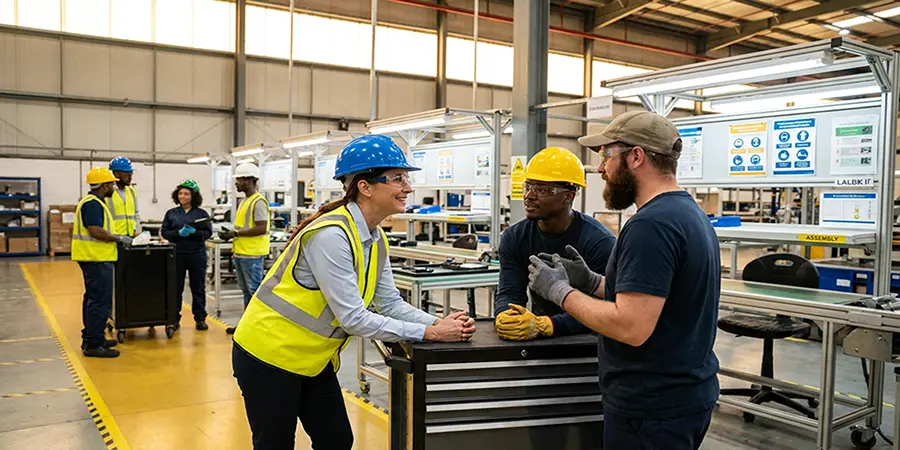
You cannot have physical safety without psychological safety. If an employee notices a frayed wire, a bypassed machine guard, or a colleague taking a dangerous shortcut, they must feel entirely comfortable reporting it. In many organizations, however, workers stay silent due to a fear of reprimand, social exclusion, or slowing down production.
Leaders must actively cultivate an environment where raising concerns is praised rather than punished. This requires a high degree of emotional intelligence. When a worker brings a hazard to your attention, your immediate reaction sets the tone for the entire team. Responding with frustration or annoyance will instantly shut down future reporting. Instead, leaders must practice active gratitude, explicitly thanking employees for their vigilance and demonstrating how the feedback will be used to improve conditions.
For more about how to do so, you may find it helpful to read our pages on Emotional Intelligence.
Active Observation vs. Passive Monitoring
Effective safety leadership demands acute observational skills. Passive monitoring involves sitting behind a desk and waiting for incident reports to arrive. Active observation requires walking the floor, engaging with the environment, and reading the subtle behavioral cues of your workforce.
A proactive leader does not just look for physical trip hazards or missing safety goggles; they look for the human factors that precede an accident. Are workers displaying signs of severe fatigue? Is a usually communicative team suddenly quiet and rushing through their tasks? Is there visible tension or conflict between team members operating heavy machinery? Recognizing these behavioral shifts allows a manager to intervene, perhaps by enforcing a break or reassigning a high-stress task, long before an actual incident occurs.
Top Tip: Conduct Engagement Walks
Replace traditional, clipboard-focused "safety audits" with engagement walks. Focus on conversing with employees about their tasks rather than strictly inspecting their compliance. Ask questions like, "What is the most challenging part of this process today?" to uncover hidden hazards.
Clear, Consistent, and Contextual Communication
Ambiguity is the enemy of safety. When safety protocols are buried in dense, highly technical manuals, they are rarely absorbed by the workforce. A leader's job is to translate complex safety requirements into clear, actionable, and contextual instructions.
Tailoring the Message
Communication must be adapted to the audience. A daily toolbox talk should not sound like a legal briefing. Use plain language, relate the safety protocols to the specific tasks of the day, and use real-world examples to illustrate the "why" behind the "what." If employees understand the logic behind a safety rule, they are significantly more likely to follow it when supervision is absent.
The Power of Listening
Communication is inherently a two-way street. Often, the individuals operating the machinery or executing the manual labor have the best insights into how a process can be made safer. Leaders must foster an environment where top-down directives are balanced with bottom-up feedback. By actively soliciting input from frontline workers, leaders not only improve site safety but also empower their team, increasing overall morale and job satisfaction.
When Prevention Fails: Handling the Aftermath
Even with the most robust safety programs, exceptional leadership, and comprehensive training, accidents can and do happen. When prevention fails, a leader's focus must immediately pivot from hazard mitigation to crisis management and comprehensive employee support.
Navigating the aftermath of a workplace accident requires immense empathy and a clear understanding of your team's legal and medical rights. The moments following an injury are chaotic, and injured employees are incredibly vulnerable. It is the leader's responsibility to ensure that immediate medical care is provided and that the incident is documented transparently and ethically.
Furthermore, leaders must advocate for their employees during the recovery process. This means ensuring that injured workers understand their options and are not pressured into returning to work prematurely. In complex situations, particularly those involving severe long-term injuries or disputed liability, workers may need to seek professional representation to protect their livelihoods. For instance, an employee may need to consult a Chicago workers compensation lawyer to navigate the complex bureaucratic hurdles of insurance claims and secure the necessary resources for a full recovery. A true safety culture supports workers not just before an accident, but fiercely defends their wellbeing and rights after one occurs.
Rebuilding Trust After an Incident
How an organization handles the weeks and months following a workplace accident permanently defines its safety culture. If leadership attempts to sweep the incident under the rug or hastily assigns blame to the injured party, trust will be irreparably broken. The workforce will become defensive, and future hazard reporting will plummet.
Instead, leaders must embrace accountability and transparency. Conduct a thorough, root-cause analysis of the incident and share the findings openly with the team. Discuss exactly what systemic failures allowed the accident to happen and outline the concrete, structural changes that will be implemented to ensure it never occurs again. By treating an accident as a systemic failure rather than a purely individual mistake, leaders reinforce a culture of continuous learning and mutual protection.
Conclusion
Building a culture of safety is a profound leadership challenge that extends far beyond the implementation of hard rules and regulatory compliance. It requires a dedicated commitment to developing and deploying core soft skills. By fostering psychological safety, practicing active observation, communicating clearly, and demonstrating unwavering support when accidents do occur, managers can transform their workplaces. Ultimately, safety is not merely a metric to be tracked; it is a fundamental reflection of how deeply an organization values and protects its people.
About the Author
Sammie Goodwin is a communication strategist and behavioral writer dedicated to helping individuals navigate high-stakes, unpredictable situations. Specializing in the intersection of emotional intelligence, conflict resolution, and personal resilience, they write for SkillsYouNeed to equip readers with the practical soft skills required to manage everything from sudden accidents to complex legal disputes.