


The Soft Skills That Separate Good Project Managers From Great Ones
See also: Effective Team-WorkingMost people associate project management with Gantt charts, budgets, and status reports.
But ask any experienced project manager what actually determines whether a project succeeds or fails, and the answer is almost always the same: people.
Technical knowledge matters; you need to understand scheduling, risk registers, and scope management. But the skills that make the real difference are the ones that help you get a room full of people with competing priorities to work toward a shared outcome. These are soft skills, and in project management, they are anything but soft.

Why Soft Skills Matter More in Project Management Than Most Professions
Project managers rarely have direct authority over the people they work with. Unlike a line manager who can assign tasks and conduct performance reviews, a project manager typically works across departments, pulling together teams who report to someone else. You cannot rely on hierarchy to get things done - you have to rely on influence, trust, and communication.
This is why soft skills are not just “nice to have” in project management. They are the mechanism through which everything else happens. A perfectly constructed project plan is worthless if you cannot get stakeholders to agree on scope, motivate a team through a difficult phase, or negotiate a realistic deadline with a sponsor who wants everything delivered yesterday.
Research from the Association for Project Management (APM) consistently shows that projects are more likely to fail due to poor communication, weak stakeholder engagement, or unclear leadership than due to technical planning errors. The tools and templates are freely available—the human element is where the real skill lies.
Communication: The Foundation of Everything
Effective communication in project management goes far beyond sending status updates. It means understanding what different audiences need to hear, when they need to hear it, and in what format.
A project sponsor wants a high-level summary: are we on track, what are the risks, and do you need a decision? A technical team wants specifics: what exactly needs to be built, by when, and what are the dependencies? Delivering the same message to both groups in the same way will frustrate everyone.
Good project communicators also know when to listen. Some of the most valuable information on a project comes from casual conversations: a developer mentioning that a particular feature is more complex than expected, or a stakeholder revealing in a corridor chat that their priorities have shifted. Active listening, reading between the lines, and asking the right follow-up questions are skills that take deliberate practice to develop.
Written communication matters too. Project documentation, from business cases to risk logs to lessons learned reports, needs to be clear, concise, and structured for the reader, not the writer. The ability to distil complex information into something that a non-specialist can understand and act on is a skill that distinguishes effective project managers from those who simply generate paperwork.
Leadership Without Authority
Leading a project team when you do not have formal management authority requires a different kind of leadership. You cannot simply direct people - you have to earn their engagement.
This starts with clarity of purpose. People contribute more willingly when they understand why their work matters and how it connects to a larger goal. A good project manager frames the project in terms that resonate with each team member’s own motivations and professional interests, not just in terms of milestones and deliverables.
It also requires adaptability. Different people respond to different leadership approaches. Some team members want detailed guidance and regular check-ins; others perform best when given autonomy and trusted to deliver. Recognising which approach each person needs, and adjusting your leadership style accordingly, is a hallmark of mature project leadership.
Perhaps most importantly, leading without authority means being willing to have difficult conversations. Raising a concern about quality before it becomes a defect, challenging an unrealistic timeline before it becomes a missed deadline, or addressing a team conflict before it derails collaboration - these all require courage and tact in equal measure.
Stakeholder Management: Understanding What People Really Want
Every project has stakeholders—people who are affected by the project’s outcome or who have influence over its direction. Managing stakeholders effectively is one of the most complex and rewarding soft skills in project management.
The starting point is understanding that stakeholders rarely have identical interests. A finance director cares about cost control. An operations manager cares about minimising disruption. An end user cares about whether the final product actually makes their job easier. A project manager who treats all stakeholders the same - or worse, ignores some of them - is setting the project up for resistance and rework.
Effective stakeholder management involves mapping who has influence, who is affected, and what their concerns are. It means investing time in building relationships before you need them, not scrambling to manage expectations after something has gone wrong. It requires empathy - genuinely understanding someone else’s perspective, even when it conflicts with your own priorities.
The best project managers treat stakeholder engagement as a continuous activity, not a box-ticking exercise at the start of a project. Regular, honest communication builds trust. Trust reduces friction. Reduced friction means faster decisions and fewer surprises.
Negotiation and Conflict Resolution
Projects are inherently full of competing demands. There is never enough time, budget, or resource to do everything that everyone wants. Negotiation - finding workable compromises without damaging relationships - is a daily reality for most project managers.
Good negotiators in project management focus on interests rather than positions. Instead of arguing about whether a deadline should be the 15th or the 30th, they explore why the deadline matters and what flexibility exists elsewhere. Often, the real issue is not the date itself but an underlying concern about quality, resource availability, or reputational risk.
Conflict resolution follows similar principles. When two team members disagree about an approach, a skilled project manager does not simply impose a decision. They create space for both perspectives to be heard, help the team identify the core issue, and guide them toward a resolution that everyone can support - even if it is not anyone’s first choice.
These skills do not develop overnight. They are built through experience, reflection, and often through structured learning. Many APM project management courses now integrate soft skills development alongside technical project management knowledge, recognising that the two are inseparable in practice.
Teamwork and Collaboration
Project teams are often temporary, cross-functional, and geographically dispersed. Building a cohesive team under these conditions requires deliberate effort.
It starts with creating psychological safety: an environment where people feel comfortable raising concerns, admitting mistakes, and offering ideas without fear of blame. Project managers set the tone for this through their own behaviour: how they respond to bad news, whether they acknowledge contributions, and whether they model the collaborative attitude they expect from others.
Practical steps matter too. Clear roles and responsibilities reduce ambiguity. Regular retrospectives create a feedback loop that helps the team improve. Celebrating small wins maintains momentum during long or difficult projects.
The strongest project teams are not necessarily the ones with the most talented individuals. They are the ones where communication flows freely, trust is high, and everyone understands how their work connects to the project’s overall objectives.
Developing Your Soft Skills
Unlike technical skills, which can be learned from a textbook, soft skills develop primarily through practice and feedback. However, there are ways to accelerate the process:
Seek feedback deliberately. After a difficult meeting or a stakeholder conversation that did not go as planned, ask a trusted colleague what you could have done differently. Most people never ask, and therefore never improve.
Observe others. Pay attention to how effective leaders and communicators operate. What do they do differently in meetings? How do they handle pushback? How do they build rapport quickly?
Reflect regularly. Keep a journal of project situations where soft skills made a difference - positively or negatively. Over time, patterns emerge that help you identify your strengths and development areas.
Invest in structured learning. Formal training in project management increasingly covers communication, leadership, teamwork, and stakeholder engagement as core competencies. These are not add-ons - they are central to what it means to manage a project well.
The technical side of project management can be learned relatively quickly. The soft skills take longer - but they are what ultimately determine whether you are managing a process or leading a project.
Further Reading from Skills You Need
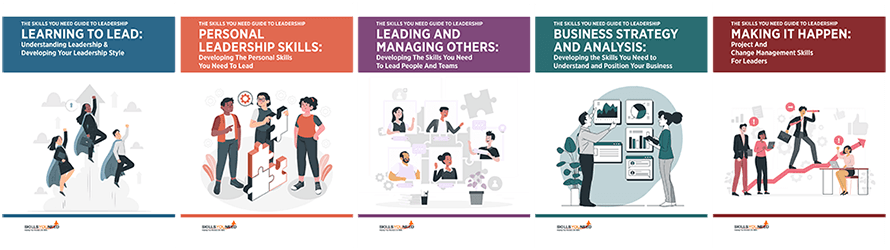
The Skills You Need Guide to Leadership eBooks
Learn more about the skills you need to be an effective leader.
Our eBooks are ideal for new and experienced leaders and are full of easy-to-follow practical information to help you to develop your leadership skills.
Conclusion
Great project management is not defined by tools, processes, or technical expertise alone, but by the ability to work effectively with people. Communication, leadership, stakeholder management, negotiation, and collaboration are the skills that enable projects to move forward smoothly, even in the face of complexity and competing priorities.
While technical knowledge provides the foundation, it is these soft skills that determine how well a project manager can influence outcomes, build trust, and guide teams to success. Developing these abilities takes time, reflection, and consistent practice, but the impact is significant.
Ultimately, the difference between a good project manager and a great one lies in how they engage with others—and how effectively they turn collective effort into meaningful results.
About the Author
Training ByteSize is a UK-based, APM-accredited training provider specialising in project management qualifications. With over 30 years' experience delivering online, virtual and classroom courses, they help professionals at every career stage build the skills and credentials to manage projects with confidence.