


Essential Team Skills You Need
for Successful App Development
See also: Effective Team-Working Skills
Building and delivering apps is not just about tools and tasks; it is about people. The chasm between a stalled project and a launch that users love usually lies in people skills such as collaboration, clear communication, positive problem-solving, cross-functional coordination, and the ability to work together. A team’s soft skills determine the timeline, quality of the final product, and thus your wallet, just as much as any technical decision.

Good Project Management: How to Keep Everything on Track
Every app needs a visionary who understands the big picture and keeps the team unified in pursuit of it. Project management turns chaos into order. The visionary keeps tasks organized, manages timelines and ensures that the communication between designers, developers and stakeholders does not encounter any hitches.
What good project managers ask depends on focusing on the right questions.
They foresee issues before they even arise.
They prioritize well and have a handle on realistic deadlines, not estimated ones.
Having a strategic vision is the trait that, above all others, will ensure your dream team of game developers complete a released title on deadline and within budget. Project management holds the whole process together.
Shared Vision & Collaborative Leadership
When working together, winning teams gel. Strong leadership is not about maintaining a death grip on your team and associated performance tasks; it's about aligning people, setting priorities with clarity, and removing obstacles. Leaders who listen, ask the right questions, and translate business goals into possible outcomes establish psychological safety, a space in which people take risks to share ideas, make mistakes, and learn quickly.
What this looks like day-to-day:
Regular aligning sessions that focus on outcomes, free from busy work.
Transparency in prioritizing, so that effort is going toward the features that actually matter.
A feedback culture in which issues are raised early and resolved together.
Empathy & Design Thinking
Empathy creates a great product experience that involves understanding what people want and how they feel. Designers who differentiate between collaboration skills - effective listening, lightweight user research, design-added cross-functionality – work together in the transformation of nebulous ideas into an effective end product. Empathy reduces rework as decisions are clearer and swifter when teams know and understand their users and each other.
Cross-Functional Problem-Solving
Apps today draw upon many specializations, but success is determined by how those specializations come together. Cross-functional collaboration is a skill and requires common vocabularies, respect for each other’s constraints, and joint problem-solving. When designers, developers, quality assurance, and product people collaborate in tackling trade-offs, the team ships faster and with fewer surprises.
Tactics that help:
Quick pairing on difficult things.
Agreed-upon acceptance criteria that ensure everyone knows what “done” looks like.
Cross-team checkpoints before big integrations.
Clear Communication & Feedback Loops
Communication is about more than messages – it is also about clarity and timing, and listening. The teams that can use clear assertions, ask clarifying questions, and document decisions avoid rehashing arguments over and over again. Just as critical is feedback, which should be constructive, timely, and results-oriented, not personality-based.
Practical habits:
Short daily syncs and quick notes for blockers.
Asynchronous updates for distributed teams.
Frequent retrospectives that are followed up by an effective change.
Quality Mindset & User Advocacy
Quality is not one role’s responsibility; it is a team mindset. The more people think like a user, the better the product will be. Encouraging individuals to test their ideas early, report the problems they are experiencing as clearly as possible, and prioritizing getting them fixed before release helps everyone save money by reducing the risk of costly surprises in the field.
Operational Coordination & Reliability Planning
Creating a stable and scalable app requires a combination of technical expertise and coordination. It is a plan for effective rollback, monitoring, and incident response that all need calm communication, rehearsed processes, and shared ownership. Teams that organize themselves properly minimize downtime and user irritation.
Market Awareness & Customer Insight
If you want to build something useful for people, then you must listen to real users and the market. Product teams that incorporate customer feedback into their planning process and can articulate that feedback into prioritized work deliver products that people use. A soft skill is market insight: curiosity, synthesis, and the confidence to argue for the user without becoming defensive.
The Cost Connection: How Soft Skills Impact the Budget
If you ask the question “how much does it cost to develop an app?”, here is some common sense: talented communicative developers are more expensive at first, but they save your money in the end. Effective collaboration reduces feedback delays, minimizes rework, increases predictability, and helps the product get to market sooner with fewer expensive defects. In other words, investing in people who collaborate, communicate well and solve problems together is an investment in quality and cost control.
Further Reading from Skills You Need
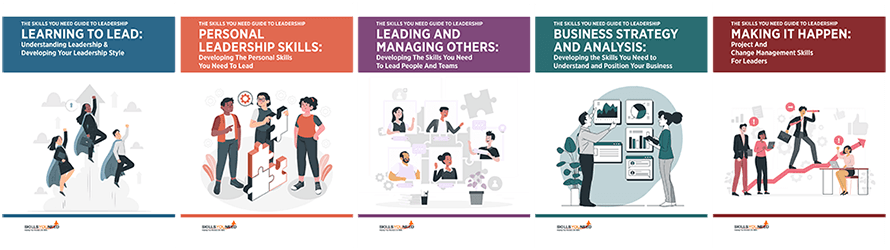
The Skills You Need Guide to Leadership eBooks
Learn more about the skills you need to be an effective leader.
Our eBooks are ideal for new and experienced leaders and are full of easy-to-follow practical information to help you to develop your leadership skills.
Final Thoughts
Technical ability builds features, but soft skills are what make the team that ships them work well together. Emphasize teamwork, empathy, clear communication, and collaborative problem-solving, and your app will be more reliable, easier to evolve, and more likely to please users and still not be beyond your means.