


The Psychology of Online Privacy:
Why We Care About Being Invisible
See also: Internet Browsing and Privacy
The invention of the Internet has given humanity unprecedented freedom in communication and the dissemination of information. In the early stages of its development, complete anonymity ensured the freedom to speak, pursue new romantic relationships, discreetly search for any information, and so on. However, with each passing year, this freedom waned.
User identification tools became increasingly sophisticated, making every user's online activity susceptible to surveillance and analysis. Still, the need for online privacy is so strong among users that developers have found new ways to ensure it.
In this article, we will discuss the positive psychological aspects of online privacy and show how it can be achieved despite the most advanced digital surveillance systems.
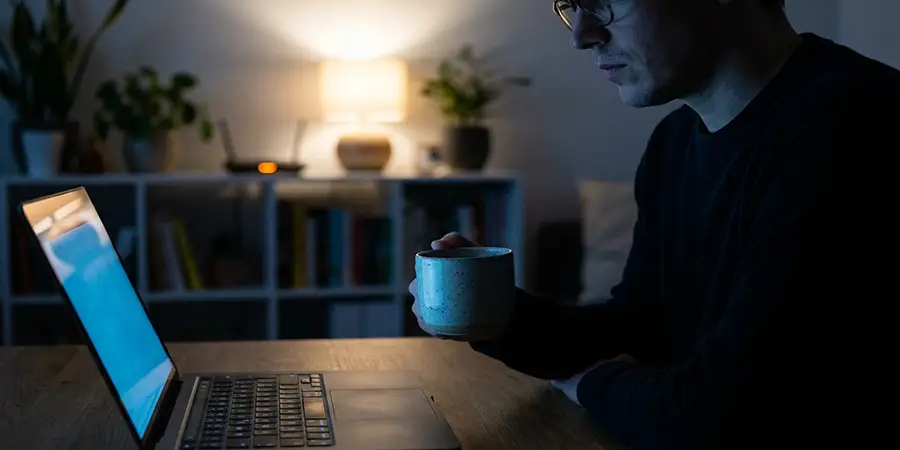
Psychological Reasons for Being Invisible Online
It would be a mistake to reduce the diverse motivations for users to remain anonymous to just a few. Everyone has hopes, fears, or simply rational reasons for concealing identity. However, several of the most common ones cited by users can be identified.
Breaking Free from Habitual Social Roles
Every person performs certain functions in society, which develop into specific behavioral patterns called social roles. Still, a person cannot be reduced to just a social role; they are much more than that. However, they often cannot act in accordance with their personal needs due to fear of exposure.
For example, consider a high-ranking official, a police officer, or a teacher. Each of us has expectations of what they should ideally be. But what if one of them is lonely and wants to find a partner on a dating website? Someone perhaps wants to relieve stress at an online casino but is afraid of being exposed. Others may want to test themselves in a new role, e.g., as a blogger, while remaining anonymous. In each of these cases, online invisibility allows a person to realize certain needs without compromising one's core social role.
Overcoming Psychological Complexes
Problems in the early stages of socialization can lead to low self-esteem. Lack of warmth and encouragement from parents, teasing from peers, poor school grades, and many other negative factors can create barriers to communicating with others. Anonymity allows you to disassociate from your traditional self-image. A person creates an ideal image of themselves and reveals completely different sides of their personalities.
A Sense of Security
Being invisible online provides a sense of security when performing a variety of actions. For example, users can make purchases they'd prefer to keep private without any worries. Similarly, citizens of authoritarian states can access information from opposition sources without fear of political persecution. By eliminating fear when acting online, people relieve the unnecessary stress that permeates their offline lives.
Freedom from Restrictions
When engaging in various activities online, users face numerous restrictions. Every social media platform, marketplace, forum, etc. can significantly limit users' freedom. For example, this may include restrictions on maintaining multiple profiles, sending mass messages, commenting on certain topics, and so on. If a user violates these rules while revealing their true identity, they at least lose the right to use the platform's services. If they do so incognito, they will not suffer any significant losses.
Restoring Online Invisibility
The desire to reveal users' identities is common among a wide variety of actors. E-commerce website owners, advertisers, fraudsters, security services, private investigators, and many other individual, government, or corporate actors may be interested in deanonymizing users. To avoid their persistent interest in the identity of an anonymous user, various means can be used:
Advanced anti-detection tools such as Linken Sphere. Using innovative browsers enables invisibility in situations where standard browsers reveal technically sensitive personal information about users. Such browsers are widely used in multi-accounting, crypto trading, dating, betting, e-commerce, affiliate marketing, and other industries.
Face replacement in photos via neural networks. If you run any kind of online business, are engaged in professional activities, participate in forum discussions, etc., the visual component of such communication is vital. Other users want to see that they are communicating with a real person, not a bot. So, how can you maintain privacy in such a situation? Replacing your own face with a neurally generated image will allow you to remain visible and invisible simultaneously.
Decentralized social media. DeSoc provides users with significantly greater privacy and anonymity thanks to multiple nodes that participate in data management. This makes tracking or censoring user activity difficult, and each person gains greater independence in managing information.
The Bottom Line
Online privacy fulfills a fundamental human psychological need for free and secure communication. When respected, users' capabilities are enhanced, allowing them to create various digital personas, expand their businesses, advertise their services anonymously, and so on. Thus, invisibility is essential for fostering creativity and exploring new forms of online interaction. And while modern digital fingerprint tracking systems strive to undermine user anonymity, methods for maintaining invisibility are also evolving. Thanks to them, people can navigate the digital landscape without fear, achieving significant goals.