

8 Stress-Management Habits for HR Teams Surviving the Monthly Payroll Deadline
See also: Workplace StressPayroll week can turn a calm HR office into a pressure cooker. The numbers have to be right, the deadline never moves, and everyone is waiting on you.
It shows up in the data too. Around 60% of small businesses report payroll problems during some, most, or all of their pay cycles.
That kind of recurring stress can wear you down if you let it run unchecked.
Yet, small habits can soften the worst of it. Below you'll find eight of them, simple things you can try this month and keep for the next one.

8 Essential Habits to Reduce Payroll Stress
-
Map your payroll month before the pressure builds
A lot of payroll stress comes from surprises, and most surprises can be avoided if you can see the whole month laid out in front of you. Before the cycle starts, block out the key dates: data cutoffs, approval windows, the submission deadline, and the pay date itself.
When you know what each week demands, you can pace yourself instead of sprinting at the end.
Here is a simple way to break a typical payroll month into stages:
Week Main focus What you can do Week 1 Collect data Chase timesheets and changes early Week 2 Verify Cross-check hours, leave, and new hires Week 3 Process Run figures, fix flags, get approvals Week 4 Pay and review Release pay, then note what went wrong
Keep a copy where your team can see it, and update it as the month moves.
-
Protect deep focus with short, timed work blocks
Payroll work needs accuracy, and accuracy slips fast when you are jumping between emails, chat pings, and spreadsheets every two minutes. If you can carve out short, protected blocks of time, the numbers tend to come out cleaner.
You don't need a perfect system, but a way to tell the world you are heads-down for a while.
A few things you can try:
- Work in 45-minute blocks, then take five minutes away from the screen.
- Mute notifications during verification, since that is where small errors like to hide.
- Batch your replies into one or two windows a day rather than reacting all day.
- Tell your team your focus hours so they know when to wait.
Even one protected block a day can make payroll week feel a lot less frantic.
-
Build one pre-payroll checklist your whole team trusts
Memory is a shaky foundation when money is on the line. A written checklist takes the mental load off your shoulders and gives everyone the same picture of what "done" looks like. If you build it once and refine it each month, it can quietly save you from the errors that cause the most panic.
Your checklist could include:
- New starters and leavers confirmed and entered.
- Overtime, bonuses, and expenses approved by the right person.
- Tax codes and deductions reviewed for changes.
- Bank details checked for anyone newly added.
- A final figure signed off before submission.
Tick each item off as you go. The relief of a checked box is real, and it can stop you lying awake wondering if you forgot something.
-
Lean on good tools instead of memory and luck
Trust in pay accuracy takes time to build, and it can be fragile. Fewer than 20% of employees fully trust automated systems to calculate their pay, which tells you something useful: the goal isn't to hand everything to software, but to let good tools handle the repetitive math so you can save your attention for the judgment calls.
A reliable platform can flag anomalies, keep your records in one place, and cut the manual data entry that causes most slip-ups.
For teams running pay across several countries, an affordable global payroll provider like One Global Payroll can pull everything into a single process, which takes real pressure off when deadlines stack up across time zones.
Whatever you choose, let the tool carry the load it is good at, and keep your energy for the parts that need a human.
-
Take Regular Microbreaks During Payroll Week
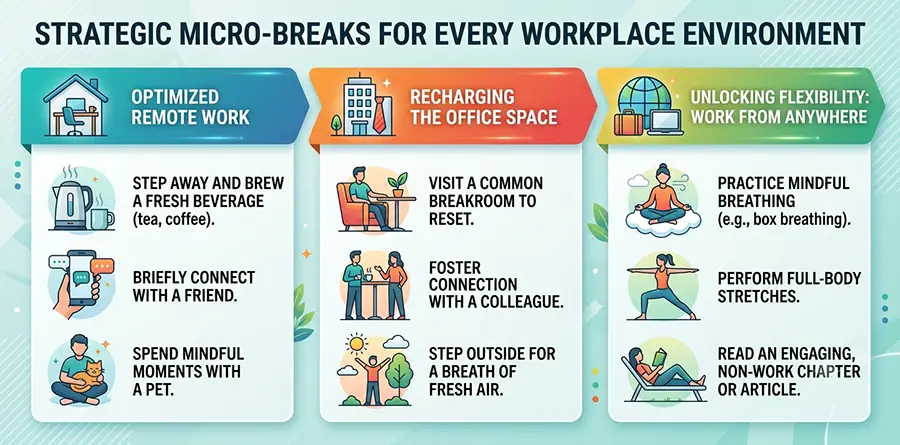
The effect of taking regular microbreaks is bigger than most people expect. Short pauses give your brain a chance to reset, which lowers the buildup of tension that makes you sloppy and short-tempered by Friday. The trick is taking them on purpose, before you feel overwhelmed, rather than only when you hit a wall.
Here are a few that fit into a busy day. You can stand up and stretch for sixty seconds between spreadsheet tabs. You can step outside for fresh air after finishing a tricky section. You can look away from the screen and focus on something far across the room to rest your eyes. And you can keep water nearby, so a refill becomes a natural reason to move.
None of these take long. Done a few times a day, they can keep your focus steady right through the deadline.
-
Set firm boundaries around after-hours payroll messages and pings
Payroll has a way of bleeding into your evenings, and once it does, the stress never fully switches off. If you can draw a clear line around when you respond, you protect your rest, which is the thing that keeps you sharp during crunch time. Setting boundaries can feel awkward at first, yet they tend to earn respect once people see you holding them.
Some boundaries worth setting:
- Decide a cutoff time after which non-urgent messages wait until morning.
- Agree with your team on what truly counts as urgent.
- Turn off work notifications on your phone once the day ends.
Your calm in the morning often depends on the rest you allowed yourself the night before.
-
Talk openly with your team before the numbers pile up
Silence makes payroll harder. When questions go unanswered, small issues grow into last-minute fires that land on your desk at the worst possible moment.
Communication gaps are common too: about 67% of employees say they struggle to get timely answers to workplace questions, and payroll queries sit right in the middle of that.
A quick check-in early in the cycle can surface problems while there is still time to fix them. You can ask managers to confirm changes by a set date. You can let employees know where to send pay questions so they don't clog your inbox. And you can share the timeline so nobody is left guessing. A little openness now can spare you a stressful scramble later.
-
Reset fully once the payroll run finally wraps up
The deadline passing does not mean the stress leaves your body on its own. Business and professional services teams report burnout rates roughly 22% higher than lower-pressure sectors, and skipping recovery is a big reason it stacks up month after month. If you treat the end of the run as a real finish line, you give yourself a chance to recharge before the next one.
So once pay is out, take a moment to mark it. You can close the laptop a little early, take a proper lunch away from your desk, or do a short, blame-free review of what tripped you up. Small resets like these can stop one hard month rolling straight into the next.
Final thoughts: Carrying less weight into next month's payroll run
Payroll deadlines will always carry some pressure, and that part may never fully go away. What can change is how much of it you absorb. When you map the month early, protect your focus, lean on a checklist and the right tools, and give yourself real breaks, the deadline can start to feel like a routine instead of a recurring emergency.
Select one or two of these habits to begin with, since trying all eight at once can backfire. Your calmer payroll weeks can start with a single small change you make today.

About the Author
Ben Hadley doesn’t buy into “the way it’s always been done.” He’s spent his career challenging hiring norms and rethinking how remote work should feel. At Remployee, he helps create honest tools and opportunities for people tired of the gig economy’s empty promises.