

Legal Guidance After an Accident: The Soft Skills That Make a Difference
See also: Communication SkillsNobody plans for an accident. One moment you're going about your day, and the next you're dealing with injuries, insurance calls, and decisions you never expected to face. In that fog of stress, the choices you make early on can shape how the entire recovery plays out. But what rarely gets discussed is the set of personal skills you need to actually use those well.
So, before diving into directories and hotlines, it's worth asking the harder questions. How do you make sound decisions under pressure? How do you separate good advice from bad? These are soft skills, and they matter far more than most people realize during the legal process that follows an accident.
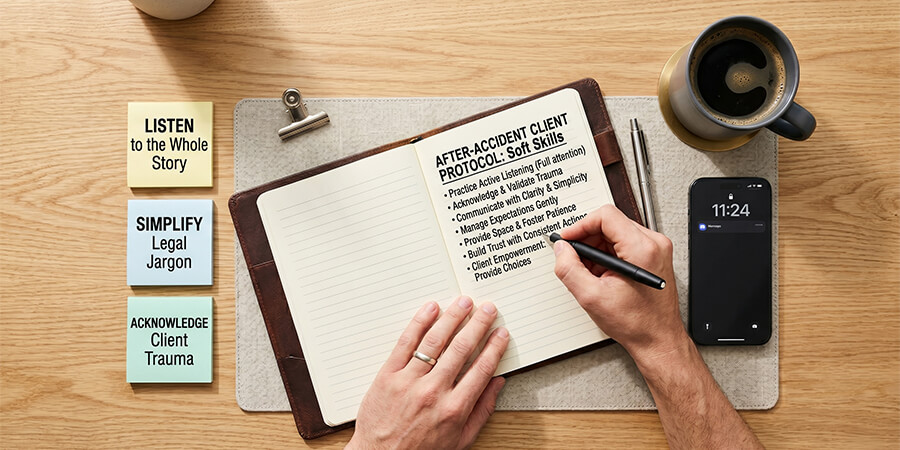
Making Decisions When Your Head Isn't Clear
After an accident, stress hormones narrow your focus, pain drains your concentration, and urgency pushes you toward snap judgments. Insurance companies know this, and so do less scrupulous firms that pressure victims into signing agreements before they've had time to think. Most advice for accident victims focuses on where to get help. Many individuals begin by choosing to access this legal resource, which allows them to explore structured guidance and connect with experienced professionals.
The first skill worth developing is the ability to slow down. Very few choices after an accident are truly time-sensitive in the way they are presented. You almost always have more time than you think. Recognizing artificial urgency as a tactic is half the battle.
A practical approach is to sort decisions into three buckets:
- What needs to happen today (medical attention, a police report)
- What can wait a few days (choosing legal representation)
- What decisions or steps can wait weeks (settling a claim)
Writing these down gives your stressed brain a structure to lean on.
Tip: The 24-Hour Rule
If someone pressures you to sign something, tell them you need 24 hours. Any legitimate professional will respect that. If they don't, that tells you something about whether they have your best interests at heart.
Evaluating Sources: Not All Advice Is Equal
Once you start looking for guidance, you'll find no shortage of it: legal aid organizations, personal injury firms, government websites, and online forums. The trouble is not finding information but figuring out which of it deserves your trust.
Start by asking one question about every source: What does this person or organization gain by giving me this advice? A government-funded legal aid center has different motivations from a law firm running ads. Understanding those incentives helps you weigh guidance more carefully.
When assessing online resources, watch for these signals:
- Specificity over vagueness. Reliable sources cite actual laws or procedures. Vague reassurances like "you deserve compensation" without explaining the process are often marketing dressed up as education.
- Date and jurisdiction. An article from three years ago about a different country's system may not apply to you. Check when it was published and whether it covers your region.
- Separation of information and sales. Educational content that gradually turns into a pitch for a specific firm should be read with that context in mind.
Cross-referencing helps, too. If you read something on one website, look for the same claim on two or three others from different types of organizations. When multiple independent sources agree, you can feel reasonably confident.
Self-Advocacy: Speaking Up in Unfamiliar Territory
Perhaps the most underrated post-accident skill is self-advocacy: clearly expressing your needs and asking questions when you don't understand something. Many people stay quiet during consultations because they worry about looking foolish, nodding along with jargon, and leaving more confused than when they walked in.
Before any meeting or phone call, write down your three most important questions. A short list keeps you focused and makes it harder to leave without answers. If someone uses a term you don't recognize, ask them to explain it in plain language. You are not being difficult; you are being thorough.
Self-advocacy also means being honest about what you don't know. Pretending to understand can lead to agreeing to terms that work against you. It takes courage to say, "I need you to go over that again," but it's the kind of courage that pays off.
Questions Worth Asking in Any Legal Consultation
- What are the possible outcomes, and how likely is each one?
- What will this cost me, and when?
- What is your experience with similar situations?
- What timeline should I expect?
- What do you need from me, and by when?
Communicating Clearly Under Stress
After an accident, you will need to explain what happened multiple times: to medical professionals, insurance representatives, and legal experts. Each narration matters, because inconsistencies, even innocent ones caused by stress, can be used against you later.
As soon as you are able after the incident, write down what happened in chronological order: what you saw, heard, and felt, along with the time and location. This record becomes your anchor, keeping your story consistent because you documented it, not because you rehearsed it.
When speaking with professionals, stick to facts rather than interpretations. "The other driver ran a red light" is a claim you'd need to support. "The collision occurred on my left side as I travelled through the intersection" is a factual description. Expressing yourself factually makes your account more credible.
Emotional Regulation: The Skill Nobody Mentions
Fear, anger, and frustration are not weaknesses; they are natural responses to a distressing experience. But left unmanaged, they drive poor decisions. Emotional regulation means recognizing when your feelings are steering a choice and pausing before you act. If your first instinct after reading a letter from an insurance company is to fire off an angry reply, that's your signal to wait. Don't send it until the next day.
Support groups and advocacy networks, whether local or online, can help here. People who have been through similar experiences offer perspectives that are hard to get elsewhere: which battles are worth fighting and which frustrations are normal.
Final Thoughts: Putting It All Together
These skills feed into each other. Better source evaluation leads to better decisions. Stronger self-advocacy improves your communication with professionals. And none of these are talents you either have or you don't; they are skills that can be practiced and improved. The legal processes that follow an accident can feel designed to keep you off balance, but the same soft skills that help people succeed in workplaces and everyday negotiations are the ones that matter most when the stakes are personal.