


9 Steps to Take After a Road Accident
See also: Decision Making and Problem SolvingIn a heavily motorized world with over 1.6 billion cars actively on the roads, accidents are an unfortunate fact of modern life. According to global health statistics, over a million people lose their lives each year to road incidents, making vehicle safety a subject we must never treat lightly.
However, even when an accident involves no serious injuries, it remains a high-stress, deeply jarring scenario that will immediately test your ability to stay calm, communicate clearly, and make rapid, logical decisions. It is a terrifying moment that teaches you the absolute power of psychological preparedness.
Knowing exactly which steps to take in the chaotic aftermath can save you immense administrative headaches, protect you from unfair legal blame, and prevent unnecessary financial expenses later down the road. Therefore, this comprehensive guide outlines the vital steps—and the specific cognitive soft skills required to execute them—to take following a road accident.
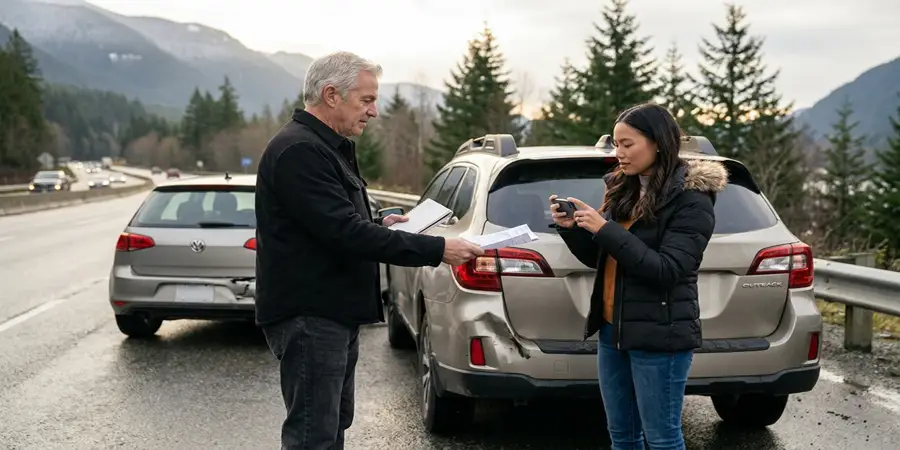
Essential Steps to Follow After a Collision
Managing the immediate aftermath of a crash requires both logistical focus and strong emotional regulation. Follow this sequential guide to ensure your physical safety and actively protect your legal rights.
-
Check if Everyone Is Alright
The absolute first rule of surviving an accident of any kind is evaluating your own physical condition. If you are not able to move safely, think clearly, or use your senses without severe pain, you are in no shape to help anyone else.
If you are physically able to do so, carefully check on the other occupants of your vehicle. Pay extraordinary attention to vulnerable passengers, such as older people, pregnant women, infants, or toddlers. Next, check on the passengers of the other vehicle involved—even if their driving directly caused the accident.
If anyone is seriously injured, the sole priority instantly becomes securing medical assistance. Nothing else matters in that critical moment. This is a profound test of your ability to prioritize under pressure, and acting decisively can literally save a life.
-
Assess the Immediate Situation
The next phase will require incredibly strong observation and decision-making skills.
First, immediately ensure your hazard lights are activated. Depending on exactly where your vehicles have come to a stop, oncoming drivers might not see the wreckage in time to brake, leading to dangerous secondary collisions.
Gather yourself and calmly assess the environment. Your brain is still struggling to grasp the sudden shock of the impact, and high levels of adrenaline are coursing through your veins, but you must actively force yourself to stay calm and think objectively.
If the cars are relatively undamaged, drivable, and no fluids are visibly spilling onto the road, move them completely out of the active flow of traffic. Once you are parked in a safe, designated location on the shoulder or side street, turn off the engines.
-
Call the Authorities
Every local jurisdiction has slightly different legal rules regarding whether you must contact the police for very minor fender benders. However, if there are any injuries, if the vehicles are badly damaged, or if there is substantial public property damage, you must officially report the accident to law enforcement.
Any situation involving serious injuries or trapped passengers requires immediately dialing the national emergency number. Providing accurate information to dispatchers requires strong spatial orientation and communication skills—you must be able to clearly identify your exact location using cross streets, mile markers, or local landmarks, which can be remarkably difficult when you are in a state of shock.
-
Exchange Details and Gather Evidence
At this specific stage, you may begin to feel intense, overwhelming anger toward the driver who caused the accident, or heavy guilt if you were at fault. Your first biological instinct may be to start an emotionally loaded, aggressive argument with the other driver. You must suppress this urge; arguing will never lead to a productive outcome.
Instead, heavily lean on your communication skills and your ability to maintain composure under pressure. Calmly exchange insurance details, driver's license information, and contact numbers. Speak to any surrounding witnesses and ask for their contact details as well.
Use your smartphone to take comprehensive, wide-angle photos and videos of both vehicles, the surrounding road conditions, and any visible skid marks. Once your initial adrenaline surge wears off, the precise details of the crash will rapidly fade from your memory, so it is vital to document everything factually while the scene is fresh.
-
Report the Accident to Your Insurer
While specific car insurance policies vary, almost all of them legally require that you report a collision as soon as possible, regardless of who was ultimately at fault. Many providers enforce strict 24-hour reporting deadlines, and delaying this critical step could leave you entirely without financial coverage.
Fortunately, modern insurance companies make this process relatively seamless. Many providers offer dedicated mobile apps that allow you to upload your photos and report the exact details directly from the side of the road while you wait for a tow truck.
-
Have the Vehicle Safely Towed
If your car is fundamentally safe to drive, structurally sound, and you feel psychologically level-headed enough to get behind the wheel, you can carefully drive it yourself to a reputable repair shop. Otherwise, you must arrange to have the vehicle towed.
However, finding a reliable, affordable tow truck in an unfamiliar area while managing acute stress requires logistical planning skills. If you feel totally overwhelmed, do not hesitate to ask the responding police officers for assistance or recommendations. In many cases, your insurance provider will dispatch their preferred towing service, removing the logistical burden from your shoulders.
-
Seek a Medical Evaluation
Yes, even if the incident felt like a minor bump, you absolutely must get yourself thoroughly evaluated by a medical professional.
Immediately following the impact, the powerful effects of adrenaline can completely mask the pain of severe whiplash, soft tissue damage, or internal injuries. In the hours and days that follow, debilitating symptoms frequently emerge.
Visit an urgent care center or your primary doctor and explicitly tell them you were involved in a collision, even if you do not currently feel anything unusual. Crucially, document every medical visit and retain all receipts. These records form the foundational evidence if you need to build a formal injury claim later.
-
Find and Call Legal Representation
If you are highly confident in your ability to negotiate fiercely with corporate insurance adjusters and decipher complex legal liability documentation, you may not require an attorney. However, for most people, consulting a professional specializing in personal injury is the safest way to fully understand your options.
Car insurance claims are notoriously complex and require deep familiarity with local liability laws, which differ drastically by region. For instance, if you are injured due to someone else’s negligence in Atlanta, the comparative fault rules applied to your claim will be fundamentally different than if the incident occurred in New York or London. Partnering with a local professional ensures someone is actively advocating for your rights while you focus entirely on your physical recovery.
-
Process Your Emotions Constructively
Once the logistical chaos finally settles down, the psychological weight of the event will likely catch up with you. Anyone possessing a strong foundation of emotional intelligence will tell you that experiencing delayed shock is completely normal, but they will also advise you to monitor these feelings closely.
Pay strict attention to what you are feeling and analyze the root cause. It is entirely natural to experience a complex blend of anger, guilt, frustration, and driving anxiety. If you find yourself snapping at loved ones, take time to review strategies for dealing with aggression.
Car accidents are rarely intentional, personal attacks. Viewing them as such will only increase your anxiety and lead to psychological isolation. Acknowledge your trauma, express your emotions safely, and consider speaking with a counselor if the anxiety begins to impair your daily life.
Conclusion
Dealing with the frightening aftermath of a car accident requires a robust combination of calmness, objective observation, clear communication, decisive action, and emotional regulation. These are highly valuable life skills that you should actively cultivate, with the sincere hope that you will never actually have to apply them to a crash.
If the worst does happen, you will be immensely grateful that you invested the time to build this psychological resilience. And even if you never face a collision, these exact same soft skills will continuously prove their immense value in countless other high-stakes areas of your life.
About the Author
David Kessler is a former insurance claims adjuster and road safety advocate. He specializes in post-accident recovery, risk management, and the practical application of soft skills in high-stress emergencies, helping drivers navigate both the logistical and emotional hurdles of unexpected collisions.