

Crisis Management: What to Do If Hit by an Uninsured Driver
See also: Effective Decision MakingCar accidents are inherently shocking events. The sudden, violent disruption of a collision, the immediate concern for the well-being of your passengers, and the subsequent flood of adrenaline all combine to create a highly volatile environment.
This initial trauma is often compounded exponentially when the dust settles and you discover a disheartening fact: the at-fault driver does not have auto insurance. According to industry studies, roughly one in eight drivers operates a vehicle without valid insurance coverage.
For victims left in the wake of an uninsured collision, the traditional path of exchanging insurance details and smoothly filing a third-party claim suddenly disappears. Navigating this high-pressure scenario is a true test of your life skills. It requires a cool head, methodical action, and a solid grasp of your personal boundaries and communication techniques.
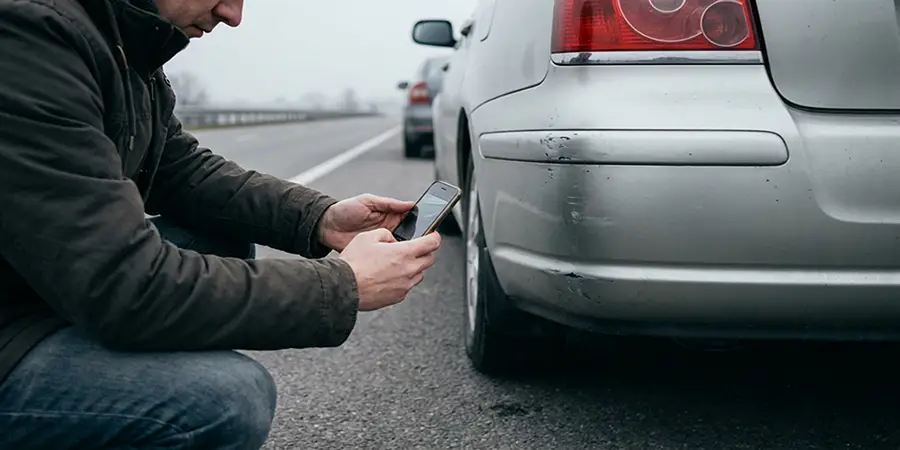
Managing Cognitive Load Under Pressure
When a collision occurs, your body undergoes a massive physiological response. Adrenaline and cortisol flood your system, initiating a primitive "fight, flight, or freeze" reaction. In this heightened state of arousal, your cognitive load capacity shrinks dramatically. It becomes intensely difficult to process new information, absorb external stimuli, or make rational choices.
Mastering the soft skill of emotional regulation is your absolute first objective. Before rapidly exiting your vehicle or engaging with the other driver, take five seconds to perform a grounding breathing exercise: inhale deeply for four seconds, hold for four, and exhale slowly. This simple biological intervention signals to your nervous system that you are not in mortal danger, restoring vital access to the prefrontal cortex—the area of your brain responsible for complex decision-making and problem-solving. By deliberately slowing down your internal tempo, you prevent panic from dictating your subsequent actions and set a foundation of calm control.
Prioritizing Physical Safety and Methodical Action
The absolute first step following any vehicular collision is to objectively assess the physical safety of everyone involved. Because of the aforementioned adrenaline surge, you or your passengers may feel entirely unharmed in the immediate aftermath, only to develop severe, debilitating symptoms hours or even days later.
Applying strong situational awareness is critical here. Evaluate the immediate environment logically. Is the vehicle leaking fluids? Are you sitting in a hazardous blind spot on a busy motorway? Make a calculated, methodical decision to move to the shoulder if the vehicles are operational and it is strictly safe to do so. Delaying medical care or remaining in a hazardous location not only jeopardises your physical health but compounds the overall crisis. When a medical professional evaluates you immediately, it creates an official, timestamped record linking any injuries directly to the accident, which is a vital step in maintaining objective documentation.
Assertive Communication and De-Escalating Conflict
When an at-fault driver knows they are uninsured, their behavior at the scene can become highly unpredictable. Operating a vehicle without insurance is a serious offence in most regions, and the offending driver will likely panic. They might attempt to flee, become aggressively defensive, or desperately plead with you to keep the authorities out of it by offering to pay for damages out of pocket.
This is where your interpersonal communication skills are put to the ultimate test. It is essential to maintain your composure and proactively de-escalate the situation. Speak in a calm, steady, and neutral voice. Use firm assertiveness if they are reluctant to share their personal details. State clearly: "I understand you are stressed, but we must follow standard safety procedures and wait for the authorities to arrive."
Crucially, you must rigorously monitor your own verbal output. Do not apologise or admit any degree of fault at the scene, even out of a misplaced sense of social politeness. While saying "I am sorry this happened" might seem like an empathetic, human gesture, it can be easily twisted later to assign you partial liability. Stick strictly to exchanging factual information and maintaining a professional boundary.
For more about how to do so, you may find it helpful to read our page on Emotional Intelligence.
The Skill of Meticulous Documentation
While waiting for law enforcement to arrive, you must mentally shift from a state of shock to one of active, objective data collection. In cases involving uninsured drivers, the burden of proof often falls heavily on the victim to demonstrate exactly how the accident occurred. This requires sharp observation and meticulous organizational habits.
Use your smartphone as a dedicated data-gathering tool rather than a communication device. Cultivate a forensic mindset by gathering the following evidence:
Wide-Angle Photography: Capture the entire intersection or roadway, making sure to include traffic signs, skid marks, lighting, and current weather conditions.
Close-Up Damage: Take specific, high-resolution pictures of the damage to all vehicles involved, noting the position of the cars relative to each other.
License Plate Details: Securely photograph the at-fault driver’s license plate immediately. If the driver panics and attempts a hit-and-run, this is your strongest asset for tracking them down.
Eyewitness Information: Politely approach bystanders and ask for their contact details. Gathering third-party perspectives is an excellent demonstration of proactive problem solving.
Navigating Jurisdictional Realities and Insurance Frameworks
It is important to acknowledge that insurance requirements, legal protocols, and specific compensation rules vary wildly between countries and jurisdictions. What is standard operating procedure in one region may be completely inapplicable in another.
Because of this inherent variability, the transferable skill you must employ is the ability to adapt to complex bureaucratic systems. Do not assume you are left entirely without recourse simply because the other party broke the law. Many auto insurance policies include Uninsured Motorist (UM) or Underinsured Motorist (UIM) coverage. This coverage is specifically designed to act as a financial substitute for the insurance the at-fault driver should have rightfully possessed.
When engaging with your own insurance provider, treat the interaction as a formal business negotiation rather than a casual conversation. Insurance adjusters are corporate representatives trained to evaluate claims critically. Provide them with the police report, your medical records, and your photographic evidence in a highly organized, systematic format. By presenting yourself as a methodical, detail-oriented individual, you set a professional tone that commands respect.
Recognizing When to Delegate to Professionals
Knowing your own limitations is a hallmark of mature leadership and deep self-awareness. Navigating an uninsured motorist claim is rarely a straightforward, simple administrative task. If your injuries are severe, if liability is suddenly being actively disputed, or if you simply lack the cognitive bandwidth to manage the bureaucratic labyrinth alongside your daily responsibilities, you must recognise when to delegate to an expert.
A legal professional specialising in auto collisions understands the tactical maneuvers used within the insurance industry. They possess the capacity to handle aggressive back-and-forth communication, conduct independent investigations, and uncover hidden avenues of compensation. For example, the uninsured driver may have been operating a vehicle owned by a heavily insured third party, or a roadway defect may have contributed to the crash.
For those navigating severe collisions in specific jurisdictions, seeking focused local expertise—such as contacting San Luis Obispo car accident lawyers—ensures that regional laws regarding uninsured motorists are applied correctly to protect your financial recovery. An experienced attorney takes the administrative burden completely off your shoulders, allowing you to focus entirely on physical rehabilitation rather than fighting endless legal battles.
Managing the Psychological and Emotional Toll
Finally, it is vital to acknowledge the immense psychological impact of a car accident, particularly one fraught with the added financial anxiety of dealing with an uninsured, unpredictable driver. The aftermath is frequently characterised by overwhelming stress, disrupted sleep patterns, and a pervasive sense of vulnerability when returning to the road.
Actively practicing stress management is just as critical as managing the legal paperwork. Allow yourself dedicated time to process the shock and the disruption to your routine. Recovery is never solely physical; it requires deliberate mental and emotional processing to overcome the trauma.
If you find yourself struggling with persistent anxiety, hypervigilance, or intense fear, strongly consider speaking with a professional counselor. Rebuilding your mental resilience after a traumatic event is a gradual, iterative process. By actively deploying healthy coping strategies, setting strict boundaries around when you deal with accident-related paperwork, and leaning heavily on your personal support network, you can successfully navigate the crisis and emerge with greater emotional fortitude.
Conclusion
Discovering that the driver who hit you lacks insurance is undoubtedly a highly stressful and disheartening revelation. However, by deploying a robust toolkit of soft skills—ranging from emotional regulation and assertive communication to methodical organization and strategic delegation—you can effectively manage the crisis from start to finish.
Remember that legal requirements and insurance frameworks vary significantly between jurisdictions, making adaptability and rigorous documentation your greatest assets. By taking systematic, calm, and well-documented steps, you can protect your rights, mitigate the financial damage, and focus on the most important task of all: your personal recovery and long-term wellbeing.
About the Author
Sammie Goodwin is a communication strategist and behavioral writer dedicated to helping individuals navigate high-stakes, unpredictable situations. Specializing in the intersection of emotional intelligence, conflict resolution, and personal resilience, they write for SkillsYouNeed to equip readers with the practical soft skills required to manage everything from sudden accidents to complex legal disputes.