

The Skill of Informed Parenting: How to Choose Baby Formula
See also: Pregnancy and BabiesBecoming a parent sharpens you in ways you never expected. Suddenly, you are reading ingredient lists at midnight, comparing certifications across continents, and second-guessing advice from strangers on the internet. This is not just parenting - this is a crash course in critical thinking, research, and decision-making under pressure. Learning how to choose baby formula is one of the first real tests of those skills. And here's the thing: what you learn in this process transfers far beyond the baby aisle.
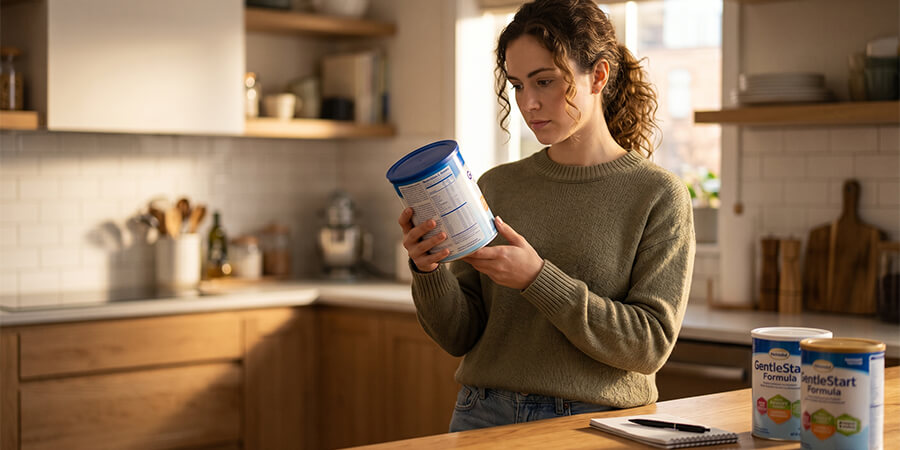
How to Choose Baby Formula: Weighing Multiple Factors
Most parents approach formula selection the same way they approach any overwhelming decision - they pick whatever looks trustworthy and move on. But that instinct, left unchecked, leads to choices based on packaging aesthetics or brand recognition rather than actual evidence.
Developing the skill of weighing multiple factors means resisting the urge to simplify. When you learn how to choose baby formula, you are really practicing a broader mental habit: holding several variables in mind at once without letting one dominate irrationally.
Here are the key factors parents should consciously weigh:
Your baby's age and developmental stage. Infant formulas are not interchangeable across stages. Stage 1 formulas serve newborns, while later stages adjust protein and carbohydrate profiles as babies grow.
Known sensitivities or conditions. Reflux, lactose sensitivity, and cow's milk protein allergy - each calls for a different formula category. Recognizing these signs early and cross-referencing them with formula types is genuine diagnostic thinking.
Ingredient sourcing and certifications. Where ingredients come from matters. Organic certifications, farming standards, and third-party testing are signals worth decoding, not ignoring.
Practical constraints. Budget, local availability, and preparation time are real factors. A formula that checks every nutritional box but is out of stock for weeks is not a realistic choice.
Thinking through all four simultaneously, without collapsing into "just pick one," is a skill. It gets easier with practice.
Reading Nutrition Labels: A Critical Thinking Exercise
If you want a practical workout for your analytical mind, spend twenty minutes reading nutrition labels on three different formula cans. You will quickly realize that numbers without context are nearly meaningless - and that context is something you have to build yourself.
This is where critical thinking becomes concrete. Reading nutrition labels is not just about spotting iron percentages or DHA content. It is about understanding what those numbers mean relative to your baby's needs, and whether the claims on the front of the can are actually supported by what's listed on the back.
A few mental habits worth building here:
Distinguish between ingredients and marketing claims. "Brain-supporting nutrients" on the front label must be traced back to specific ingredients on the back label. If you cannot find the connection, the claim is doing more work than the formula.
Compare on a per-100ml or per-serving basis. Raw numbers are only useful when standardized. Comparing protein content across brands requires a common unit; you are reading noise.
Look for what is missing, not just what is present. The absence of certain additives (corn syrup, artificial preservatives, unnecessary thickeners) can be as important as the presence of beneficial ones.
Question unfamiliar ingredients. You do not need a biochemistry degree. A quick search on a specific additive - combined with a healthy skepticism toward both alarm and reassurance - is enough to build a reasonable opinion.
This habit of evidence-based reading, once developed, applies everywhere: supplement labels, food packaging, even financial documents. Parenting is just an unusually high-stakes place to start practicing it.
European Baby Formula vs. US Formulas: Using Comparative Analysis
Comparative analysis is a foundational skill in almost every professional domain. Parents who research European baby formula versus domestic options are practicing exactly that - and often without realizing it.
The comparison is genuinely interesting. European baby formula is regulated under EU standards that prohibit certain sweeteners (such as corn syrup) and set stricter limits on pesticide residues. US formulas are regulated by the FDA, which sets its own nutritional minimums but uses different thresholds and ingredient policies.
Neither system is inherently superior - that framing misses the point. What matters is understanding each framework's priorities and whether they align with your own values and your baby's needs. That kind of structural comparison - looking at incentives, standards, and trade-offs rather than just outcomes - is sophisticated thinking that serves parents well in many other areas of life.
Specialty importers like organiclifestart.com carry the full range of European organic brands - HiPP, Holle, Kendamil, Jovie, and others - with US-based warehousing and direct shipping across the country. If you've decided which formula you want to try, it's one of the more straightforward places to order it.
Reading Organic Formula Reviews - Synthesizing Feedback Without Bias
Organic formula reviews are everywhere. Parent forums, Amazon listings, pediatric blogs, influencer posts - all of them contain opinions, and none of them are neutral. Learning to synthesize this feedback without absorbing its bias is one of the more underrated skills in modern parenting.
When reading organic formula reviews, apply these filters:
Identify the reviewer's context. A review from a parent of a premature infant with reflux tells you something very specific. It may or may not apply to your situation. Generalizability matters.
Weight volume over individual data points. One glowing review and one furious review cancel each other out. Look for patterns across dozens of responses, not outliers in either direction.
Separate emotional language from functional feedback. "My baby loves it" is data about palatability. "My baby's digestion improved within a week" is data about tolerability. Both are useful, but they answer different questions.
Notice who funds the review platform. Affiliate-driven review sites have structural incentives to favor certain products. That does not make them wrong, but it means their conclusions deserve extra scrutiny.
Treating organic formula reviews as raw material to be analyzed - rather than verdicts to be accepted - is an approach that makes you a better consumer of information in every domain.
Conclusion: Building Confidence in Your Decision
Here is what no one tells you clearly enough: the goal is not certain. When it comes to choosing organic milk for babies, there is no formula (pun intended) that eliminates doubt. The goal is calibrated confidence - a decision you can stand behind because you did the work, even knowing that new information could shift your thinking later.
That shift in framing - from "finding the right answer" to "making the best decision with available information" - is one of the most transferable soft skills parenting can teach.
To get there, try this:
Summarize what you know. Write down the three or four factors that matter most to you. Seeing them in writing clarifies your actual priorities.
Identify your remaining uncertainty. What would change your mind? Knowing this makes you more open to useful updates without being destabilized by noise.
Consult a professional, then decide for yourself. Pediatricians are partners, not oracles. Their input is one valuable data point in your decision, not the final word.
Revisit as your baby grows. Choosing organic milk for babies is not a one-time event. Nutritional needs change, and so should your formula assessment.
The parents who navigate this process best are not the ones with the most information. They are the ones who have learned to think clearly under uncertainty - and who carry that skill forward long after the formula stage is over.
About the Author
Sarah Jenkins is an early childhood educator and freelance writer who specializes in child development. She is passionate about empowering parents to make confident, evidence-based choices for their families. When she isn't writing, she enjoys baking sourdough bread and exploring nature trails with her two young children.