

Strengthening Soft Skills Through
Digital Storytelling and Multimedia Tools
See also: Storytelling in Business
In the modern globalized world, technical elements are second to the soft skills of communication, empathy, flexibility, and the ability to work in teams. Employers are increasingly demanding because they need people to lead with purpose, relate to groups, work in a constantly changing environment, and express their thoughts in an imaginative way.
So, what can professionals and students do to build these skills in a digital-first world?
Digital storytelling is one solution that provides a means to express oneself, communicate, and connect with people through audio, video, and multimedia tools. By having fun with the real-world application of creative technology—using tools such as voice generators, video upscalers, and text-to-speech applications—a user can refine their content and, more importantly, their personal skills.
6 Ways Multimedia Tools Build Soft Skills
Communication: Expressing Yourself Clearly and Confidently
Communication is the basis of many soft skills: it is vital to communicate clearly, confidently, and with purpose. Your voice is important when delivering a project pitch, clarifying something, or training people.
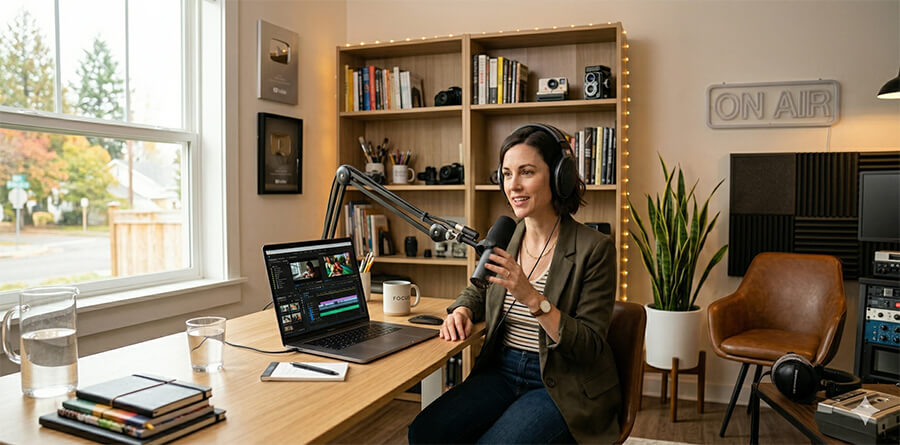
Using an AI voice generator offers an opportunity to craft high-quality, lifelike voiceovers without prior voice acting experience. For example, producing a narrated explainer video about a team-building workshop involves pacing a script, choosing the right tone (professional or friendly), and refining the delivery.
In practice, this process helps to:
Increase the organization of spoken materials
Concentrate on tempo and clarity
Become comfortable with delivering messages
Accessible across devices, this is of particular value to introverts or non-native speakers who aspire to train and improve their verbal communication skills in low-stress conditions.
Empathy and Emotional Intelligence: Building Connection Through Tone
Empathy is not just merely empathizing with others but also ensuring that they appreciate that you empathize with them. Your tone of voice is of utmost importance here as, in digital communication, we do not have access to body language.
Experimenting with slight changes in the tone of delivering a message—such as trying out calm, energetic, and serious deliveries—can be an eye-opener. It aids in developing emotional intelligence and adapting the style of communication to the audience's requirements.
This can be applied when working in HR, teaching, counselling, or any position where relating to clients is key.
Adaptability: Embracing New Tools and Workflows
The responsive nature to a change in environment and the open-mindedness in accommodating new ways of solving a problem is adaptability. Learning and adapting to the usage of new software is a soft skill in itself since we live in a fast-changing world.
In digital presentation projects, you might be given low-quality, user-generated content with no time to reshoot. That's when relying on an AI video upscaler becomes essential. Enhancing footage with better-looking images, blending the light, and increasing the resolution without manual editing skills teaches resourcefulness. It allows you to achieve a professional outcome within tight constraints, proving that adaptability often saves the day.
Creativity: Using Multimedia to Tell Your Story
Creativity is a critical soft skill that enables professionals to be innovative, and present problems and ideas in a memorable manner. Multimedia storytelling is among the most convenient means of developing creativity.
Presenting a digital portfolio or a résumé by incorporating imagery, voiceovers, and brief video clips presents your work originally. Creating a persuasive narrative that is not limited to text assists in enhancing visual storytelling, narrative structure, and audience communication.
Emotional resilience is closely connected with creativity, too, since creativity promotes experimentation, repetition, and lateral thinking, which are characteristics of professionals who do well in an uncertain world.
Active Listening and Clarity: Enhancing with Text-to-Speech
Active listening is one soft skill that is not given enough credit; it is the process of really paying attention and reacting to information. It is easier to practice when you can use voice-based tools.
Using standard text-to-speech AI tools helps you review your own written content in a new way. Listening to words being read out loud helps you notice awkward wording, poor logic, and unnatural-sounding grammatical progression that you might not detect when reading in silence during proofreading.
By means of this process, you learn how to edit your writing so it will be easier to understand, listen to how a message can be heard by others, and increase transparency and organization in the process of communication.
Collaboration and Leadership: Presenting Ideas with Impact
Leadership nowadays is not about power—it is about influence. You may be pitching an idea with confidence and delivering a presentation that is done visually and emotionally, and this is essential when you are with a team or in a meeting.
In a group interactive distant workshop, developing a group video presentation requires someone to lead the incorporation of visuals, edit individual contributions, and ensure a clear, consistent voiceover. This enables the presentation to be smooth, unified, and professional. What is more important is that the process assists in creating team trust and demonstrates how soft skills such as initiative, cooperation, and attention to detail trace directly to leadership.
Final Thoughts: Where Tech Meets Human Skills
Though modern multimedia toolsets possess strong capabilities related to content development, their true significance depends on the effect they have on human beings. When we deliberately use them, we not only acquire polished digital products—we develop basic soft skills that help us become better communicators, team players, and critical thinkers.
Living in a world where human connection and digital literacy have converged, it is not only good to adopt the use of tools that maximize expression and story development, but it is a strategic imperative.
As a student, educator, remote worker, or professional seeking to advance, leveraging creative technology will give you the confidence, empathy, and versatility needed to thrive in any environment.
About the Author
Marcus Thorne is a digital media instructor and creative director with over a decade of experience bridging the gap between technology and human connection. He specializes in teaching professionals and students how to use multimedia storytelling to build essential soft skills, improve team collaboration, and deliver impactful presentations.