

How to Make Videos Without Editing Skills:
A Guide to AI Video Generation
See also: Creative Thinking Skills
Video has rapidly become the dominant medium for digital communication, corporate training, and modern marketing. However, the technical barrier to entry has historically kept many talented communicators from utilizing this highly engaging format.
Traditionally, producing high-quality multimedia required mastering complex timeline software, understanding frame rates, balancing audio frequencies, and spending hours rendering files. This steep learning curve meant video production was reserved strictly for specialized professionals.
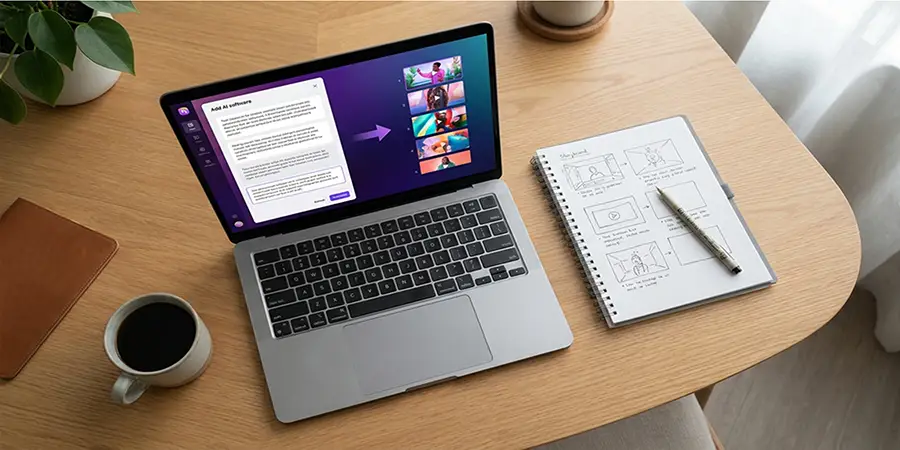
Today, technological advancements have completely removed these technical barriers. If you want to expand your professional toolkit, it is now entirely possible to make videos without editing skills by leveraging artificial intelligence.
The Shift from Technical to Soft Skills
When you remove the need for technical software manipulation, the requirements for successful content creation fundamentally shift. Instead of relying on technical mastery, you must now rely on your interpersonal and cognitive abilities. To create videos from text effectively, you need a strong grasp of narrative structure, target audience psychology, and clear written communication.
An AI video generator is ultimately just a tool; it requires a competent human operator to provide it with high-quality instructions. If your foundational message is poorly constructed, the resulting visual output will be equally ineffective, regardless of how advanced the underlying technology is. Therefore, refining your traditional communication abilities is more important now than ever before.
The modern creator must focus on what to say and how to structure it, rather than worrying about the underlying technical execution of the visual elements.
Mastering the Art of Prompting
The primary skill required to operate an AI video maker for beginners is precise written communication, often referred to as "prompt engineering." Because these platforms rely on text-based instructions to generate visual assets, the clarity of your writing directly dictates the quality of your final product.
Vague instructions will yield generic, disconnected imagery. Conversely, highly specific language that details the tone, pacing, visual style, and emotional intent of the scene will produce a cohesive and engaging narrative. Developing strong communication skills ensures that you can translate abstract concepts into concrete descriptive text.
Before typing your prompt, outline your core message. Ask yourself what you want the viewer to feel, what the primary takeaway should be, and what aesthetic aligns with your brand. Translating these answers into clear, structured paragraphs is the true secret to mastering text-to-video platforms.
Developing Visual Literacy and Storyboarding
Even though you do not need to manually cut and splice video clips, you still need to understand how visual storytelling works. Visual literacy is the ability to interpret, negotiate, and make meaning from information presented in the form of an image.
A successful video requires a logical progression of ideas. You must learn how to structure a narrative arc: hooking the viewer's attention in the first three seconds, delivering the core value in the middle, and providing a clear call to action at the end. Strong strategic thinking skills are vital here, allowing you to map out the viewer's journey before you generate a single frame of footage.
Creating a simple written storyboard can save you hours of trial and error. By outlining the script alongside brief descriptions of the desired accompanying visuals, you create a structured blueprint. This blueprint ensures that the AI generates scenes that logically support your spoken or written narrative, rather than just providing random, visually appealing background noise.
Choosing the Right AI Video Generator
The market is currently flooded with digital platforms offering automated video production, but they are not all created equal. Identifying the right software requires you to evaluate your specific operational needs against the capabilities of the tool.
Some platforms specialize in generating photorealistic avatars that read your script, making them ideal for corporate training modules or internal presentations. Other platforms excel at pulling stock footage and animating typography, which is highly effective for social media marketing and educational content.
When selecting a platform, look for intuitive user interfaces, robust customization options, and high-quality voiceover generation. The goal is to find a system that allows you to seamlessly turn ideas into videos without feeling overwhelmed by technical menus or restrictive templates. Experimenting with different platforms using trial accounts is the best way to determine which workflow aligns with your personal creative process.
Maintaining Authenticity and Brand Voice
One of the primary risks of using automated generation tools is producing content that feels sterile, generic, or devoid of human emotion. While an algorithm can assemble images and audio perfectly, it cannot inherently understand the nuanced emotional connection you share with your audience.
To combat this, you must apply rigorous editorial oversight to every piece of content you produce. Review the generated script to ensure it matches your natural tone of voice. If the AI suggests phrasing that sounds overly robotic or formal, rewrite it to reflect your personal or corporate brand identity.
Furthermore, pay close attention to the generated voiceovers. Many modern tools offer highly realistic synthetic voices, but pacing and inflection can sometimes miss the mark. Taking the time to manually adjust the cadence, add strategic pauses, and refine the pronunciation of specific industry terms will dramatically elevate the professional quality of your final output.
Overcoming Common Implementation Challenges
While making videos without traditional software is faster, it is not entirely foolproof. You will inevitably encounter formatting errors, mismatched visual context, or audio synchronization issues. Successfully navigating these hurdles requires strong problem-solving skills and a high degree of patience.
When a generated scene does not match your vision, resist the urge to abandon the project. Instead, analyze why the output failed. Was your prompt too ambiguous? Did you provide contradictory stylistic instructions? Iterative testing—making small, deliberate adjustments to your text inputs—is the most reliable method for improving your results.
Additionally, remember that perfection is often the enemy of progress. In the modern digital landscape, consistent, clear communication is usually more valuable than flawless cinematic execution. Learn to identify when a video is "good enough" to effectively convey your message and achieve your strategic objectives.
Conclusion
The democratization of multimedia production is a massive opportunity for educators, marketers, and business leaders. You no longer need to invest thousands of hours and dollars into mastering complex editing suites to share your ideas visually.
By leveraging modern text-to-video platforms, you can bypass the technical bottlenecks of content creation. However, success in this new landscape relies entirely on your foundational soft skills. Cultivating your ability to communicate clearly, structure compelling narratives, and apply critical editorial oversight will ensure that your automated videos remain engaging, authentic, and highly effective.
About the Author
Sammie Goodwin is a digital communications strategist and educational technologist. She specializes in helping individuals and organizations bridge the gap between traditional communication skills and emerging generative AI technologies, empowering them to tell compelling visual stories without technical barriers.