


Skills You Need Be a CEO
See also: Developing Your Leadership StyleAny individual who aspires to become a CEO, rising through the executive ranks to the highest levels of leadership, must possess a specific set of attributes that distinguishes them from the broader workforce. While technical mastery and financial literacy are the entry requirements, the "view from the top" requires a profound shift toward strategic vision and cultural stewardship.
Some individuals appear to be born with these attributes, often described as natural leaders who instinctively motivate others toward success. However, for the vast majority, these are learned competencies developed over years of intentional practice. As the head of an organisation, the CEO carries the ultimate responsibility for the company's survival, profitability, and ethical standing in an increasingly transparent global market.
The following skills are necessary if you have dreams of becoming a CEO, or if you want to ensure that your tenure in that position is productive for you and your organisation alike. Modern leadership now demands a balance of technological fluency, social responsibility, and traditional strategic rigour.
The Ability to Be Innovative and Adaptable
Globalisation, hyper-competitive environments, and rapid technological advancement mean that modern organisations face constant disruption. A CEO can no longer rely on a static business model; they must foster a culture of perpetual evolution.
The key to success for any modern organisation is the ability to innovate on a continuous basis. This involves delivering features and services that stay ahead of the competition and anticipate shifts in consumer behaviour. A CEO must be able to "see around corners," designing strategies that effectively combat change while maintaining long-term profitability. Fostering this environment requires mastery of Innovation Skills to ensure that new ideas are not just generated, but effectively implemented across the organisation.
Strategic Risk-Taking
Leadership is defined by the decisions made under conditions of uncertainty. A CEO must be able to take calculated risks after conducting a rigorous evaluation of the probabilities associated with both success and failure.
An executive who is entirely risk-averse will almost inevitably cause their company to lag behind more agile competitors. However, "calculated" is the operative word. Risks must never jeopardize the core survival of the organisation. For instance, an essential task for a new CEO is securing an appropriate executive employment agreement; this minimizes personal risk and creates a structured foundation for the team. Beyond legalities, a CEO must oversee robust Risk Management frameworks to protect the company's assets while chasing growth.
Maintaining an Optimistic Resilience
The climate at the top can be volatile. A CEO should possess an optimistic nature, coupled with the resilience to identify opportunities even within significant crises or market downturns.
A CEO must be able to think outside the box to design strategies that combat external threats, all while inspiring their workforce to maintain a positive attitude. This optimism is not about ignoring reality; it is about providing a narrative of hope and a clear path forward during "bad times." Developing your own Positive Thinking is essential to ensure you remain a pillar of stability for your employees when they feel most vulnerable.
Decisive Action and Execution
Vision without execution is merely a hallucination. A CEO must be able to take timely, decisive action based on the environmental factors at play in their specific industry.
While a CEO must not be impulsive, they must avoid "analysis paralysis." Every course of action should be constructed after careful thought, but once a decision is made, the CEO must lead the execution with conviction. This requires a deep understanding of Project Management and Action Planning to ensure that high-level strategies are translated into daily operational wins.
High-Level Stakeholder Communication
The role of the CEO is less about doing the work and more about coordinating the people who do. This requires extraordinary communication skills to manage a wide range of stakeholders, from board members to frontline staff.
An effective CEO is open-minded, listening to ideas from across the hierarchy rather than only focusing on their own strategies. Vocabulary and "register" are vital here; a CEO with sophisticated Improving Vocabulary can tailor their message to suit a board of directors, a room of investors, or a factory floor. In a multinational context, this also involves navigating cultural nuances to ensure the company's mission is universally understood.
Emotional Regulation and Intelligence
A CEO must maintain absolute control over their emotions. In times of crisis, the organisation looks to the leader for cues on how to react; if the leader panics, the organisation follows suit.
Controlled emotion does not mean being cold or rigid. A CEO should applaud successes and point out failures with appropriate intensity, ensuring that colleagues understand the meaning behind the feedback. High levels of Emotional Intelligence allow a leader to appreciate their employees effectively while maintaining the necessary distance to make "tough" calls. Mastery of Managing Emotions is what separates a boss from a true leader.
Inclusive Decision-Making and Trust
Modern leadership is increasingly collaborative. A CEO must promote a culture where all employees feel they are part of a team working toward a common corporate objective.
While the final decision often rests with the CEO after rigorous financial analysis, involving others in the process builds "buy-in" and loyalty. However, the CEO must also be a capable independent decision-maker during high-pressure periods when time constraints prevent consultation. This balance is built on a foundation of Trustworthiness and Conscientiousness. A CEO must trust their subordinates enough to delegate authority, while accepting that the ultimate responsibility for every corporate decision remains theirs alone.
For more, see our pages on Decision Making.
Further Reading from Skills You Need
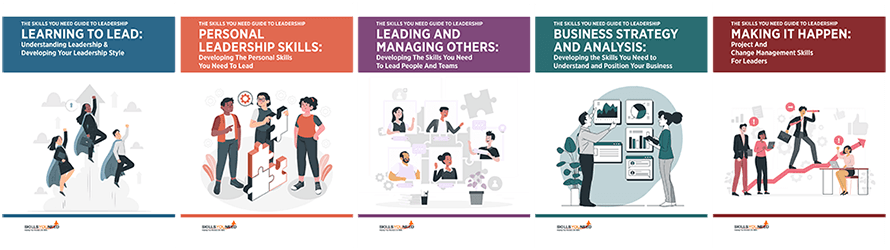
The Skills You Need Guide to Leadership eBooks
Learn more about the skills you need to be an effective leader.
Our eBooks are ideal for new and experienced leaders and are full of easy-to-follow practical information to help you to develop your leadership skills.
Summary
The journey to becoming a CEO is a marathon, not a sprint. It requires a relentless commitment to personal development and an ability to balance competing interests—profit and ethics, innovation and stability, delegation and control. By mastering the core competencies of strategic thinking, emotional intelligence, and decisive action, you can prepare yourself for the highest levels of corporate responsibility.
Remember that the most effective leaders are those who never stop learning. Use Reflective Practice to evaluate your leadership style regularly, and ensure that as you rise through the ranks, you are building a legacy of trust and excellence that will sustain the organisation long after your tenure concludes.
About The Author
This article was developed by the SkillsYouNeed editorial team to provide a roadmap for aspiring executives. Our mission is to provide you with the essential life and leadership skills required to thrive in a complex, modern world.