

The Benefits of Structured Early Education
See also: Toddlers and Young ChildrenEarly childhood is often described as a time of free exploration, and rightly so. Children in their first years of life learn best through play, curiosity, and responsive relationships. But within that freedom, there is a quiet architecture at work. The best early education programs offer structure, not in the sense of rigid schedules and worksheets, but in the form of predictable rhythms, thoughtful environments, and intentional planning.
When we talk about the benefits of structured early education, we are really talking about the power of predictability, purpose, and careful support. These are the conditions under which young children feel safe enough to take risks, focused enough to concentrate, and inspired enough to stretch beyond what they already know.
What Structure Really Means
Structure in early childhood is often misunderstood. It does not mean long sit-down lessons, strict silence, or children moving in lockstep from one adult-led activity to another. That kind of regimentation is actually developmentally inappropriate for young children and tends to produce anxious, compliant behaviour rather than genuine learning.
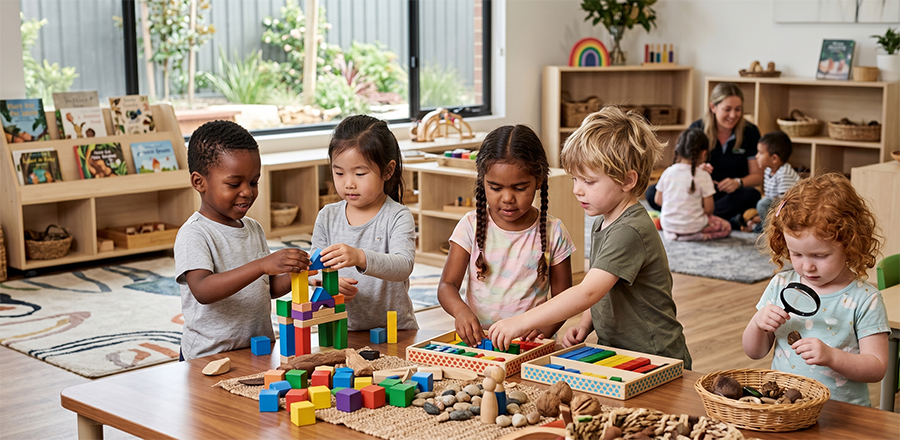
Meaningful structure looks different. It is the educator who knows exactly which child needs extra support during transitions. It is the morning rhythm that includes a predictable greeting circle, followed by uninterrupted time for children to choose their own activities. It is the thoughtful rotation of materials, the planned provocations that invite deeper thinking, and the reliable rituals that help children feel anchored.
This kind of structure creates security. A child who knows roughly what to expect each day, who feels held within a clear framework of expectations, is a child who can relax into exploration and learning. Structure, done well, is the frame that makes freedom possible.
Predictable Routines Support Regulation
One of the first gifts that structured early education offers children is the gift of routine. Young children have not yet developed strong internal time-keeping, and they depend on external rhythms to feel oriented. Knowing that morning tea follows free play, that rest time comes after lunch, and that outdoor play happens at a predictable moment allows children to regulate their bodies and emotions more easily.
This predictability reduces stress hormones, supports focus, and makes it easier for children to handle the natural transitions of the day. Over time, internalising these routines helps children develop their own sense of sequence and anticipation, which are building blocks of executive function.
Intentional Teaching Within Play
Structured early education does not abandon play-based learning. It enriches it. Skilled educators plan experiences based on observations of the children in their care. They notice that several children are fascinated by animals and introduce relevant books, small-world play, and nature walks. They see that a child is on the verge of mastering counting and offer a game that gently extends the skill. They recognise emerging friendships and create opportunities for those children to work together.
This is intentional teaching, and it is only possible within a thoughtfully structured program. Without planning, observation, and reflection, learning can still happen, but it will be patchy and uneven. Great educators use structure to ensure that every child receives the right challenge at the right moment.
Families looking for quality Perth childcare often ask how structure and freedom are balanced within a program. The answer lies in the depth of educator planning behind what looks, from the outside, like simple play. That planning is what separates ordinary care from exceptional early education.
Language and Literacy Foundations
Structured early learning environments expose children to rich language in deliberate, repeated ways. Daily story time builds narrative awareness. Songs and rhymes strengthen phonological skills. Conversations during meals introduce new vocabulary and turn-taking. Ritualised greetings and farewells give children repeated practice with social language.
Over time, this consistent exposure builds the foundations for reading and writing. Children who have spent hundreds of hours hearing stories, singing rhymes, and discussing ideas with attentive adults arrive at school with a vocabulary and a love of language that no last-minute flashcard program can match.
Social Skills Through Group Rhythms
Group life in a structured early learning setting is one of the most valuable social experiences a young child can have. Within the safe container of a predictable day, children learn to wait their turn, share resources, cooperate on projects, and navigate the inevitable frustrations of living in community.
Morning circle, group games, shared meals, and collaborative activities all scaffold social learning. When conflicts arise, as they inevitably do, educators can support children to use words, understand one another's feelings, and find solutions together. These are skills that will serve children for life, and they develop most easily within intentionally designed social environments.
Building Independence
Good structure supports growing independence rather than stifling it. When children know where materials are kept, what the transitions of the day look like, and what is expected of them, they can take initiative. They can choose their own activities, serve their own morning tea, wash their own hands, and pack up after themselves.
This independence is not just convenient for adults. It is foundational for children's sense of competence. The child who knows they can meet their own needs in small but meaningful ways builds confidence that extends far beyond the walls of the early learning centre.
Learning to Focus
Young children's attention spans are short, but they grow with practice. Structured early education environments offer plenty of opportunities for sustained focus, whether through extended project work, open-ended creative exploration, or quiet reading corners where children can settle in with a book.
By providing uninterrupted blocks of time for deep play, great educators help children develop the capacity to stay engaged. This capacity is one of the most important predictors of later academic and professional success. Children who have learnt to concentrate for thirty minutes on an interesting problem will find it easier to concentrate for an hour on a university essay later in life.
Preparing for School, Without Schoolifying
Structured early education prepares children for school, but not by turning early learning into school. The best preparation is not drilling letters and numbers; it is building the skills that make formal learning possible. These include self-regulation, curiosity, persistence, social competence, language comprehension, and problem-solving.
A well-structured program allows children to develop these skills naturally, through rich experiences and attentive relationships. When the time comes for formal schooling, these children arrive equipped with the inner resources they need to thrive.
Supporting Families Too
Structured early education also supports families. Predictable days, clear communication, and consistent routines make life easier for parents juggling work and home. Regular documentation of children's learning gives families insight into their child's growth. Thoughtful partnerships between educators and families strengthen the whole circle of care around the child.
Conclusion: A Gentle Kind of Structure
The structure that supports young children's learning is not loud, rigid, or imposing. It is a gentle framework that holds children with warmth and guides them with intention. Within that framework, childhood can unfold as it should: playful, curious, connected, and rich in possibility. That is the quiet power of structured early education, and it makes an immense difference to the children lucky enough to experience it.
About the Author
Cliff Carver is the Co-Founder and CEO of Cuddles. He started Cuddles with his father in 1995 and today, with multiple centres across Western Australia, it continues to be family-owned, family-operated, and family-driven. On weekends, Cliff loves spending quiet time outdoors teaching his own grandchildren how to build the perfect sandcastle.