


Pitching Your Business Idea - The Complete Guide
See also: Pitching Your Business IdeaThe modern business world has been thoroughly transformed by the global startup movement. For several years now, you have likely heard ubiquitous business jargon surrounding unicorns, angel investors, venture capitalists (VCs), accelerator programs, hockey-stick growth, and cash burn rates. While it would take an entire textbook to cover the nuances of corporate finance, the foundational concept is simple: startups are young, agile businesses that often utilize external investor capital to achieve rapid, disproportionate growth.
However, successfully transitioning from a brilliant idea scribbled on a napkin to a fully funded, scalable business is incredibly difficult. Raising capital requires far more than just a good product; it requires a compelling narrative, airtight financial logic, and phenomenal presentation skills.
Fortunately, millions of successful entrepreneurs have walked this exact same path before us, and we can glean massive insights from their experiences. This comprehensive guide will walk you through the entire process of preparing for an investor meeting and meticulously structuring the ultimate pitch deck.

In the Beginning, There Is an Idea
The first and most important lesson any seasoned entrepreneur will teach you is this: you likely do not need external funding right away. Your primary objective must always be to validate your business idea first.
You would be amazed at exactly how far you can go with absolutely no external financing through bootstrapping. Bootstrapping gives you the absolute freedom to experiment with your product, refine your core offering, and crucially, make low-risk mistakes without a board of directors breathing down your neck. By the time you finally sit down in an investor's office, both you and your business model will be significantly more mature and battle-tested. Having established that vital foundation, let us delve into the mechanics of raising capital.
The Crucial Preparation Phase
The preparation phase is arguably the most critical stage of the entire fundraising journey. Facing sophisticated investors without having spent hundreds of hours meticulously preparing yourself and your data is heading for an absolute disaster.
Investors review thousands of pitches every year. They possess an incredible ability to instantly detect when a founder has not done their homework, and for them, lack of preparation is an immediate, non-negotiable rejection. During this intense preparation phase, you must aggressively:
- Rigorously test and challenge every assumption in your business model.
- Create, refine, and ruthlessly edit your visual pitch deck.
- Craft a compelling, 30-second elevator pitch that hooks attention immediately.
- Practice your verbal presentation until it feels entirely conversational and natural.
- Conduct deep background research on the specific investors you are meeting to tailor your approach.
Does this sound like an overwhelming amount of work? It is not nearly as exhausting as actually running a high-growth company. Roll up your sleeves, and let us dive into the anatomy of the pitch deck.
The Anatomy of a Perfect Pitch Deck
The great hidden benefit of creating a pitch deck is that by doing it properly, you are forced to strictly structure your scattered thoughts and critically analyze every facet of your business. Even though the deck is an incredibly important visual aid, it is ultimately just a high-level summary of your comprehensive industry knowledge, carefully crafted for a specific financial audience.
The goal is never just to fill in PowerPoint slides. The goal is to have these foundational business concepts so thoroughly internalized that you barely need to look at the screen while presenting. A standard, highly effective pitch deck typically contains the following thirteen sections:
-
The Introduction
Start strong but keep it incredibly simple. Your title slide should feature your company logo, a high-quality visual, your name, and your official title (typically Founder or CEO). The primary purpose of this slide is to set a professional tone and provide a visual anchor while you introduce yourself to the room.
-
The Business Overview (The Hook)
At this exact moment, we must introduce the most important psychological tool you will use throughout the entire pitch: empathy. Imagine you are the investor. You have likely listened to dozens of overly complicated, jargon-filled pitches this week. What is the very first thing you desperately want to hear?
You want the core idea condensed into something short, catchy, intriguing, and instantly relatable. You want the elevator pitch. What is thrilling about your concept? What simple analogy describes it best? Do not dive into complex technical details here; simply paint the big picture and successfully hook the investor's attention.

-
The Problem
It is time to revisit your core motivation for creating this product. What is the actual, tangible problem you are solving in the market? Describe this problem in simple, human terms, heavily punctuating the user's specific pain points. Is this problem pressing enough, or expensive enough, to force consumers to actively seek out a solution?
If the problem is not severe, you risk creating a "nice-to-have" gadget rather than a "must-have" utility. Products without a desperate market need ultimately fail. Focus deeply on the user journey and explicitly demonstrate why the current state of the industry is completely unacceptable.
-
The Solution
How exactly are you going to make people's lives easier, cheaper, or more efficient? Clearly articulate your solution, but beware: this is still not the time to show dense technical blueprints. Tell a compelling story. Show the investor how a frustrated customer's life is instantly improved the moment they utilize your service. You need the investor to visibily feel the relief and joy that your product provides.
-
The Product
Now is the time to finally show off your hard work. Display high-fidelity prototypes, live software demos, or physical mockups. Investors want to see that you are capable of execution, not just ideation. You should ideally have a functioning Minimum Viable Product (MVP) built before you ever ask for institutional money. Building the initial version with your own time and capital proves your deep commitment; if you are not willing to put your own resources at risk, why should an investor?
-
Market Traction
As the common Silicon Valley saying goes: "Traction speaks louder than words." What you believe to be a brilliant idea must be verified by the brutal reality of the open market. Do you have active beta users, rising monthly recurring revenue (MRR), or letters of intent from B2B clients? Do not miss the opportunity to highlight these metrics. Tangible traction is the ultimate proof that your business model is commercially viable.

-
The Target Market
To provide a realistic projection of how wildly profitable your company can become, you must demonstrate a profound understanding of your target market. First, define your exact ideal customer profile. Then, mathematically estimate the total market size. You should be intimately familiar with calculating your Total Addressable Market (TAM), Serviceable Available Market (SAM), and Serviceable Obtainable Market (SOM).
-
The Competition
There are millions of active businesses in the global economy. You must entertain the absolute certainty that someone, somewhere, is attempting to solve this exact same problem. Does this mean you should give up? Absolutely not.
However, pretending that you have "zero competition" is the fastest way to lose an investor's respect. Acknowledging your direct and indirect competitors shows immense maturity. Use this slide to highlight your unique competitive advantages, your defensive moats, and exactly how you plan to out-execute the incumbents.
-
The Business Model
At this point in the presentation, the investor's mindset shifts. They transition from empathizing with the consumer's pain to rigorously analyzing the financial mechanics. They will only write a check if they inherently believe you can build a highly profitable enterprise. Your business model slide must clearly visualize how you acquire customers, how you price the product, and exactly how the money flows into your bank account.
-
Plans and Roadmaps
Rome was not built in a day, and neither will your startup be. Utilize your planning and organizing skills to lay out your major upcoming milestones. Be ambitious but mathematically realistic. When will you achieve product-market fit? When will you expand internationally? Most importantly, exactly how much capital will it take to reach those specific milestones? Focus on a clear 18-to-24-month operational roadmap.

-
The Funding Ask
Simply asking "for money" is not enough. You must confidently specify the exact dollar amount you are raising in this round. Furthermore, the investor will demand to know how much capital has already been invested, your current monthly burn rate, your proposed company valuation, and a clear pie chart detailing exactly how their specific funds will be allocated (e.g., 40% engineering, 40% marketing, 20% legal).

-
The Team
Here is the greatest secret in venture capital: Early-stage investors do not invest in ideas; they invest in founders. If a market pivots, a strong team will successfully adapt, but a weak team will crumble regardless of how good the original idea was.
Use this slide to highlight why your specific team has the unique technical background, industry experience, and relentless grit required to win. Highlight your co-founders, your advisory board, and any key early hires. Building the wrong team is consistently ranked as one of the top reasons startups fail.

-
Contact and Q&A
Close your presentation with a clean, professional slide featuring your direct contact information, website URL, and a polite transition into the crucial Question and Answer (Q&A) portion of the meeting.
The Design of Your Pitch Deck
While the underlying business knowledge always comes first, it absolutely does not mean that graphic design is something you can afford to ignore. Remember, your pitch deck is often the very first impression an investor receives regarding your brand's quality standards. Think of your deck's design as a proxy for your product's user interface; if your slides are sloppy, cluttered, and confusing, investors will naturally assume your software or service is as well.
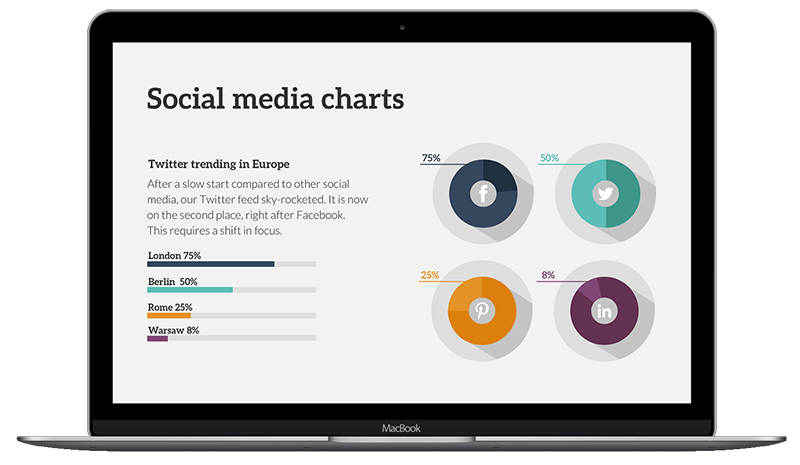
How exactly should you approach the design? Be incredibly smart about it. If you lack graphic design skills, hire a professional presentation designer or purchase a high-end, dedicated startup template. A beautifully structured template utilizes white space, enforces a clear visual hierarchy, and helps you present dense financial information in a highly engaging, digestible manner.
Conclusion
If you have read this far, you are clearly determined to get your startup pitch absolutely right. That dedication is a phenomenal start. The undeniable truth is that the entrepreneurial road lying ahead of you is filled with complex challenges, exhausting setbacks, and tedious climbs. Therefore, the absolute best advice any founder can receive is this: ensure you choose to build a business around a problem you are truly, deeply passionate about.
Unwavering passion is clinically proven to be the most effective way to stay hyper-focused, maintain your resilience through inevitable rejections, and continuously push the business forward. Prepare relentlessly, know your numbers inside and out, and confidently step into that boardroom. Good luck on your venture.
Further Reading from Skills You Need
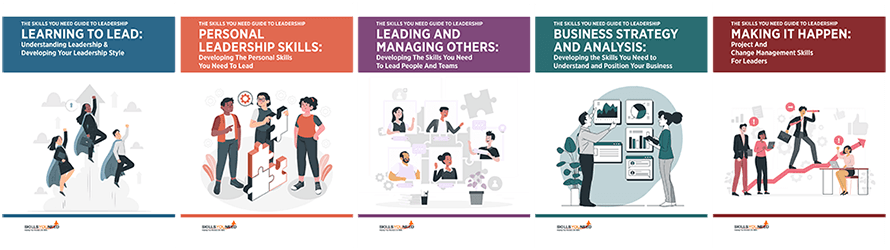
The Skills You Need Guide to Leadership eBooks
Learn more about the skills you need to be an effective leader.
Our eBooks are ideal for new and experienced leaders and are full of easy-to-follow practical information to help you to develop your leadership skills.
About the Author
Olgierd Skibski is a startup advisor, presentation consultant, and former IT professional. He specializes in helping early-stage founders and executives translate complex business models into compelling, visually beautiful narratives that resonate with venture capitalists.