

Making the Transition from Entrepreneur to Leader
See also: Entrepreneurial SkillsIt takes a brave person to become an entrepreneur, and an even braver one to successfully make the transition from an entrepreneur to a leader.
While entrepreneurship relies on a brilliant idea, infinite enthusiasm, and the motivation to get a project off the ground, leadership is a profoundly different discipline that requires a distinct set of skills.
You might not realise it at first, but your business idea will eventually become too complex for you to handle by yourself. If you are only just starting out, that may seem hard to believe. However, once you have made your first sale, then your tenth, and your fiftieth, you will likely reach a place where the workload threatens to outpace your personal capacity.
It is at this critical juncture that you must rise to the challenge. You need to make the transition from being a solo operator to being a true leader, a shift that is essential for sustainable growth but is rarely easy.

The Bottleneck Phenomenon
Many founders fall into the trap of “founder's syndrome,” where their deep attachment to the business and desire for control inadvertently restrict the company's growth. When every decision, no matter how small, must pass across your desk, you become the primary bottleneck in your own organisation.
Recognising this bottleneck is the first step toward effective leadership. The transition requires a fundamental change in mindset: you must move from working in the business (handling day-to-day operations) to working on the business (focusing on strategy, growth, and team development).
For more about how to do so, you may find it helpful to read our page on Strategic Thinking Skills.
Visualise Where Your Business Will Be
Before you can genuinely start to grow your business and embark on the transition from entrepreneur to leader, you need to know exactly where your company is headed. Without a clear destination, you cannot effectively guide a team.
- What is your company's core vision?
- What are the non-negotiable values that define your culture?
- What are your long-term, overarching goals?
- How can those be broken down into actionable, shorter-term objectives?
The bottom line is this: if you cannot picture yourself in your own mind being extremely successful, dominating your market, and running a phenomenal business, then chances are you never will.
Matt Mayberry, Performance Strategist
Once you know where you want to be, you can begin to plan how you will get there. It is much like driving a car: knowing your destination allows you to map the most efficient route and prepare for obstacles along the way.
Growing and Empowering Your Team
The most visible change your business will undergo is the hiring of new staff. With team expansion comes a completely different range of responsibilities. You can no longer rely solely on your own work ethic; you must learn to harness the potential of others.
Learning to manage people effectively is a continuous journey. You will need to develop a robust set of interpersonal tools to build a cohesive, motivated workforce. Consider the journey of Craig Kielburger, who started a small initiative as a child that required him to rapidly develop leadership and delegation skills as it grew into a massive international organisation. The ability to inspire and build a team is what scales an initial spark into a movement or a successful enterprise.
The most critical skills involved in managing people include the ability to inspire and motivate, maintaining honesty and transparency, solving problems collaboratively, and being a powerful, empathetic communicator.
If you are able to develop the right skills and your employees are fully aligned with your business values, you will cultivate a close-knit, high-performing team.
The Turning Point: Master the Art of Delegation
When you reach a certain headcount, it becomes physically and mentally impossible to manage everything. Delegating effectively and placing trust in your employees is a hallmark of any great leader.
Top Tip: Set Boundaries
Take time to establish both emotional and practical boundaries.
As an entrepreneur, you were your company. Now, your team is the company. Trying to hold onto all the power and responsibility will only lead to you burning out.
Delegation is not simply assigning tasks; it is about transferring ownership and accountability. You must provide your team with the authority to make decisions within their domains. This empowers them, speeds up operational processes, and frees you to focus on high-level strategic planning.
For more about how to do so, you may find it helpful to read our page on Delegation Skills.
Further Reading from Skills You Need
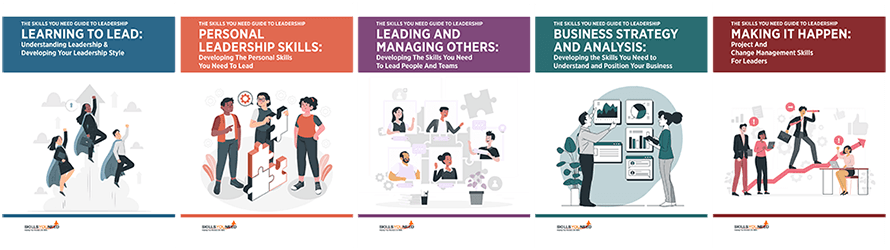
The Skills You Need Guide to Leadership eBooks
Learn more about the skills you need to be an effective leader.
Our eBooks are ideal for new and experienced leaders and are full of easy-to-follow practical information to help you to develop your leadership skills.
Key Steps for the Entrepreneur-to-Leader Transition
To successfully navigate this shift, consider adopting the following foundational practices:
- Let go of your ego. Naturally, you will feel protective of your business. However, believing that you are the only one who can do things the right way will create a massive mental block. Share your knowledge by training employees and enabling them to take on real responsibility.
- Do not wait for volunteers. It is a tough truth, but few people will step up to take on significantly more work without being asked. The key is to communicate what needs doing effectively and assign the best person for the task. Identify strengths and proactively assign responsibilities.
- Avoid micromanagement. Once you have delegated a task, resist the urge to snoop over your employee's shoulder. Set clear expectations for the final results, establish concrete deadlines, and then step back to let them execute the work their way.
- Share all essential resources. Ensure you have provided all the tools, information, and access necessary for your employees to succeed. Do not set them up for failure by withholding critical context.
- Patience is a virtue. Remember that taking on new responsibilities is a learning curve for your staff. Be patient while they learn to complete these tasks, and build extra time into your project schedules to account for this adjustment period.
- Give praise and recognition. When an employee does well, praise them for it. Giving credit where it is due creates a positive, productive work environment where people feel valued and are intrinsically motivated to deliver excellent results.
Conclusion
Making the leap from entrepreneur to leader is rarely a seamless process. It requires dismantling the very habits that made you successful in the early days—namely, doing everything yourself. By learning to delegate, communicating a clear vision, and investing in the development of your team, you can evolve into a leader capable of steering your business toward long-term, sustainable success.
About the Authors
This article is contributed by Marc Bishop and Sharon Crooks, with subsequent updates by the SkillsYouNeed editorial team.
Marc is the managing director of PlusHR and a leading reward and performance management specialist. Sharon is an experienced HR Consultant who specialises in training business people and leaders to communicate effectively with their employees, ensuring smooth transitions during periods of high growth.