

Helping Your Toddler Move to a Big Bed
See also: Increasing IndependenceTransitioning from a crib to a "big kid" bed is a monumental milestone in your child's early years. It is a time that naturally evokes excitement, pride, and perhaps a fair amount of parental anxiety. For both you and your toddler, it represents a major move towards maturation and autonomy.
This change involves much more than just purchasing new furnishings. It is fundamentally about assisting your child in achieving independence and self-assurance in their own sleep space. However, it may also evoke a complex blend of emotions—boundless enthusiasm for the new bed during the day, followed by sudden apprehension and boundary-testing when the lights go out.
So, what practical steps can you take to facilitate a smooth, tear-free transition? Let's explore some highly effective, psychologically sound methods to assist your child (and protect your own sleep) during this significant developmental change.

Is Your Toddler Prepared for a Bigger Bed?
First and foremost, is your child actually prepared to make the transition? While there is no universal "right" age, most children make the move somewhere between 18 months and 3 years old. Because each child is unique, it is essential to watch for developmental indicators rather than just looking at the calendar.
Watch for these distinct indicators that your child might be ready:
The Great Escape: They are consistently attempting (or succeeding) to climb out of their crib. Once a child can climb out, the crib becomes a safety hazard, and transitioning to a lower bed is necessary to prevent falls.
Potty Training: If your toddler is learning to use the toilet at night or early in the morning, they need the physical freedom to get out of bed independently to reach the bathroom.
Expressing Desire: They can verbally tell you what they need, or they show a strong, unprompted interest in older siblings' beds or "big kid" setups.
Outgrowing the Crib: They have simply hit a growth spurt and look physically cramped, bumping their head or feet against the crib rails during the night.
When you spot these signs, it is a good time to start getting everything ready. Waiting until they are developmentally ready—specifically when they can comprehend the "invisible boundary" of staying in a bed without physical bars—will make the process significantly smoother.
Get Them Involved in the Process
One of the most effective ways to support your child through a major transition is to let them actively help out. Involving them makes them feel in control of their environment and is a fantastic way to ease any underlying anxiety about the change.
Here is how you can deeply engage your toddler:
Let Them Choose: Ask your child to pick out their new bedding, blankets, or a special sleep-safe stuffed animal. Giving them this small choice empowers them and helps them practice vital decision-making skills.
Make it a Team Effort: Work together as a family to unbox and set up the bed. Allow them to "help" by handing you safe tools or holding the instructions. It teaches kids about teamwork and builds positive anticipation.
Say Goodbye to the Crib: Have a small, positive "farewell" moment for the crib. Explain that because they are growing so big and strong, the crib needs to go to another baby who needs it.
Use Toys for Roleplay: Use their favorite dolls or action figures to act out what moving to a big bed looks like. Having their toys "sleep" in a little mock-bed can help demystify the process.
Safety First: Toddler-Proofing the Bedroom
Moving to a big bed means your child suddenly gets unsupervised freedom in their room. With this newfound freedom comes an urgent need for parental responsibility. It is absolutely vital to create a space where they are entirely safe, even if they wake up and wander around at 2:00 AM.
To properly secure their environment, you must view the room from their eye level:
Anchor Heavy Furniture: Secure all dressers, bookshelves, and nightstands to the wall. A curious toddler exploring their room in the dark might attempt to climb drawers, leading to severe tip-over accidents.
Secure Electrical Outlets and Cords: Use high-quality outlet covers and ensure that all window blind cords, lamp wires, and baby monitor cables are completely out of reach or pinned safely to the wall.
Clear Away Hazards: Remove any small toys that could be choking hazards, heavy objects, or medications from the room. The entire bedroom essentially becomes their new "crib," so it must be completely safe to roam.
Consider a Safety Gate: If your toddler tends to wander out of their room and toward stairs or the kitchen, installing a baby gate at their bedroom door can keep them safely contained while still allowing their door to remain open.
Choosing a Special Bed
When it comes to picking the actual bed, you have a few excellent options. Some parents use a standard twin bed with attachable safety rails to prevent midnight roll-outs. Others prefer toddler beds, which use the same mattress as the crib but sit much lower to the ground.
Another highly popular option is a Montessori-style floor bed. These beds rest directly on the floor and heavily encourage autonomy. Because there is no height to fall from, safety rails are unnecessary. Your child can easily crawl in and out, which deeply supports their physical independence and makes them feel highly accomplished in managing their own sleep space.
Handling the "Jack-in-the-Box" Phase
The most common challenge parents face during this transition is the "Jack-in-the-Box" phase. Without the physical barrier of crib rails, toddlers suddenly realize they can get up whenever they want. You might find them appearing at your bedside, playing with toys, or repeatedly asking for water.
To manage this effectively, you must establish firm, loving boundaries:
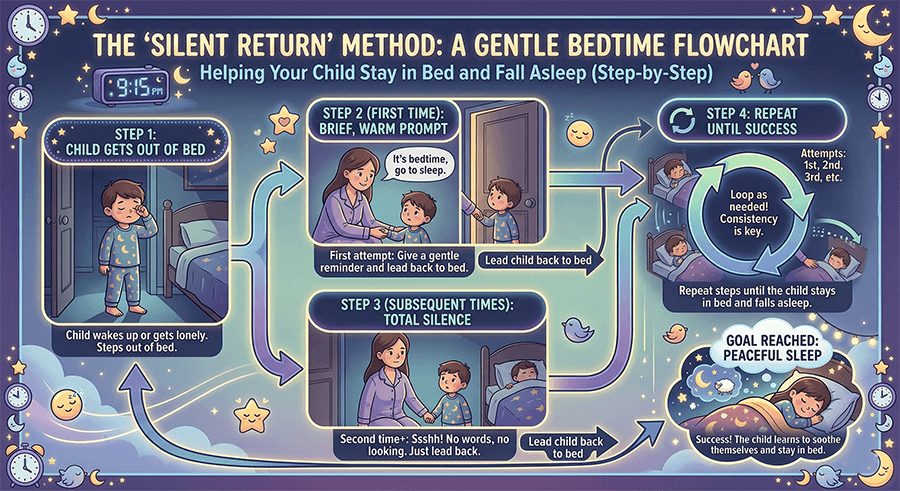
The Silent Return: If your toddler gets out of bed, gently take them by the hand and walk them back to bed. The first time, tell them, "It's bedtime, I love you, go to sleep." Every time they get up after that, return them to bed completely silently. Any engagement—even a scolding—is considered a reward to a toddler craving attention.
Use an OK-to-Wake Clock: These brilliant devices glow red during the night and turn green when it is an acceptable time to get out of bed. It gives toddlers a visual, easy-to-understand cue for when morning has officially arrived.
Praise the Positives: Cheer them on enthusiastically for the little wins, like staying in bed all night or playing quietly until their clock turns green. A simple sticker chart can do wonders for their confidence.
Stick to a Calming Routine
Children thrive on predictability. Having a consistent, soothing bedtime routine is extra important when you are introducing major environmental changes. A routine acts as a behavioral cue that signals to their brain that it is time to wind down.
Keep your favorite bedtime activities completely unchanged. If you always take a warm bath, brush teeth, and spend twenty minutes reading their favorite story, continue doing exactly that in the new bed. This helps bridge the gap between the old and the new, ensuring the "big bed" feels just as safe and cozy as the crib did.
Handling Emotions and Regressions
Transitioning to a big bed can temporarily disrupt sleep patterns and stir up strong emotions. Your toddler might act nervous, demand an extra nightlight, or suffer a slight sleep regression where they wake up crying. It is incredibly important to approach these feelings with immense patience.
Listen actively when they share their feelings. If they are scared of the shadows in the new room setup, acknowledge those feelings rather than dismissing them. By managing your own emotions and staying calm when they push boundaries, you project a sense of safety that will quickly help them settle into their new routine.
Conclusion
Moving to a big bed is an exciting, deeply meaningful step in your child's development. It is not just about upgrading a piece of furniture; it is an opportunity to help your child grow important life skills, practice independence, and learn how to manage complex emotional transitions.
By looking for genuine signs of readiness, getting your toddler actively involved in the process, deeply child-proofing their room, and maintaining a rock-solid bedtime routine, you can make this transition a highly positive experience. Expect a few bumps, boundary-testing, and midnight wanderings along the way—this is entirely normal. Approach the process with consistency and warmth, and soon enough, your little one will be sleeping soundly and proudly in their new big kid bed.
About the Author
Robert Lawerance is a certified Pediatric Sleep Consultant. With a deep passion for helping families navigate the chaotic early years, Robert combines evidence-based child development strategies with a warm, relatable approach. He specializes in creating practical routines that support both child independence and parental well-being.