


Soft Skills You Develop as a University Student
That Will Later Boost Your Career
See also: Critical Thinking
It is easy to overlook soft skills during your formal education. Because university curriculums are heavily focused on academic metrics, research methodology, and technical knowledge, the essential human skills you need to actually thrive in a professional environment are rarely explicitly taught in a lecture hall. However, the soft skills you develop and practice during your time as a student are likely to be the most important capabilities you will ever learn.
Far from being easy or natural, mastering these competencies takes time, uncomfortable situations, and constant effort. In fact, many modern career coaches and talent acquisition professionals prefer the term "power skills," as it more accurately reflects their immense commercial value without making them seem trivial. By actively recognizing and cultivating these skills during your studies, you can transform your university experience into a powerful launchpad for your future career.

What Are Soft Skills, and Why Do They Matter?
Because there are very few formal degrees dedicated entirely to soft skills, there is no single, universally agreed-upon list of what they entail. Broadly speaking, they are people-centered capabilities that dictate how we interact with others and how we manage ourselves. Examples include clear communication, teamwork, emotional regulation, and resilience.
A key difference between soft and hard skills lies in their application. Typically, hard skills have a defined, limited purpose—for instance, the ability to write code in Python, speak Mandarin, or operate a specialized piece of laboratory equipment. A soft skill like strategic planning, however, is universally applicable. It is just as useful when approaching a complex coding architecture as it is when organizing a global marketing campaign or managing a household budget.
Furthermore, hard skills can usually be mastered once and applied over a lifetime. You learn a programming syntax, and you simply use it. Soft skills require constant calibration. Your interpersonal skills will need to adapt dynamically depending on whether you are negotiating with a hostile client, comforting a distressed colleague, or pitching to an executive board.
When educational systems are engineered to reward hard skills through grading rubrics, the importance of soft skills is often underestimated by students. However, if you ask any experienced manager why people are dismissed from their jobs, they will rarely cite a lack of technical knowledge. People are hired for their hard skills, but they are fired for their lack of soft skills. Poor timekeeping, an inability to resolve conflicts, and an aggressive communication style are what separate a failing employee from an indispensable leader.
6 Core Skills You Will Develop at University
The good news is that it is never too late to learn. University environments—particularly for international students moving away from home for the first time—provide countless low-risk opportunities to develop a robust portfolio of career-ready soft skills.
-
Advanced Interpersonal Communication
Students must rapidly improve their ability to communicate complex ideas. The nature of teaching shifts dramatically from high school to university; rather than passively receiving knowledge from a teacher, students are expected to engage in active debate, defend their theses in seminars, and collaborate on diverse academic projects.
For international students, this challenge is often amplified by operating in a second language and navigating new cultural norms. Whether you are chatting with new flatmates from different backgrounds or presenting a major research project to an auditorium, you will inevitably hone your communication skills. Learning how to articulate your thoughts clearly and listen actively to opposing viewpoints is a critical prerequisite for professional leadership.
-
Confidence and Emotional Resilience
Confidence and resilience are not innate personality traits; they are behavioral muscles that can be built through deliberate practice. University life provides a constant stream of opportunities to step outside of your comfort zone, from joining a new sports society to defending a controversial academic paper.
You will inevitably face setbacks, such as failing a midterm exam, dealing with homesickness, or facing rejection from an internship application. True resilience is the ability to analyze these failures objectively, learn from the feedback, and adapt your strategy without losing your motivation. Employers highly value graduates who do not crumble under pressure and can navigate professional failures with maturity.
-
Independence and Proactive Problem-Solving
It is often assumed that every young adult is capable of living an independent life, yet many struggle with basic life administration. University forces you to take total ownership of your daily existence, often for the very first time. You must manage a strict student budget, handle landlord disputes, cook your own meals, and navigate complex healthcare systems.
This forced independence cultivates deep problem-solving capabilities. When your laptop breaks the day before a major deadline, you cannot rely on your parents to fix it; you must find a rapid, creative solution. This translates directly to the workplace, where managers prize employees who can independently troubleshoot issues rather than constantly asking for step-by-step instructions.
-
Time Management and Self-Motivation
Self-motivation and organization are critical tools for a university student. Unlike high school, where your schedule is strictly regimented from morning to afternoon, university offers massive blocks of unstructured time. It is entirely up to you whether you spend that time reading in the library or socializing in the student union.
You will quickly learn how to balance the intense expectations and overlapping deadlines of your degree with your part-time job and your personal life. Learning how to motivate yourself when nobody is watching, prioritize high-impact tasks, and avoid the trap of procrastination builds the foundation of professional time management.
-
Critical Thinking and Information Evaluation
We live in an era of information overload, where distinguishing verified fact from heavily biased opinion is increasingly difficult. One of the most important intellectual tools you will acquire during your degree is the ability to think critically. While academic programs expect you to aggressively interrogate primary sources, peer-reviewed journals, and historical data, this is also a vital everyday life skill.
Strong critical thinking involves questioning the underlying assumptions of a compelling argument, identifying logical fallacies, and synthesizing diverse data points into a cohesive strategy. In the corporate world, employees who can look at a misleading data dashboard and ask the right critical questions are the ones who drive genuine business innovation.
-
Collaboration and Team-Working
Almost every modern degree includes a mandatory group project. While these assignments are notoriously frustrating because they pair you with individuals of varying work ethics, they perfectly simulate the realities of the modern workplace. You rarely get to choose your colleagues in a corporate environment.
Group assignments teach you how to delegate tasks, hold peers accountable, and navigate conflicting personalities. Mastering team-working means learning how to leverage the distinct strengths of your group members to achieve a shared objective, a skill that every hiring manager explicitly looks for during an interview.
Conclusion
Soft skills are absolutely vital to your lifelong success, but do not fall into the trap of assuming they will develop automatically just by attending your lectures. Honing your interpersonal, organizational, and cognitive skills can be just as demanding as passing your most difficult academic modules. However, as a university student, you have no shortage of opportunities to practice, fail, and improve in a highly supportive environment.
Approach your personal development with purpose and intent. Join student committees, volunteer for leadership roles, and actively seek out diverse perspectives. By consciously building your power skills today, you will not only achieve greater academic success, but you will also set yourself up for a dynamic, resilient, and highly rewarding professional career.
Further Reading from Skills You Need
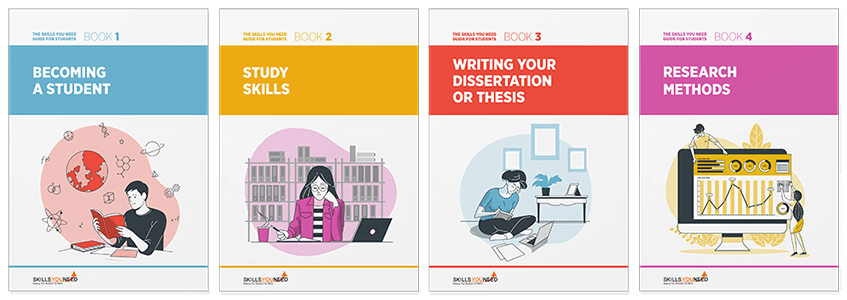
The Skills You Need Guide for Students

Develop the skills you need to make the most of your time as a student.
Our eBooks are ideal for students at all stages of education, school, college and university. They are full of easy-to-follow practical information that will help you to learn more effectively and get better grades.
About the Author
Dr. James Cousins is a Higher Education Consultant and Career Strategist with over 12 years of experience working inside university career centers. He specializes in helping undergraduates and international students translate their academic experiences into highly marketable professional skills.