

Closing the Modern Productivity Gap
See also: The Skills GapEverywhere you look today, economists and business leaders are discussing the profound effect the "skills gap" is having on the global economy.
With groundbreaking technology and artificial intelligence (AI) being announced seemingly every week, one would assume we are entering a golden age of individual and corporate productivity. In reality, we are often experiencing the exact opposite. Despite having a wider array of revolutionary tools at our disposal than ever before, global labour productivity growth frequently stalls or underperforms expectations. The age-old mantra still stands: merely possessing a tool is not enough. If you do not learn how to utilise it effectively, strategically, and sustainably, productivity will inevitably plateau.
In the past, the productivity gap was primarily defined by basic computer literacy—whether an employee knew how to use a spreadsheet or navigate a CRM system. Today, the gap has fundamentally shifted. It is no longer just about software mechanics; it is about cognitive load, technological adaptability, and managing the relentless flood of digital information.
The Changing Nature of the Productivity Gap
Modern employees operate in a highly complex digital ecosystem. They work on multiple monitors, switch constantly between messaging apps, emails, and video calls, and are now expected to integrate AI co-pilots into their daily workflows. The gap between the rapid pace of technological advancement and human adaptability is widening.
This resulting skills gap is responsible for staggering financial losses in the global economy. With the half-life of digital skills shrinking rapidly due to the pace of technological change, relying entirely on your employer to provide formal training is no longer a viable strategy. Employees must take ownership of their continuous professional development to remain competitive.
To close this gap, we must rethink what "digital skills" actually mean in the modern workplace. Here are eight critical skills worth investing your time and energy into to master the modern digital landscape.
8 Skills to Close the Modern Productivity Gap
Attention Management and Deep Work
We live in an attention economy. With endless streams of notifications from communication platforms like Slack, Microsoft Teams, and email, it is incredibly easy to fall victim to inefficient multitasking. This constant context-switching destroys focus and severely limits your ability to perform high-level cognitive tasks.
Developing the skill of "deep work"—the ability to focus without distraction on a cognitively demanding task—is perhaps the most valuable skill you can cultivate today. This involves knowing how to strategically block out time, silence non-essential notifications, and protect your concentration from the demands of the digital workplace.
Mastering AI and Automation
Artificial Intelligence is no longer a futuristic concept; it is a daily workplace reality. However, simply having access to an AI tool does not make you more productive. The real skill lies in prompt engineering—knowing exactly how to communicate with language models to yield precise, highly usable outputs.
Furthermore, employees must develop a keen understanding of automation. By identifying repetitive, low-value administrative tasks and using basic automation tools to handle them, you free up your mental bandwidth for strategic, creative problem-solving that machines cannot replicate.
Asynchronous Communication
The "always-on" culture of immediate replies is a massive drain on productivity. Modern communication skills require an understanding of asynchronous workflows. This means writing clear, comprehensive messages or recording brief video updates that give your colleagues all the context they need to respond on their own schedule, rather than demanding an immediate, disruptive answer.
Understanding when a situation requires a real-time meeting versus when an asynchronous update will suffice can save hundreds of hours a week across an organisation.
Information Triage and Critical Research
We live in an age of seemingly infinite information, which is simultaneously a blessing and a curse. Inefficient research can quickly bog employees down. The sheer amount of data available can be overwhelming, and blindly trusting the first search result—or an unverified AI output—can lead to costly mistakes.
You must develop strong critical thinking skills to quickly filter noise, verify the credibility of online sources, cross-reference data, and extract only the most actionable insights. Information triage is the ability to rapidly decide what is important, what can be saved for later, and what should be ignored entirely.
Advanced Virtual Collaboration
A company is a living, breathing organism with individual teams working together to create a whole. With remote and hybrid work becoming standard, teams are frequently spread across different offices, cities, and time zones.
Effective virtual collaboration goes far beyond simply knowing how to join a Zoom call. It requires a deep understanding of cloud-based document management, avoiding data silos, maintaining strict version control on shared files, and utilising project tracking software to keep out-of-sync teams aligned without the need for constant micro-management.
Agile Learning and Platform Flexibility
Software and hardware evolve at a breakneck pace. Businesses constantly shift operating systems, adopt new project management tools, and migrate to new internal platforms. If you become too rigidly attached to one specific interface, you will quickly fall behind.
The core skill here is platform flexibility—the ability to grasp the underlying logic of software rather than just memorising where the buttons are. Cultivating an agile learning style allows you to quickly adapt to new dashboards, interfaces, and operating systems with minimal friction.
Digital Etiquette and Emotional Intelligence
As the proportion of workplace and customer communication conducted via text and social media increases, the nuance of tone and body language is frequently lost. This makes misunderstandings remarkably common.
Applying emotional intelligence to digital environments is a vital skill. This means understanding how your written tone might be perceived, using appropriate etiquette in group channels, and reading the digital "room" to defuse potential conflicts before they escalate.
Digital Wellness and Boundary Setting
Finally, long-term productivity is utterly impossible without sustainability. The seamless integration of work applications onto our personal smartphones has blurred the lines between professional and private life, leading to unprecedented levels of burnout.
Digital wellness is the proactive practice of setting boundaries. Knowing when to close your laptop, how to disconnect from work communications during off-hours, and taking regular breaks from screen time are essential skills for maintaining your mental acuity and physical health in a hyper-connected world.
Further Reading from Skills You Need
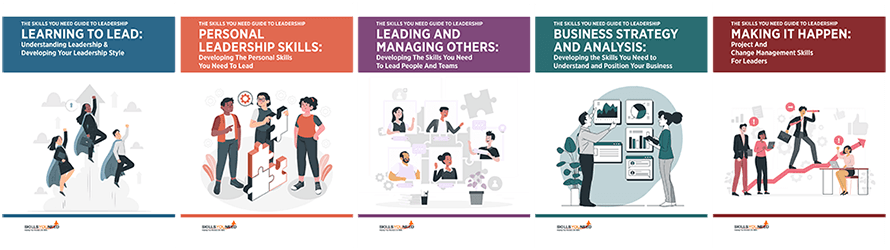
The Skills You Need Guide to Leadership
Learn more about the skills you need to be an effective leader.
Our eBooks are ideal for new and experienced leaders and are full of easy-to-follow practical information to help you to develop your leadership and management skills.
Conclusion
The requirements for navigating the modern digital workplace may seem overwhelming at first. However, if you actively treat productivity not as a byproduct of the tools you own, but as a deliberate skill-set that requires ongoing cultivation, the investment in your own education will pay massive dividends.
Take a hard look at your current daily workflows. Where do you lose the most time to distraction? Which new technologies are you actively resisting out of comfort? By identifying your own personal productivity gaps and committing to continuous upskilling, you empower yourself to become a truly indispensable asset in the modern economy.
About the Author
Jeff Fernandez is a technology entrepreneur and thought leader in corporate education. He specialises in helping the digital workforce adapt to new technologies with scalable, modern training solutions.