


Skills That Plumbers Need to Master
See also: Social Problem-SolvingPlumbers are some of the most in-demand trade professionals in the world. While everyone eventually needs help with their drainage systems and indoor piping, technical expertise alone is not enough to sustain a successful contracting business. Although you certainly need to know how to operate complicated tools, diagnose hidden leaks, and interpret complex blueprints, your career will quickly plateau if you do not actively develop your interpersonal abilities.
In the modern trades, customer service and clear communication are just as important as turning a wrench. Customers want to hire professionals they can implicitly trust with their homes and businesses. Below, we explore the ten essential soft skills that plumbers must master to propel their careers, build a loyal client base, and successfully navigate the daily challenges of the job.
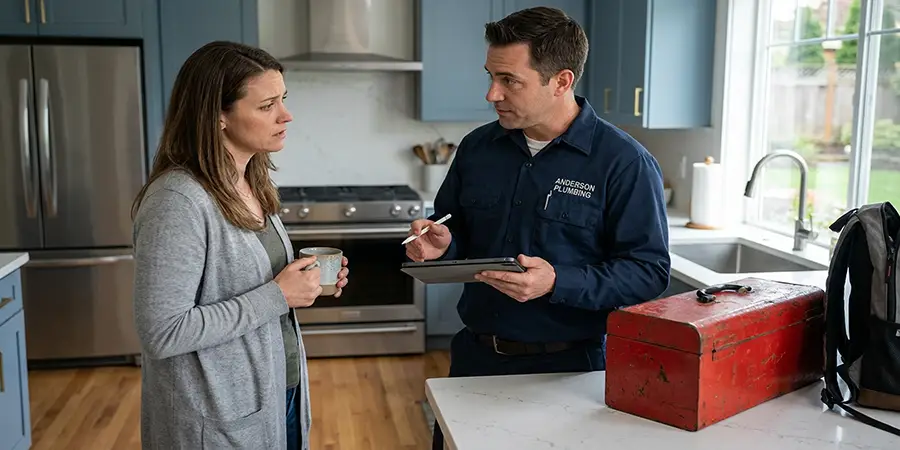
10 Soft Skills Every Plumber Needs to Master
Active Listening
Anyone can stand silently while a customer describes how their water heater is failing, but true active listening is how you pick up on the subtle cues that point directly toward the root problem. Customers often lack the technical vocabulary to describe plumbing issues accurately, so they rely on describing sounds, smells, or specific situational triggers. If you are preoccupied with thinking about your next job or formulating your response before they finish speaking, you will likely miss critical diagnostic information.
Try deliberately building your active listening skills by maintaining eye contact and repeating the customer's concerns back to them for clarification. If you can pinpoint the exact symptoms by being fully present in the conversation, you will arrive at faster, more accurate solutions while making the client feel heard and respected.
Honest and Transparent Communication
People typically call for plumbing assistance when their stress levels and emotions are running high. They might feel panicked about a clogged main drain backing up into their shower, or highly anxious about how a dripping ceiling will affect their finances. You might assume the best way to help is to stay quiet and immediately start working, but honest, transparent communication is far more effective.
Talking customers through exactly how you plan to fix the issue—without relying on confusing industry jargon—will rapidly calm them down. Be upfront about potential costs, expected timelines, and worst-case scenarios. If they feel informed and included in the process, you will always be the plumber they call back the next time they have an emergency.
Demonstrating Empathy
Emotional intelligence and empathy are critical soft skills that all successful contractors need to master. When a customer's emotional tension collides with cold, dismissive professionalism, the situation can easily escalate into anger. Showing genuine empathy for their situation completely diffuses that tension.
If you walk into a small business with a flooded restroom due to a burst pipe, explicitly let the owner know that you recognize how stressful this disruption is to their livelihood. Validating their frustration connects you with them on a personal level. They will immediately recognize you as an ally who has their back, rather than just a technician who is there to collect a paycheck.
Creative Problem-Solving
Problem-solving is a dynamic skill that sharpens with every unique challenge you face in the field. As a plumber, you rarely encounter textbook scenarios. Houses settle, previous contractors make undocumented modifications, and pipes corrode in unpredictable ways. Keeping an open mind to defining problems and finding creative solutions is mandatory.
For example, a customer might request a quote to fix a puddle forming underneath their main interior water supply. If you are practicing sharp problem-solving skills, you will look beyond the immediate symptom. You might deduce that their outdoor sprinkler system connects near that supply line, prompting you to inspect the exterior yard for sinkholes caused by broken underground pipes the customer did not even realize existed. Thinking about the bigger picture always leads to the most effective, long-term solution.
Teamwork and Delegation
While experienced plumbers often handle routine residential calls independently, larger commercial jobs and complex remodels require you to visit sites with apprentices, journeymen, or professionals from entirely different trades. Focus heavily on improving your teamwork skills as your career progresses.
Speak respectfully to your crew, delegate tasks efficiently based on each person's skill level, and constantly communicate your immediate actions to ensure job site safety. Mentoring younger apprentices with patience rather than frustration not only builds a stronger, more capable team, but also establishes you as a natural leader within your company.
Strategic Time Management
Timeliness is the backbone of a successful, profitable plumbing career. You need to become an absolute expert at managing your dispatch schedule, incorporating unpredictable drive times, and executing your tasks efficiently while on a client site to avoid cascading delays throughout the day.
You can rapidly improve this soft skill by using the priority matrix until it becomes second nature. Measure incoming calls by how urgent and important they are, ensuring you never waste peak hours on low-priority administrative tasks while a severe leak is damaging a client's property. The right technology can also make this significantly easier for busy teams. Using the best plumbing software for contractors can help reduce scheduling confusion, improve direct communication between mobile team members, and make it far easier to keep customers automatically updated regarding your estimated arrival time.
Rigorous Attention to Detail
Mastering the art of paying attention to fine details prevents catastrophic failures. In plumbing, a fraction of a millimeter difference in a fitting or a slightly degraded rubber seal can result in thousands of dollars in water damage. If you often miss tiny details because you are rushing to the next job, this is the most critical area for your professional development.
Think about why you might be rushing through your physical work or your customer communications. Consciously slow yourself down. Double-check your measurements, review your tool checklist before leaving a site, and test your work under pressure before signing off. Impeccable attention to detail is the hallmark of a master tradesperson and virtually eliminates costly callbacks.
Professional Self-Confidence
When people need emergency plumbing help, they want to hire an expert who projects absolute confidence in their own abilities. Your team members and apprentices also need a confident leader they can trust when things go wrong. While it takes time to build genuine self-assurance, it is entirely achievable through dedicated practice.
Lean into ongoing training opportunities that challenge you to expand your technical repertoire. Seek out complex jobs rather than avoiding them. You should also actively find a mentor within the industry who exhibits the calm, collected confidence you aspire to have. By observing how they handle adversity, you will naturally adopt their resilient mindset.
De-escalation and Conflict Resolution
Plumbing emergencies frequently come with massive financial and emotional stakes. This can heighten the tension in customer interactions, leading to disputes over repair timelines, unavoidable structural damage, or final billing. Learning strong conflict resolution skills will save your professional reputation.
Conflict resolution requires remaining entirely calm while actively listening to the upset party. Never raise your voice to match theirs. Formulate empathy for their perspective to understand their core fear—which is usually financial—before offering a reasonable compromise or detailed explanation. If you can successfully de-escalate a furious customer and solve their problem, you will often earn a customer for life.
Critical Thinking and Curiosity
In the trades, critical thinking involves several operational components, but the most foundational element is curiosity. Keep an open, inquisitive mind as you encounter bizarre or outdated plumbing configurations, especially in older buildings.
Collect the physical evidence of a problem, reflect on potential solutions that worked on similar calls in the past, and never be afraid to ask questions or consult a manual when you need clarification. You will arrive at the safest, most efficient solutions for everything from hidden slab leaks to complex boiler installations if you consistently use reasoning, evidence, and curiosity to work through your challenges.

Further Reading from Skills You Need
The Skills You Need Guide to Jobs and Careers: Career Management
This eBook is the guide that you need to understand your strengths and values, and build both your confidence and your network. This will enable you to develop and take advantage of opportunities that arise, and create a meaningful and fulfilling career for yourself.
Commit to Improving Your Soft Skills
Becoming a truly great plumber requires much more than passing a trade school exam or completing an apprenticeship. To build a lasting, lucrative career, you must continuously refine the soft skills you use on the job every single day. By prioritizing active listening, transparent communication, and rigorous time management, you will elevate your professional reputation, enjoy smoother days on the job site, and provide unparalleled service to the customers who rely on your expertise.
About the Author
Jack Shaw is a master plumber and vocational educator with over 15 years of experience in the residential and commercial trades. He specializes in training apprentices not just in technical pipefitting, but in the essential client-facing communication skills required to run a successful, reputable contracting business.