

How Communication Skills Enhance
Patient Care in Mental Health Settings
See also: Types of Empathy
When it comes to physical health, communication is important. But in mental health settings, it's essential. You're not just treating symptoms, you’re listening to stories, understanding emotional states, and building trust with people who may feel isolated, misunderstood, or deeply vulnerable. In these moments, what you say and how you say it can be just as important as your clinical knowledge.
Mental health care providers, especially nurses and nurse practitioners, are often on the front lines of patient interaction. Their words can help de-escalate a crisis, encourage treatment adherence, or offer comfort to someone in distress. And while medical training prepares providers with the science of treatment, soft skills like empathy, active listening, and nonverbal communication often make the biggest difference in patient outcomes.
If you’re pursuing or considering a career in this field, it’s important to understand how communication shapes the therapeutic environment. Let’s take a closer look at the educational path and the communication techniques that lead to stronger patient relationships and better mental health outcomes.

Starting with the Right Foundation
To deliver effective care, you need both clinical expertise and strong interpersonal skills. This balance is emphasized in advanced nursing programs that focus on mental health. For registered nurses looking to specialize, researching accredited psychiatric nurse practitioner schools online is often a practical starting point. These programs are designed to prepare professionals to assess, diagnose, and treat individuals across the lifespan, frequently combining evidence-based coursework with virtual simulations and clinical experiences.
Flexible online pathways are especially helpful if you’re managing other responsibilities while working. They allow you to build a foundation in psychiatric care while honing the advanced communication techniques needed to engage with patients compassionately and effectively.
The Role of Active Listening
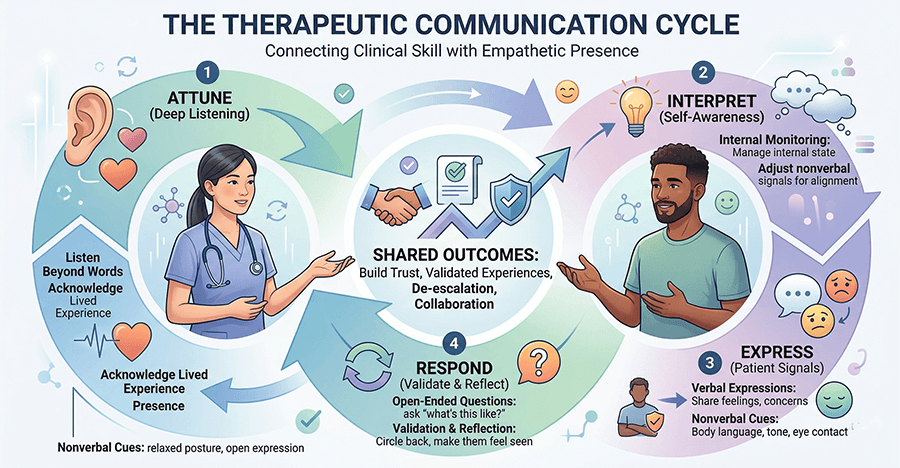
Active listening is more than just hearing words. It's about fully engaging with the speaker, picking up on subtle cues, and responding in a way that makes the person feel seen and understood. In mental health settings, where patients may have difficulty expressing their feelings or trusting others, this skill is critical.
As a nurse or mental health professional, you’ll often work with individuals experiencing anxiety, depression, trauma, or other conditions that affect communication. These patients may speak slowly, avoid eye contact, or have trouble staying on topic. Active listening means staying patient, reflecting their emotions to them, and creating a safe space for honest conversation.
When done right, active listening builds rapport and shows patients they’re not alone in their struggles. It also allows you to gather deeper insight into their experience, which can improve diagnosis and treatment planning.
Nonverbal Communication Is Just as Powerful
Not all communication happens through words. In fact, research shows that nonverbal cues, such as body language, eye contact, tone of voice, and even the physical space between you and another person, often carry more weight than what you actually say. In mental health care, where trust and sensitivity are paramount, these subtle signals can make a significant difference in how your message is received.
When working with patients who may be vulnerable, anxious, or in crisis, your body language sets the tone long before your words do. A relaxed posture, gentle facial expression, and a steady, calm tone can create a sense of safety and approachability. Even something as simple as nodding while a patient is speaking shows that you're actively listening and engaged, reinforcing their sense of being seen and heard.
On the flip side, unintentional cues, like checking your watch frequently, fidgeting, or folding your arms, can send signals of impatience, disinterest, or defensiveness. These small behaviors may seem harmless, but they can seriously undermine rapport, especially with patients who are already feeling unsure or guarded. That’s why self-awareness is essential. It's about making sure your body and voice are aligned with the care and empathy you're trying to convey.
As you grow more experienced in the mental health field, this awareness becomes more intuitive. You’ll start to recognize how your presence, more than just your words, shapes the environment. And by staying attuned to the subtle signals your patients are sending, you can adjust your responses to meet them where they are, emotionally and psychologically. That adaptability is what turns communication from a skill into a true art form in mental health care.
Building Trust Through Empathy
Empathy is one of the most powerful tools in mental health care, and it doesn’t require you to have all the answers. It’s not about solving problems right away. It’s about showing up, listening, and genuinely caring. Many patients come in feeling misunderstood, ashamed, or judged. Your willingness to sit with them, ask thoughtful questions, and offer non-judgmental support can create a sense of safety that encourages them to open up. It’s this kind of presence, not perfection, that makes people feel heard.
When a patient feels emotionally safe, trust begins to grow. Empathetic communication includes open-ended questions like, “What has this been like for you?” or gentle reflections like, “That sounds incredibly difficult.” These small gestures may seem simple, but they can go a long way in helping someone feel validated. Avoiding dismissive or overly clinical language and instead using warm, conversational responses creates a space where healing can actually begin.
Over time, this approach helps you develop deeper, more collaborative relationships with your patients. Whether someone is dealing with anxiety, depression, trauma, or complex emotional issues, empathy becomes the bridge that connects your knowledge to their lived experience. And when trust is present, patients are more likely to engage, make progress, and feel empowered in their healing journey.
Communication Supports Team-Based Care
In today’s healthcare systems, patient care is rarely done in isolation. Nurses, therapists, social workers, and doctors often work together to develop treatment plans. In mental health, where conditions are complex and progress is gradual, strong team communication is critical.
Being able to clearly communicate a patient’s concerns, changes in behavior, or treatment preferences ensures consistency and improves overall care. Miscommunication, on the other hand, can lead to delays, errors, or patient dissatisfaction.
That’s another reason why communication skills are often built into advanced nursing programs; professionals must be able to advocate for their patients and contribute effectively within interdisciplinary teams.
Helping Patients Navigate Their Options
Mental health treatment isn’t one-size-fits-all. Some patients respond well to therapy, while others need medication, lifestyle changes, or community support. Your role as a nurse or practitioner includes helping patients understand their options and make informed decisions.
Clear, respectful communication empowers patients to take control of their care. It might involve explaining how medications work, what to expect in therapy, or how to recognize warning signs of relapse. When you can translate complex medical concepts into everyday language, you make mental health care more accessible and less intimidating.
Patients who feel informed and involved are more likely to stick with treatment, and more likely to trust the care system overall.
The Link Between Communication and Burnout
It’s worth noting that communication doesn’t just benefit patients. It also plays a vital role in safeguarding your well-being. Working in mental health settings means you’re often exposed to emotionally intense situations. Over time, without proper outlets and tools, the cumulative stress can lead to compassion fatigue, emotional exhaustion, and even burnout.
Burnout isn’t just about being tired. It’s a state of physical, emotional, and mental depletion that can leave you feeling detached, overwhelmed, or cynical about your work. One of the most effective ways to prevent this spiral is through intentional communication. That means not only knowing how to talk with patients, but also learning how to talk about your stressors, openly and without guilt.
Setting healthy boundaries is a good place to start. Knowing when to say no, when to step away, and when to recharge helps preserve your energy and mental clarity. Equally important is asking for help when you need it. Whether it's seeking guidance from a supervisor, checking in with a mentor, or simply expressing frustration to a trusted colleague, these interactions build emotional resilience.
Continuing Education Keeps Skills Sharp
Communication in mental health is not a static skill. It evolves with experience, reflection, and ongoing education. Workshops, training sessions, and advanced certifications can help you stay updated on best practices and refine your abilities.
Whether it’s learning trauma-informed language or exploring new counseling techniques, these opportunities allow you to grow as a provider. Even seasoned professionals benefit from revisiting the basics and seeking feedback.
If you're studying through an online psychiatric nurse practitioner program, you’ll likely have access to communication-focused coursework, mentorship, and simulations. Take advantage of these tools; they’ll serve you throughout your career.
Further Reading from Skills You Need
Our Communication Skills eBooks
Learn more about the key communication skills you need to be a more effective communicator.
Our eBooks are ideal for anyone who wants to learn about or develop their interpersonal skills and are full of easy-to-follow, practical information.
Conclusion
In mental health care, every word counts. Patients are listening, not just for advice or instructions, but for signs that they matter, that they’re not alone, and that they’re in good hands.
You don’t need to be perfect. What matters is showing up with authenticity, patience, and a willingness to connect. Communication is a skill like any other; it can be learned, practiced, and strengthened over time.
About the Author
David Chen is a board-certified Psychiatric-Mental Health Nurse Practitioner (PMHNP-BC) and clinical educator with over a decade of experience in both acute and outpatient mental health settings. He is passionate about patient advocacy, trauma-informed care, and teaching healthcare professionals how to build therapeutic alliances through empathetic communication.