

The Skills You Need to Manage Affiliate Partners
See also: Building RapportWhy do affiliates stop promoting a product that still pays them a commission?
Usually it comes down to how they are managed: emails go unanswered, a rate is cut without warning, or a payment arrives late.
If you run an affiliate programme, or you are about to take one on, the skills that matter most are ones you may already use at work: communication, negotiation, comfort with numbers and plain reliability. And managing independent partners requires abilities that are equally valuable when working with suppliers, freelancers, clients, and other external stakeholders.
Below is a checklist of these skills, then a closer look at the four that partners notice first.

What an Affiliate Manager Actually Does
Affiliates are independent partners, such as bloggers, newsletter writers, review sites and agencies, who earn a commission when someone they refer buys. They don’t work for you.
That changes how you manage. You can’t set their hours or assign them tasks. You can only make promoting your product easier and better paid than promoting the next one.
So the work splits into four parts: recruiting the right partners, keeping them informed, agreeing fair terms, and paying them correctly. Each part leans on a different skill.
A Checklist of Affiliate Manager Skills
You don’t need all of these on day one. Use the list to spot your gaps, then work on the weakest first.
Clear written communication, because most partner contact happens by email, chat or a partner portal.
Active listening, so you hear what a partner’s audience responds to before you suggest a campaign.
Negotiation, for commission rates, exclusive offers and the occasional dispute over a missing sale.
Data literacy, to read conversion rates, refund rates and earnings per click without fooling yourself.
Organisation and time management, since a programme of 200 partners produces a steady stream of small requests.
Financial reliability, meaning partners are paid the right amount on the date you promised.
Rapport and trust building, which turns a one-off promoter into a partner who mentions you every month.
Several of these overlap with general interpersonal skills. The difference is the setting: your partners can leave at any time, and many of them work with your competitors too.
Communication Partners Can Act On
An affiliate reads your message between twenty others. If it takes three paragraphs to reach the point, it won’t get read.
Put the action first. “Our spring offer runs 3 to 17 April, the code is SPRING20, and banners are attached” is more useful than a warm update about the company’s year.
Be specific about changes, too. If a commission rule, cookie window or payment date is about to change, say what, when and why, and give notice. Partners who first learn about a cut from their earnings report stop trusting your emails.
Listening matters as much as writing. A partner who tells you their readers ignore discount codes but respond to free trials is handing you a better campaign. Ask questions and note the answers.
Negotiating Rates Without a Race to the Bottom
Sooner or later, a strong partner will ask for a higher rate. This is where negotiation skills are vital.
Before responding, establish your reservation point: the least favourable commission arrangement you are prepared to accept. Also identify your BATNA (Best Alternative to a Negotiated Agreement), which is what you will do if negotiations fail. Understanding both helps you negotiate confidently without accepting an agreement that is worse than your alternatives.
For an affiliate manager, this might be the cost of getting the same customers through paid ads, or the value of the partner’s sales at the current rate.
Knowing these numbers lets you trade instead of simply conceding. You could offer a higher rate above a monthly sales threshold, a time-limited bonus, or an exclusive code their audience can’t get elsewhere.
The same approach works for disputes. If a partner says a sale was not credited, check the records calmly, explain what you found and agree a fix. A fair process keeps the relationship even when the answer is no.
Reading the Numbers Honestly
Data literacy here means asking the right questions of a few simple figures. Which partners send buyers who stay? Which ones send clicks that never convert? Where do refunds cluster?
It also means being honest about your own skill level. In a CIPD people analytics survey of 3,852 professionals, 54% of HR staff said their team had demonstrable numerical and statistical skills. Only 36% of finance professionals agreed.
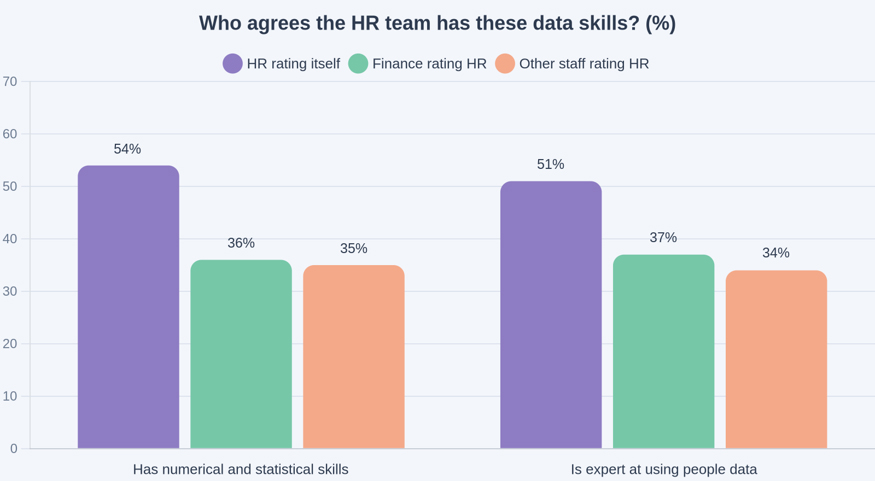
Source: CIPD, People analytics: driving business performance with people data (2018), global survey.
People tend to rate their own number skills higher than colleagues do, so before you cut a partner’s rate or celebrate a good month, ask someone in finance to check your reasoning.
Look beyond clicks and initial conversions. Consider the quality and longer-term value of the customers referred, taking refunds and retention into account. Avoid making significant decisions based on a short period of unusual activity.
Paying Partners on Time, Every Time
Reliability sounds less like a skill than negotiation, yet it is the one partners notice fastest. A late or wrong payment undoes months of good communication.
Start with written payment terms: when commissions become payable, the minimum balance before a payout, and what happens if a customer refunds after the partner has been paid. Publish them where every partner can find them.
Then make the routine boring. On payout day you check who is owed, hold back anyone under an open dispute, and one batch pays every affiliate due through PayPal, Stripe or a bank file, with small balances rolling into the next cycle.
Payment documentation requirements vary between countries and business arrangements. Establish the relevant requirements at the start of each partnership and seek appropriate financial or tax advice where necessary.
If something does go wrong, tell the affected partners before they notice. A short, honest message with a new date protects trust far better than silence.
How to Build These Skills
Write your next partner update, then cut it by half. Role-play a rate negotiation with a colleague. Sit with your finance team for one payout run. Practice like this builds these skills faster than a course.
Keep a simple log of partner requests and how long each took to resolve. After a month, you will know where your time goes and which skill to work on next.
Frequently Asked Questions
Do I need a marketing background to manage affiliates?
No. Marketing knowledge helps, but strong communication, organisation and a basic grasp of numbers matter more in the first year. You can learn the channel as you go.
How many partners can one person manage?
It depends on how active they are. A handful of high-earning partners may need weekly contact, while hundreds of small ones can share a monthly newsletter and a self-serve portal.
Which skill should I develop first?
Reliability. Paying correctly and on time costs nothing extra, and it gives every other conversation a foundation of trust.
What should I do when a partner asks for more commission?
Ask for their recent results, compare them with your alternatives, and offer a trade such as a tiered rate tied to volume. Avoid answering on the spot.