


The Skills You Need to Be an Event Organiser
See also: Facilitation SkillsFrom the outside, working as an event organiser can look like a whirlwind of glamour—product launches, high-profile weddings, and lively industry galas. Seasoned professionals know the reality is far more demanding.
Event planning consistently ranks among the most high-pressure careers, requiring logistical precision, creative vision, and calm crisis management.
Whether you are coordinating a corporate conference for thousands or an intimate workshop for twenty, the core competencies remain the same. To succeed in this fast-paced field, you need a reliable toolkit of practical and interpersonal skills.
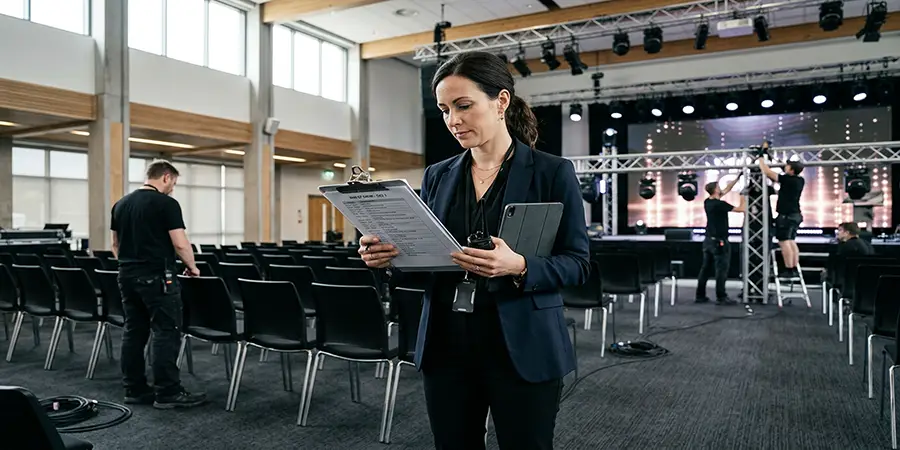
7 Essential Skills Every Event Organiser Needs
Delivering a smooth, memorable event depends on balancing careful advance planning with quick thinking on the day. Below are the seven core skills that underpin a successful career in event organisation.
Superior Organisational Skills
Organisational skills are the bedrock of the profession. Every event is a puzzle with hundreds of moving pieces—venues, caterers, speakers, attendees, transport, and technology—all of which must align at a fixed moment in time.
Successful organisers cannot rely on memory or scattered notes. You need reliable systems: detailed critical paths, clear timelines such as Gantt charts, and disciplined version control on every schedule and floor plan.
Being organised means far more than keeping a tidy desk; it means tracking budgets closely, keeping stakeholders updated, and ensuring every supplier contract and risk document is signed and filed. A well-executed event never happens by accident—it is the product of thorough attention to detail and dependable planning and organising skills.
Problem-Solving and Adaptability
In the events industry, unexpected setbacks are a certainty rather than a rarity. A keynote speaker may miss a flight, a catering van can suffer a flat tyre, or the venue Wi-Fi may drop minutes before a live stream begins.
This is where problem-solving skills prove their worth. An experienced organiser does not panic; they pivot quickly and make calm, calculated decisions under pressure.
Resourcefulness is essential. Building a practical "Plan B"—and often a "Plan C"—for every critical element is standard practice. Running pre-event risk assessments helps you spot likely failure points before the doors open, so you can resolve issues quietly behind the scenes before guests ever notice.
Networking and Relationship Building
Events are fundamentally people-driven, and your effectiveness often depends on the strength of your professional contacts. Effective networking is not just about collecting names; it is about building genuine, long-term trust with reliable partners.
A strong organiser maintains relationships with dependable florists, caterers, photographers, audiovisual technicians, and venue managers. When a last-minute emergency hits, a supplier is far more likely to go the extra mile for an organiser who treats them fairly and communicates clearly.
For freelance organisers, your network is also your strongest source of new work. Most clients hire planners through personal recommendations rather than cold advertising, making relationship building vital for long-term career growth.
Communication and Negotiation
An event organiser sits at the centre of a busy communication web connecting clients, venues, suppliers, and guests. You must adapt your tone quickly—firm and direct with a late contractor, reassuring with a nervous speaker, and clear and concise with a corporate sponsor.
Thorough communication prevents costly misunderstandings. Everyone involved needs a clear "run of show", accurate briefing documents, and early alignment on technical and setup requirements so teams work smoothly together on the day.
Alongside clear communication, strong negotiation skills are indispensable. You will regularly negotiate venue rates, supplier payment terms, and realistic client expectations. Securing strong value for a client's budget without sacrificing quality is a defining trait of a skilled organiser.
Creativity and Experience Design
Anyone can book a room and arrange refreshments. A skilled event organiser brings a clear purpose to life, using creativity to turn basic logistics into a cohesive experience.
Modern attendees expect thoughtful, engaging environments rather than passive lectures. You need to visualise how an empty venue can be transformed through lighting, layout, signage, and flow—designing the entire attendee journey from arrival and registration through to the closing session.
Even within strict corporate brand guidelines, creative thinking keeps energy high. Small, well-considered touches—such as interactive breakout formats or welcoming networking spaces—make an event genuinely memorable.
Technological Literacy
Managing events solely with a paper clipboard is long gone. Modern events are increasingly digital and hybrid, requiring comfort with a practical stack of software tools.
This typically includes registration and ticketing platforms (such as Eventbrite or Cvent), project management tools (such as Trello or monday.com), and virtual meeting or streaming platforms (such as Zoom or Microsoft Teams) for remote participants.
A working grasp of audiovisual basics is equally valuable. You do not need to be a sound engineer, but understanding microphone types, basic lighting for video, and connection backups lets you brief technical crews accurately and troubleshoot minor hiccups without delay.
Financial Acumen and Budgeting
Behind every creative event sits a strict commercial reality. Managing a budget is one of the most critical practical skills in the role: clients set a fixed ceiling, and you must deliver their brief without overspending.
This requires comfort with numbers, realistic cost forecasting, and disciplined budgeting skills. You must distinguish clearly between fixed costs (such as venue hire and staging) and variable costs (such as catering per head), while factoring in hidden extras like service charges, taxes, contingency funds, and overtime fees.
Maintaining a live expense tracker prevents unpleasant surprises when final invoices arrive. An organiser who consistently delivers on brief and within budget earns repeat business and lasting client trust.

Further Reading from Skills You Need
The Skills You Need Guide to Jobs and Careers: Career Management
This eBook is the guide that you need to understand your strengths and values, and build both your confidence and your network. This will enable you to develop and take advantage of opportunities that arise, and create a meaningful and fulfilling career for yourself.
Conclusion
Becoming a successful event organiser requires a rewarding blend of seemingly opposite strengths: you must be disciplined with schedules and budgets while staying creative, empathetic, and calm under pressure.
While a few of these traits may come naturally, all of them can be developed through practice and reflection. By strengthening your organisational systems, sharpening your communication and negotiation habits, and preparing thoroughly for the unexpected, you can build a thriving career bringing memorable experiences to life.
About the Author
Sophie Aldridge is a corporate event producer and hospitality consultant with over twelve years of experience managing conferences, exhibitions, and live community events across the UK. When she is not coordinating schedules and venues, she enjoys coastal hiking and growing heritage tomatoes in her greenhouse.