


The Skills You Need for Wild Camping
Keeping Your Mind HealthyCamping up in the hills surrounded by nature, or out in the wild and far away from civilisation, can be one of life’s greatest pleasures. In an increasingly hyper-connected and fast-paced digital world, stepping off the grid to sleep under the stars offers a profound way to decompress and restore your mental wellbeing. Compared to other outdoor activities, camping seems refreshingly simple: find a quiet spot, pitch a tent, and enjoy your stay.
But while you will indeed be picking a site and pitching a tent, your underlying camping know-how will significantly impact the success and safety of your outdoor adventure. Entering the wilderness without the correct preparation can quickly turn a relaxing getaway into a highly stressful ordeal. You need a specific blend of hard survival tactics, logistical foresight, and soft interpersonal skills to create the best possible experience.
It takes years of practice and a few minor disasters to acquire excellent outdoor skills, but even the most seasoned camper started as a novice. Whether you are planning a solo retreat into the mountains or a collaborative expedition with friends, mastering the fundamentals will drastically improve your resilience. Here is our comprehensive list of the fundamental skills you need for successful wild camping.
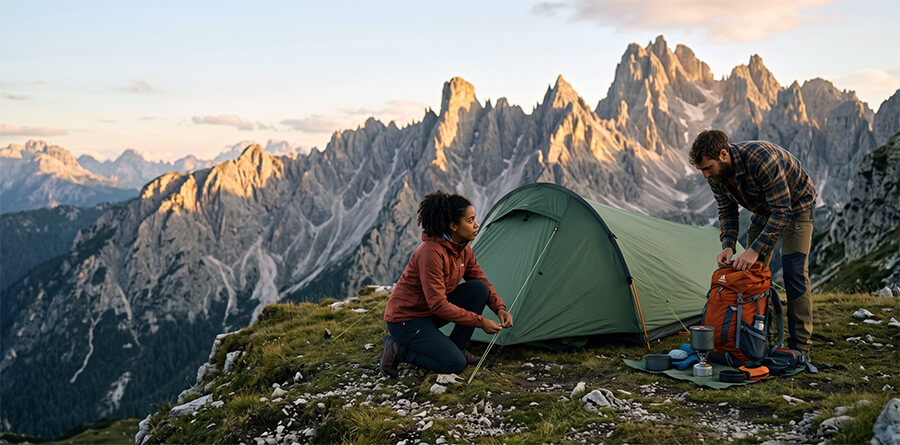
6 Essential Skills for Wild Camping
Planning and Preparation
When it comes to exploring the great outdoors, meticulous preparation is everything. The very first thing you need to consider is the site, the specific legalities associated with wild camping in that region, and the activities you intend to do. Do you plan to go hiking or scrambling? Then choose a destination that allows you to safely access the trails. The ideal site is far enough from overcrowded, commercial honeypot campsites to offer genuine solitude, but conveniently near to your intended route or a bailout point in case of an emergency.
Always take into account the micro-climates of the area, as this determines the type of clothes you should wear and the thermal rating of the gear you will need. Check the mountain weather forecast repeatedly leading up to your departure: if it warns of high winds, torrential rain, or heavy snow, putting off the trip for a later date is the mark of a wise camper. Beyond physical fitness, psychological readiness is a vital part of your preparation. You must be prepared for the mental challenge of isolation and unexpected setbacks. Excellent planning skills ensure that you maximise your time, reduce unnecessary expenditure, and sidestep avoidable mishaps.
Organisation and Gear Management
You have listed all your necessities—food, protective clothing, and perhaps a few small luxuries—but at the back of your mind, you keep wondering if you have forgotten a critical item. Packing for the wild is a complex logistical challenge; inexperienced campers almost always overpack. The trick is to strike a delicate balance between travelling light to preserve your energy and ensuring you have all the life-saving essentials. Strong organisational skills will help you achieve this equilibrium.
Wild camping is about going back to basics, so you generally need a highly weather-resistant tent, a sleeping mat, an appropriate sleeping bag, a reliable stove, fundamental cooking utensils, calorie-dense food, adequate water, a head torch, and spare dry base layers. However, anticipating challenging terrain is vital for a good night's sleep. If you expect rocky, uneven, or damp ground, a compact camping stretcher bed can be a smart, highly effective upgrade to a standard foam mat. Elevating your sleep keeps you dry, significantly improves airflow, and creates valuable storage space underneath. Compare top rated stretchers for weight ratings, pack size, and setup speed to ensure it fits seamlessly into your meticulously organised kit. Part of organising your equipment is also knowing how to pack your rucksack correctly for proper weight distribution: heavy items should sit between your shoulder blades, close to your back, while maps, compasses, and waterproofs should sit in easily accessible outer pockets.
Wilderness Survival Basics
In a nutshell, survival skills encompass the specific techniques that help a person sustain life and prevent injury in a difficult situation. Wild camping might not be inherently dangerous when planned correctly, but erratic weather, sudden shifts in temperature, and unknown terrain can sometimes lead to unexpected accidents. Therefore, it is worth knowing fundamental survival skills so you will feel confident and empowered in remote locations.
The most common techniques necessary include building a safe, contained fire (where legally permitted), making a temporary emergency shelter, sourcing and safely purifying water, and administering wilderness first aid. A comprehensive wild camping first-aid kit should go far beyond standard plasters; you must know how to use blister treatments, sterile bandages, antiseptic wipes, and tick removal tools. Additionally, learning to read natural weather signs—such as a sudden drop in barometric pressure, the rapid buildup of cumulonimbus clouds, or shifting wind directions—can give you vital hours to secure your tent before a storm hits. Before you set off, always create a "route card" and leave it with a trusted contact, detailing your plans, your destination, and your strict estimated schedule of return.
Environmental Stewardship and Leave No Trace
A crucial skill for any modern wild camper is the ability to minimise their physical impact on the environment. The "Leave No Trace" philosophy is not just a polite request from park authorities; it is a fundamental set of ethical principles designed to protect delicate ecosystems from human degradation. To camp responsibly, you must know how to properly dispose of human waste by digging a "cathole" at least 15 to 20 centimetres deep and at least 60 metres away from any water sources.
Furthermore, true environmental stewardship means packing out absolutely all of your rubbish (including biodegradable items like banana peels, which disrupt local wildlife diets) and leaving natural objects exactly as you found them. Understanding how to minimise campfire impacts—or making the active choice to use a lightweight camping stove instead—prevents devastating wildfires and scorched earth. By mastering environmental stewardship, you ensure that these beautiful, remote locations remain pristine for future generations of adventurers and local flora and fauna.
Interpersonal Communication
Camping is a brilliant opportunity to bond deeply with friends or interact with other outdoor enthusiasts. Gathering around the campfire to share stories, discuss the day's hike, and swap funny anecdotes about silly camping mistakes does not only keep spirits up, but it also allows you to learn from other people’s experiences in a relaxed setting.
Using your interpersonal skills and intrapersonal skills in the outdoors offers an opportunity to build a resilient network of like-minded people who share the same enthusiasm for nature. However, the wilderness can also be a high-stress environment. Navigating minor frustrations—like pitching a tent in the dark, dealing with a damp sleeping bag, or salvaging a burnt dinner—requires immense patience, active listening, and a very good sense of humour to keep the group dynamic positive and supportive.
Teamwork and Collaboration
Whether you are pitching a complex tunnel tent together in high winds, cooking dinner over a small stove, or debating which trail to hike the following morning, wild camping requires that you work together as a highly cohesive unit. In the wild, entirely removed from modern conveniences and instant digital answers, campers learn to rely heavily on each other to accomplish tasks that are difficult, if not impossible, to achieve alone.
Everyone has something unique to contribute to the group's success, from navigating the terrain and interpreting the weather to collecting firewood and filtering water. Through this active collaboration, the group learns to appreciate each other’s unique strengths and accept each other’s inevitable weaknesses. Additionally, knowing that you have successfully contributed to the team's survival and comfort in a challenging environment builds immense, lasting self-confidence that transfers directly back into your everyday life.
Conclusion
There is far more to wild camping than simply pitching a tent and admiring the panoramic view. It is a brilliant, real-world test of your planning, organisation, environmental ethics, and communication abilities. By intentionally developing these six core skills before you head out, you will ensure your next wild camping trip is safe, collaborative, and deeply rewarding. Embracing the challenge of the outdoors not only equips you with practical survival knowledge but also fosters a profound sense of self-reliance and teamwork that will benefit you in all areas of life.
Further Reading from Skills You Need

The Skills You Need Guide to Life
This two-part guide is an easy-to-read summary of the essential skills you need for a healthy mind and body.
The first eBook, Looking After Yourself, covers some of our most popular content and will help you to live a happier, healthier and more productive life.
The second eBook, Living Well, Living Ethically, considers how you can live your best life all the time. It helps you to answer the question: how can I avoid having too many regrets about my life?
About the Author
This article was provided by Cool Camping, experts in all things camping, glamping, and campervanning across the UK and Europe.