


How to Upskill Your Marketing Team for the Future
See also: Strategic MarketingMarketing approaches are continually evolving, which means you need to ensure your marketing team has the necessary and relevant skills to adapt to the future. The digital landscape is no longer static. Consumer expectations have shifted dramatically; they demand personalization, instant access, and authentic brand interactions. Furthermore, the rise of artificial intelligence, shifts in data privacy regulations, and the constant emergence of new platforms mean that a skill set from even two years ago may already be outdated.
When you upskill your team members through additional education and training (often called continuous professional development), it is an opportunity to expand their capabilities and ensure they have the right skills and tools. This investment gives them the motivation and confidence to face the rapidly changing world of marketing. Upskilling is not just a benefit; it is an essential survival strategy for any modern marketing department.
That means enabling your marketing team to learn about new and evolving technologies, like artificial intelligence and machine learning tools, and helping them to improve their natural creative skills to meet future consumer demand.

Adopt an In-house Training Approach
You have multiple training avenues available to teach your marketing team new skills. Adopting an in-house approach is often one of the best options because you maintain control over which skills are taught and how the training is delivered. This allows you to tailor the content directly to your company's specific goals, tools, and challenges.
Furthermore, when you use in-house training, you can begin by upskilling the team members who are most suited to expanding their skill sets and then have them train other members of your team. This "train-the-trainer" model is highly effective. The selected team members gain deep expertise, and in teaching it to others, they solidify their own understanding. This also creates internal subject matter experts, reducing reliance on external help in the future.
Make a list of the skills you want your marketing team to learn and then select members of your team who already have strong skills in relevant areas. This requires careful selection. You need individuals who not only have the aptitude to learn the new skill but also the soft skills—like patience and clear communication—to teach it effectively.
You can save costs by providing in-house training and ensuring you upskill the right people better, but there are other advantages of using the in-house approach. For instance, the people you select to train will already know the personalities and abilities of the rest of the team. That familiarity means they will be able to train their colleagues better and adapt the material to suit their specific learning styles.
Personalise Your Training Methods
Using an in-house training approach also enables you to provide skills training via methods that best suit individual members of your marketing team.
For example, some people may learn better when they engage with podcasts and other digital content while other team members may prefer engaging with trainers face-to-face and reading books. You can identify these preferences through simple anonymous surveys, one-on-one check-ins, or by offering multiple learning formats for a single topic (e.g., a video, a podcast, and a written article) and seeing which ones are most used.
Basically, adopting a personalised approach to upskilling your marketing team enables you to get the best out of each team member.
You can also get more inventive with training and make the process fun. That could be as simple as using branded worksheets or custom-designed training manuals that are colourful and engaging, rather than dry, text-heavy documents.
The more personalised you make the training process, the more engaged your team members will be, and the more skills they will learn. This demonstrates an investment in them as individuals, which can significantly boost morale and loyalty.
Enable Your Team Members to Attend Courses and Seminars
In addition to in-house training, or as an alternative to in-house training, consider sponsoring members of your marketing team to attend courses and seminars outside of the office. This could include industry conferences, specialized workshops, or online certification programs.
You could enable your team members to work toward gaining new certifications in areas like data analytics, specific marketing platforms, or marketing project management. Alternatively, they could attend day courses that are less formal but just as powerful in helping them to learn the new skills they need to handle the future of marketing.
This method also provides a significant secondary benefit: networking. When your team members attend these events, they connect with peers from other companies, learn about emerging trends, and can bring back fresh, external perspectives that are invaluable for innovation. This prevents the "echo chamber" effect that can sometimes happen with purely in-house training.
If learning software applications and new technological tools are an integral part of the upskilling you want to introduce to your company, external courses and seminars can be particularly beneficial as they are often taught by certified experts on those platforms.
Use External Experts
One of the drawbacks of in-house training and sending employees on training courses is that it takes time. So, another option for teaching new skills is to hire external experts.
When you bring in a professional to train your team, the expert will have all of the know-how and relevant tools to bring your team up to speed faster and help each team member to put his or her new skills into practice. An external expert also brings an objective, third-party viewpoint. They are not influenced by internal politics or company history and can provide candid feedback on your team's current processes and skill gaps. This 'outside-in' perspective can be crucial for breaking old habits and implementing truly new strategies.
An expert could visit your place of work, or the expert could provide learning through digital means. By using the latter method, you can ensure you get the best expert for the task on board, as it will not matter whether he or she is on the other side of the world.
Encourage Microlearning
Regardless of the precise training methods you employ, consider encouraging microlearning as well. Microlearning involves team members learning new skills in their own time and at their own pace, often through bite-sized content.
This could look like a five-minute "Skill of the Week" video, a short interactive quiz sent via a team messaging app, or a one-page infographic that summarizes a complex topic. If there are time constraints for learning, microlearning can be a very helpful method to use. It respects the employee's schedule and makes learning a continuous, manageable habit rather than a disruptive, all-day event. This approach helps build a culture of continuous learning, where personal development is not a special occasion but a part of the daily workflow.
Make the Learning Process Interactive and Simulate Real-life Situations
Upskilling is not just about teaching new skills. It is also about applying those skills. So, any upskill training process should include simulating real-life situations.
When your marketing team is able to apply the new skills that they learn to their jobs, they will become much more efficient and skillful in the new methods and actions they are taught. This works because it taps into basic human psychology. It provides a sense of achievement and a safe space to fail, experiment, and try again without real-world consequences.
Gamifying the learning experience by making training interactive is one option. Through games, trainees can answer questions and apply knowledge to problem-solving incidents that will arise in real life. When a trainee can apply knowledge to a simulated problem, the information moves from theoretical memory to practical understanding.
Through gamification, your marketing team can acquire knowledge more quickly and apply it more effectively than they would be able to do through solely reading books or listening to podcasts.
Carefully Consider the Skills That Your Team Needs to Learn
Whatever approaches you employ to upskill your marketing team for the future, you need to carefully consider the precise skills that you need your team to learn. One of the best ways of identifying the types of skills to teach is to keep abreast of current and future marketing trends and technological tools.
For instance, artificial intelligence and machine learning are being used more and more to create better and more reliable marketing approaches; from enabling more accurate, real-time analytics and measurement to improving customer engagement. Beyond just knowing how to use AI, marketers must understand how to interpret its outputs and ask the right questions.
Voice assistant technology is another thing that marketers should be up to speed with because it allows users to have contextual interactions and enables marketing teams to take personalization to a completely new level. Other areas include:
Data Literacy: The ability to read, analyze, and argue with data is perhaps the most critical skill. Team members need to be able to look at a dashboard, understand the "why" behind the numbers, and translate that data into a strategic story.
Customer Empathy: As automation handles basic tasks, the human ability to understand the customer's emotional journey becomes a key differentiator. Training in empathy and customer journey mapping is invaluable.
Advanced Content Creation: The future is about creating brand experiences. This means upskilling in persuasive storytelling in business, video production, and audio (podcast) creation.
Other technological tools that your marketing team should become familiar with include virtual reality, data mining, and blockchain technology, as these will continue to shape consumer interactions.
Conclusion
Upskilling your marketing team is not a one-time project; it is an ongoing strategic investment in your company's future. The marketing landscape will only continue to accelerate, driven by new technologies and evolving consumer expectations. By adopting a flexible, multi-faceted training approach—whether in-house, through external courses, or via microlearning—you create a culture of continuous improvement. This not only equips your team with the technical skills to compete but also fosters the critical soft skills like adaptability, problem-solving, and creativity that will ensure your business thrives in the long term.
Further Reading from Skills You Need
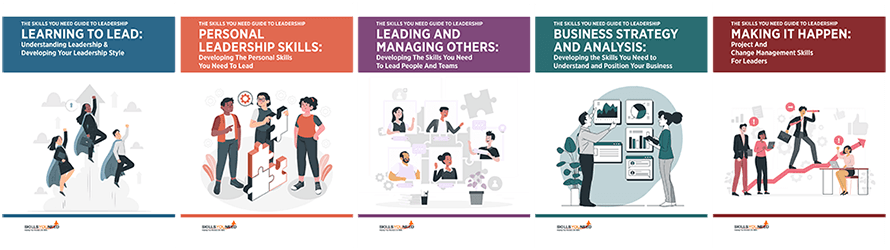
The Skills You Need Guide to Leadership eBooks
Learn more about the skills you need to be an effective leader.
Our eBooks are ideal for new and experienced leaders and are full of easy-to-follow practical information to help you to develop your leadership skills.
About the Author
Cristina Par is a content specialist with a passion for writing articles that bridge the gap between brands and their audiences. She believes that high-quality content is essential for businesses small and large.