


7 Reasons Why Students are
Choosing to Study in South Africa
See also: Online Education and Learning
When planning for international higher education, students naturally tend to look toward traditional western hubs like the United States, Australia, and the United Kingdom. However, emerging global markets are rapidly shifting the academic landscape. South Africa has quietly built a formidable reputation for offering world-class education combined with an unparalleled environment for personal and professional growth.
Studying abroad is about much more than securing a degree; it is a profound exercise in building highly sought-after soft skills, such as cross-cultural communication, adaptability, and resilience. Since the end of apartheid, South Africa has aggressively invested in its higher education sector, transforming its universities into vibrant, multinational centers of research and innovation. From advanced engineering and technology degrees to deep sociological research programs, deciding to apply to a university in South Africa offers distinct advantages for the modern, globally-minded student. Below, we explore seven compelling reasons to choose South Africa as your international study destination.

Why South Africa Offers a Unique Educational Advantage
Choosing an unconventional study destination forces you out of your comfort zone, inherently fostering the exact interpersonal and strategic skills that modern employers demand. Here is how studying in South Africa delivers on both academic rigor and real-world readiness.
-
Internationally Recognized Academic Excellence
The certifications and degrees awarded by top South African universities are widely recognized and highly respected across the globe. Institutions such as the University of Cape Town, the University of the Witwatersrand, and Stellenbosch University consistently rank among the best in the world, particularly in fields like medical research, geology, developmental economics, and engineering.
Due to a massive influx of international interest, these universities have undergone major infrastructure and curriculum transformations. This academic rigor requires students to refine their critical thinking skills, engaging with complex, localized problem-solving that has global applications. The high standards maintained by these institutions ensure that graduates leave highly competitive on the international job market.
-
A Highly Favorable Cost of Living and Fee Structure
One of the most pragmatic reasons students choose South Africa is the exceptional return on investment. Compared to the exorbitant tuition fees and living costs associated with North American or European universities, South Africa provides an incredibly student-friendly financial ecosystem. Favorable exchange rates mean that international students can enjoy a high quality of life—including modern accommodation, dining, and travel—on a relatively modest budget.
Furthermore, the academic timeline is highly efficient. Because the South African educational structure closely mirrors the British system, most undergraduate bachelor's degrees can be completed in just three years, while postgraduate master's programs typically require only a single year of intensive study. This structure allows students to accelerate their entry into the workforce while minimizing their overall educational debt.
-
Skill-Development and Experiential Learning Focus
In a hyper-competitive global economy, theoretical knowledge is no longer enough to secure employment; graduates must possess tangible, actionable skills. South African institutions recognize this shift and have heavily adopted an outcomes-based approach to higher education. Curriculums are designed specifically to bridge the gap between academic theory and real-world industrial application.
Universities frequently partner with local industries, NGOs, and multinational corporations to offer robust internship and learnership programs. This allows students to gain immediate, hands-on experience in dynamic environments. Navigating these professional landscapes requires students to rapidly develop their problem-solving abilities and adaptability, rendering them highly attractive to future employers who prioritize experiential learning over pure academia.
-
Crossing the Language Barrier Seamlessly
While South Africa boasts an incredible 11 official languages, English remains the primary language of instruction in higher education, as well as the dominant language of commerce and government. This offers a massive advantage for international students. Non-native speakers have the perfect environment to immerse themselves and perfect their English, which remains the undisputed global language of business.
Simultaneously, living in such a linguistically diverse nation offers the unique opportunity to pick up conversational phrases in languages like Zulu, Xhosa, or Afrikaans. Navigating a multilingual society dramatically enhances a student's communication skills, teaching them how to read non-verbal cues and practice deep, empathetic listening when interacting with people from vastly different backgrounds.
-
Immersion in a Rich, Diverse Culture
South Africa is famously known as the "Rainbow Nation," and its society is profoundly multicultural. The country is a vibrant blend of African, European, and Asian traditions, creating an eclectic, deeply historical, and highly welcoming environment for international visitors. This cultural diversity makes South Africa an unparalleled destination for building emotional intelligence.
Immersing yourself in a society that is actively navigating its complex historical legacy teaches students invaluable lessons in empathy, equity, and social justice. Engaging with this diverse demographic helps students broaden their worldview and develop deep cultural competence. In the modern, globalized workplace, the ability to collaborate respectfully with colleagues from entirely different cultural paradigms is a definitive leadership trait.
-
Access to Scholarships and Financial Support
To continue attracting top-tier global talent, both the South African government and private educational institutions are highly supportive of international students. Numerous scholarship programs, bursaries, and academic grants are available specifically for international applicants pursuing degrees in high-demand fields like STEM, public health, and environmental science.
While navigating the application process for these financial aids requires strong organizational skills and persistence, successfully securing a scholarship dramatically reduces the financial burden of international study, making world-class education accessible to a broader demographic of global talent.
-
Networking and "Earn While You Study" Initiatives
South African universities encourage a highly active, integrated student life that extends well beyond the lecture halls. Many institutions facilitate "earn-while-you-study" initiatives, allowing students to take on part-time jobs, apprenticeships, or campus-based employment. Balancing academic deadlines with part-time work forces students to master their time management and personal organization.
Moreover, these universities maintain incredibly strong, highly active alumni networks spread across the globe. By participating in community outreach programs and industry mixers, students can build a formidable professional network before they even graduate. These connections are frequently the catalyst for lucrative job placements and international career mobility following graduation.
Conclusion
South Africa's attractiveness as a destination for international study extends far beyond its breathtaking landscapes and vibrant wildlife. It offers a sophisticated, high-quality education system framed by deep cultural richness, economic affordability, and the convenience of English instruction. By choosing to study in a dynamic, developing market, students do not just absorb academic theory; they actively build the resilience, adaptability, and global networking skills that define modern leadership.
With its welcoming environment, rigorous academic standards, and emphasis on experiential learning, South Africa provides a unique and transformative learning journey. For the ambitious student looking to differentiate their resume and broaden their global perspective, studying in South Africa is an exceptional strategic choice.
Further Reading from Skills You Need
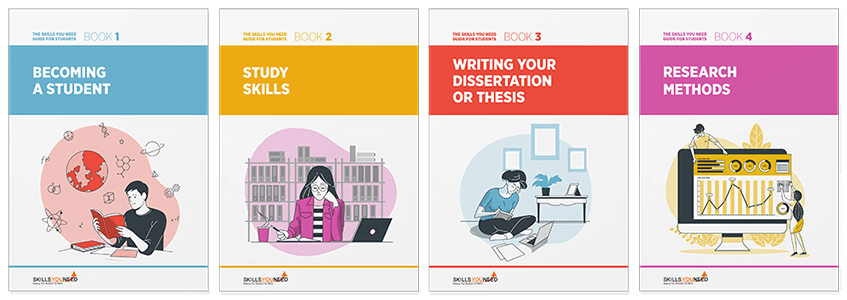
The Skills You Need Guide for Students

Develop the skills you need to make the most of your time as a student.
Our eBooks are ideal for students at all stages of education, school, college and university. They are full of easy-to-follow practical information that will help you to learn more effectively and get better grades.
About the Author
Dr. Steve Hudson is a Higher Education Strategist and International Study Advisor with over 15 years of experience guiding young adults through complex career and educational choices. He specializes in cross-cultural vocational training and global student mobility.