


Top Study Tips for Students
See also: Revision SkillsExam season is just around the corner, which means it is time to knuckle down and start studying for those all-important exams.
Work hard for the next few months and you will be able to let loose and celebrate throughout the summer. When you look at your exam timetable, it is understandable to think that you are faced with an impossible task, but stick with it because a bit of hard work and plenty of organisation will put you on track to exam success.
To make life that little bit easier for you, we have outlined some simple, modern, and science-backed changes that will make you significantly more productive during your revision sessions.

Give Yourself Plenty of Time
It goes without saying, but attempting to cram a load of information in the night before a test rarely works. Instead of relying on energy drinks and all-nighters, give yourself plenty of time to study in the lead-up to your exams.
This allows you to absorb the information in digestible sections rather than attempting to take it all in at once. One of the most highly recommended psychological principles for this is spaced repetition. By reviewing material at gradually increasing intervals, you strengthen your memory pathways and drastically reduce the chances of forgetting the information when you sit in the exam hall.
When you start working nice and early in the year, you put yourself in a formidable position to take in more information. Dedicate one hour each evening to revisit anything that you have learned that day. While the information is fresh in your mind, you can solidify your understanding of it. This steady approach means you are never trying to grasp complex or difficult concepts close to the wire.
Get Organised
Once you know what exams you are sitting and when you are going to be sitting them, it is time to put a clear, actionable plan in place that allows you to make the most of your study sessions.
It is always a good idea to rank your exams by difficulty and chronological order. Once you have done this, you will have a realistic understanding of the effort involved in revising these concepts, allowing you to structure your plan accordingly. Using methods like the Pomodoro Technique—working in focused 25-minute bursts followed by a five-minute break—can help maintain your concentration without causing burnout.
When you are planning your time, draw up a comprehensive timetable. This gives you proper revision structure and ensures that you stick to your goals. Without a plan, you might find yourself feeling bogged down by the sheer volume of the workload, when in reality, breaking it down into daily tasks makes it entirely manageable.
Keep It Visual
Over the next couple of months, you will have a vast amount of information to take in. You cannot simply read lines and lines of text and expect your brain to process them properly without mental fatigue.
The best way to learn new things is often through the use of visual cues, giving you plenty of scope to get creative with your revision. When scrolling through social media, you naturally pay more attention to images than to plain text. Cognitive studies show that humans are highly visual creatures, meaning you are more likely to engage with visual data. This makes it the perfect time to start putting together diagrams, mind maps, and colour-coded cue cards.
Consider using the Cornell Method for your notes, which visually separates key points from broader summaries. Mind mapping software can also be a brilliant way to connect different themes within a subject, providing a visual overview that is much easier to recall under exam conditions.
Practice What You Preach
One of the best ways to master a topic is to practise recalling its concepts until they are ingrained in your subconscious.
When you practise something repeatedly, you will find that you can retrieve that information with minimal effort when needed. Active recall—testing yourself without looking at your notes—is far more effective than simply re-reading the textbook. When you feel like you have mastered these concepts, the next logical step is to try and teach them to other people. This is often referred to as the Feynman Technique.
We recommend doing this in two stages. First, teach the concept to your fellow students. Because they already have an underlying understanding of the information, they can challenge you, ask probing questions, and clarify anything that you might be unsure about.
Second, try to teach the topic to family and friends who do not have any existing knowledge of the subject. If you can explain complex ideas to them in a clear, simplified, and structured way, you can enter your exams with genuine confidence. It proves you truly understand the core material rather than just memorising the jargon.
Stay Healthy
This might seem like a secondary concern, but maintaining your physical wellbeing has a profound impact on your cognitive performance.
Exercise has the power to make you feel energised and more awake, ensuring you are focused throughout your study sessions. Cardiovascular activity increases blood flow to the brain and releases key proteins that are essential to retaining new information and reducing stress.
Research consistently shows that drinking plenty of water while you study, and during the exams themselves, has a remarkably positive effect on learning. Your body and brain function optimally when properly hydrated. Many educational psychologists also believe that drinking water during exams helps to reduce anxiety, keeping your heart rate steady and improving overall performance.
You should also watch what you eat throughout the busy exam period. Certain superfoods have been found to boost brain power. Snacking on walnuts, almonds, avocados, blueberries, and dark chocolate while you study provides the healthy fats and antioxidants linked to improved memory and academic performance.
Minimise Distractions and Create a Study Sanctuary
Where you study is just as important as how you study. If you attempt to revise in a noisy room or on a cluttered desk, your brain will constantly battle against external stimuli.
Creating a dedicated study sanctuary trains your brain to associate a specific environment with focus and productivity. Ideally, this should be a quiet, well-lit space with a comfortable chair and a large enough desk to spread out your materials. Ensure that this space is strictly reserved for working; avoid studying in bed, as this blurs the psychological boundaries between rest and productivity, which can lead to poor sleep and sluggish study sessions.
Furthermore, managing digital distractions is vital. While technology can aid your studies, notifications are the enemy of deep work. Consider putting your phone in another room, turning on 'Do Not Disturb' mode, or using website blockers on your computer to prevent yourself from mindlessly scrolling through social media when you should be tackling complex equations or essay plans.
Try Using Modern Technology
There is a lot to coordinate when planning your revision, and it can become overwhelming if you try to manage everything on paper.
Fortunately, you have a smartphone or laptop close at hand, which can be an incredibly powerful tool if used correctly. While social media can be a distraction, there are countless applications designed specifically to optimise your learning experience.
Whether you struggle with managing your time, taking neat notes, or creating effective flashcards, there is a digital solution ready to help. Here are a few modern apps we highly recommend:
Notion: An incredibly versatile workspace app that allows you to build databases, track your revision timetable, and organise your lecture notes all in one place.
Forest: If you find yourself constantly checking your phone, this app uses gamification to keep you focused. You plant a virtual tree when you start studying, and if you leave the app to check messages, your tree dies.
Otter.ai: A brilliant transcription tool that can record your lectures and convert them to text in real-time. This is perfect if you struggle to keep up with the tutor and need an accurate written record to review later.
Quizlet: Ideal for visual learners, this app lets you create digital flashcards and turns your study materials into interactive games, testing your active recall on the go.
Get the Right Support
If you are genuinely struggling with your schoolwork, tackling it completely on your own will often make things more difficult and stressful.
Seeking out a mentor, joining a study group, or getting professional tutoring can be invaluable. A tutor can provide personalised feedback, tailor their teaching style to your specific learning needs, and offer actionable advice built on years of experience. Do not be afraid to ask for help when you need it; reaching out is a sign of maturity, not weakness.
Conclusion
The exam period will always be a challenging time, but you will get through it successfully with a bit of dedication and a strategic approach to your revision.
By giving yourself plenty of time, visualising your notes, teaching others, and taking care of your physical health, you are setting yourself up for the best possible outcome. Stick to your timetable, make smart use of modern technology, and remember that all of your hard work will be well worth it when you are celebrating your results in the summer.
Further Reading from Skills You Need
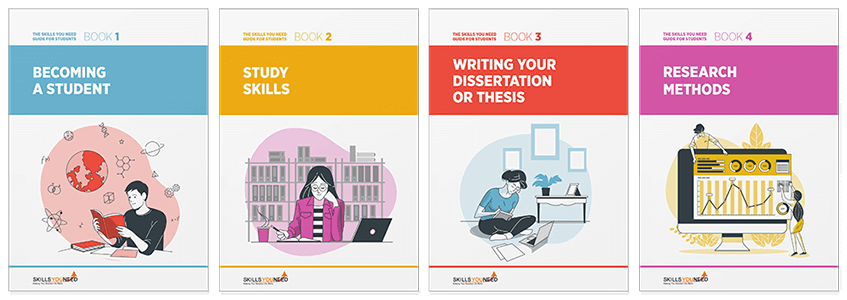
The Skills You Need Guide for Students

Develop the skills you need to make the most of your time as a student.
Our eBooks are ideal for students at all stages of education, school, college and university. They are full of easy-to-follow practical information that will help you to learn more effectively and get better grades.
About the Author
Dr. Amy Hunt is an educational psychologist and academic consultant with over a decade of experience helping university students optimise their learning strategies and overcome exam anxiety. When she is not researching the latest cognitive science behind memory retention, Amy enjoys hiking and attempting (with mixed results) to bake the perfect sourdough loaf.