


The Top Skills You Need to Have
as a School Manager
See also: Teaching Skills
Leading a school is no easy job. There is a lot of responsibility that you are invested in. Although it may seem that your role is limited to imparting the best quality of education to young minds, it trickles down much deeper. You are not only training young minds; you are building the mindset of the future of a nation.
However, there is no need to feel overwhelmed. If you are looking to hone your leadership skills as a school manager, you are already on the right track. Building a school of achievers can be made easier than you think. All you need are the right kind of skills.
This article reveals the top skills that a school manager should seek to develop.

Top 5 Skills That Can Make You a Better School Manager
The inner management of a school is undoubtedly chaotic. From deciding the teacher-to-pupil ratio and subject planning, to time optimisation, a lot goes into shaping a functional school. To do this right, you will need multiple hard skills. However, truth be told, keeping up with the management drill is hard even with those hard skills.
To ensure you can optimise your hard skills for consistency and efficiency, you need complementary soft skills—skills that can help you to be a natural leader.
Be Mindful
If there is one quality that can set you on the path of becoming a pro manager, it is awareness. How observation-oriented are you in life? Do your eyes catch what others miss? If not, you need to start being mindful now. Staying alert is not a unilateral function; there are multiple layers at work:
Self-awareness: The key to consistent growth and improvement lies in the acceptance of reality. If you are unable to understand where your strengths and vulnerabilities lie, overcoming difficulties becomes next to impossible. By being self-aware, you create an environment designed for growth and can defend yourself during uncertain situations.
Authentic leadership: True leadership is all about being true to yourself. If you fail to embrace your unique, authentic self, creating sustainable value for the people affected by your decisions can suffer. Find out what drives you and your core values; these can help you shape the values of the educational organisation you manage.
Emotional intelligence: If you cannot manage your emotions and stay resilient in disrupted times, chances are your work—and your students—will suffer. Developing emotional resilience requires accepting and addressing cognitive issues. Furthermore, you must ensure your students are in good cognitive shape. This makes empathy a key quality. When combined with tools like a student engagement platform, leaders can better identify patterns in student behaviour and well-being, allowing them to intervene proactively.
Be Open to Critical Feedback
When was the last time you reflected upon your actions because someone shared their personal take? More importantly, what was your approach towards it? Did you react or just act? Being open to feedback is a vital way to improve your management and leadership skills today. It can broaden your perspective and help you stay resilient and proactive in critical situations.
Listen more, talk less: Deep learning happens when you engage in deep listening. The more you actively listen to what others have to say, the more open you are to opportunities for improvement. Tracing the root cause of problems becomes easier, and your measures can then be preventive instead of reactive.
Validate assumptions: While listening is an important quality, you also need to know what feedback to work upon and what to steer clear of. Decluttering your mind from unconstructive feedback requires careful inspection. If the feedback is subjective, there are high chances it is based on someone's whims; if it is universal, you can assess its validity and take action.
Own Your Actions
Accountability is one of the key traits of a masterful leader. Taking complete responsibility gives you the ability to combat any critical situation and come out winning.
Acknowledgement: Having the courage to admit your own mistakes is the first step towards successfully eradicating problems from your institute. Admitting your mistakes gives you an opportunity to learn from them. The best part is you can design organisational protocols to ensure they are kept at bay, delivering a positive message to your team of a productive, unbiased work culture.
Self-understanding and management: Managing assets and students efficiently makes building a flexible mindset critical. Today's leadership is all about embracing change. Instead of sticking to traditional modes of administration, adapt to new, innovative ways—such as transitioning from paper to modern digital management tools. Successful leaders are not afraid of asking hard questions, making them agile policy builders who ensure the organisation stays strong during disruption.
Be a Proactive Thinker
A leader is a proactive thinker. They invest a lot of energy and time thinking about the problem before taking action. This helps them to analyse and understand the problem better and come up with optimal methods to solve it.
Engage in reflective thinking: The road to transforming your educational institute into a winning venture goes through introspection. Taking the time to reflect upon your own actions will not only boost your personal growth but help you understand blocking patterns in your activities and find gaps where you can improve.
Stay Focused on the Vision
No great leadership has been realised without a vision guiding it. Having a clear vision of what you are trying to achieve will help you navigate through tough times. Developing a 'why' gives you the drive to persevere.
Communicate your vision: Actualising your vision is no one-person job. You need a team to foster change. This makes effective communication of your vision a key ingredient for successful leadership; to do this, you must master the art of storytelling.
Mentorship qualities: One of the key reasons a pupil might seek you out is to coach them on developing a resilient mindset. This makes mentoring skills highly sought after in a good leader. Mentoring is much more than sharing strategies; it requires the skilful management of personalities and relationships. Start by building trust amongst your mentees, ensuring they are comfortable sharing their vulnerabilities.
Further Reading from Skills You Need
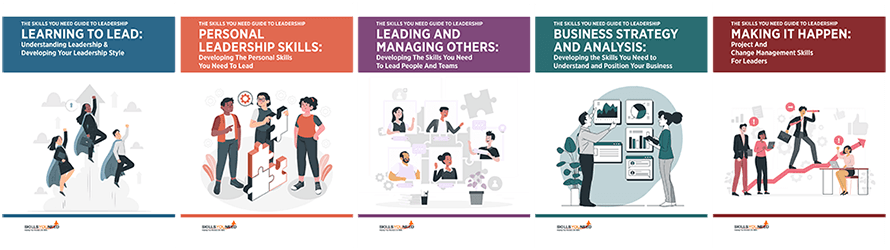
The Skills You Need Guide to Leadership eBooks
Learn more about the skills you need to be an effective leader.
Our eBooks are ideal for new and experienced leaders and are full of easy-to-follow practical information to help you to develop your leadership skills.
Conclusion
Leadership is a powerful quality. It is one of the cornerstone ingredients to foster a greater tomorrow. If you take a clinical approach and examine the greatest leaders around the globe, they all have certain qualities that are identical or similar. The skills outlined above are the ones you most commonly find in them. If you start investing your time in inculcating these skills, there is a high chance you will be on your way to becoming the manager whom you idealise.