

6 Skills You Need to Succeed
in a Marketing Degree
See also: Study Skills
Marketing is a fascinating, fast-paced, and continuously evolving field. For this reason, pursuing a degree in marketing is an excellent way to build a robust foundation for a dynamic career. Whether you are thinking of getting a diploma, a bachelor's degree, a master's, or even a PhD, formal education in marketing can provide an immeasurable amount of value to your professional life.
As you prepare to venture into this educational adventure, you may be wondering what specific competencies you need to ensure your academic and professional success. While your university program will teach you theoretical frameworks, consumer behavior models, and technical principles, thriving in the modern marketing landscape requires a distinct set of highly developed soft and hard skills. Below, we have compiled a list of six essential skills you should actively hone as you prepare for your marketing degree. By cultivating these abilities early, you will set yourself up for long-term prosperity.

The 6 Core Skills for Marketing Students
Success in a marketing program is not just about memorizing terminology; it is about learning how to think critically, communicate persuasively, and analyze human behavior. Developing the following six skills will give you a significant competitive advantage from your very first lecture.
-
Writing and Persuasive Copywriting
When you study marketing, you will quickly learn the supreme importance of conveying ideas clearly, particularly through the written word. In academic settings, you will be required to write lengthy reports, case study analyses, and strategic proposals. In the professional world, this translates into crafting marketing copy that is succinct, highly engaging, and precisely targeted to a specific audience.
As a result, it is vital that you prioritize your efforts to improve your writing skills before commencing your degree. The best technique for improvement is remarkably simple: consistent practice. Make writing a daily discipline. Start a personal blog, write practice advertising scripts for your favorite brands, or practice summarizing long articles into punchy, 280-character social media posts. The goal is to learn how to distill complex information into a format that immediately captures and retains human attention.
-
Interpersonal Communication
Communication is the absolute bedrock of success in the marketing world. At its core, marketing is about understanding people, getting them genuinely interested in your product or service, and enticing them to take a specific action. You cannot achieve this without a deep understanding of human psychology and strong interpersonal communication skills.
Furthermore, marketing is rarely an isolated activity. You will constantly interact with stakeholders, clients, creative directors, and cross-functional teams. By actively improving your communication skills—particularly your ability to practice active listening and read non-verbal cues—you will build a stronger capacity to establish positive, productive relationships. Being able to confidently articulate a marketing strategy to a room full of skeptics is just as important as the strategy itself.
-
Creative Problem-Solving
The marketing industry is characterized by relentless innovation and fierce competition. To stand out, you need originality. Creativity allows you to distinguish your product or service offering from an ocean of competitors and appeal to customers in highly unique ways. It enables you to examine the world through a different lens and spot commercial opportunities where others see only obstacles.
However, creativity in marketing is not just about designing beautiful graphics or writing clever slogans; it is about applied creative thinking. It is the ability to look at a declining sales chart or a failed campaign and brainstorm agile, non-linear solutions. Whether you are developing an app, finding alternative distribution channels, or rethinking a brand's entire identity, training your brain to approach problems laterally will prepare you to tackle the most complex assignments in your degree.
-
Collaboration and Teamwork
Collaboration is highly valued in the marketing sphere because the best campaigns are born from a fusion of multiple perspectives. An effective marketing department requires data analysts, copywriters, graphic designers, and strategic planners to work together seamlessly. This kind of cognitive diversity is priceless, allowing businesses to understand and appeal to a much wider customer base.
In any marketing degree, collaboration is compulsory. It is highly likely that the majority of your assignments—from pitching a mock product to presenting comprehensive case studies—will be completed in groups. If you make a conscious effort to refine your collaborative skills ahead of your degree, you will walk into the program prepared to navigate group dynamics, resolve inevitable creative conflicts, and lead teams effectively.
-
Market Research and Data Literacy
Gut feelings and educated guesses are no longer sufficient in modern marketing. Today, data is the driving force behind every successful campaign. Marketers need to deeply understand their competitors, their niche, and their exact target audience. Market research provides the empirical evidence required to assess where resources are best spent, identify emerging business opportunities, and mitigate financial risk.
Because research is a vital component of the profession, it forms the backbone of any marketing degree. You will learn how to conduct both qualitative research (like focus groups and behavioral interviews) and quantitative research (like survey analysis and A/B testing). To gain a head start, familiarize yourself with basic research methods and learn how to read statistical data objectively without falling victim to confirmation bias. Understanding how to translate raw data into an actionable business narrative is one of the most lucrative skills you can develop.
-
Adaptability and Continuous Learning
The marketing landscape shifts at a dizzying pace. Algorithms update overnight, new social media platforms emerge rapidly, and consumer privacy laws rewrite the rules of digital advertising without warning. As a result, marketing professionals need to be exceedingly adaptable. A successful marketer does not just understand the current rules; they know how to pivot instantly when the rules change.
Adaptability may seem like a difficult trait to develop, but it stems from a mindset of continuous learning. Rather than viewing industry disruptions as daunting obstacles, train yourself to see them as opportunities to outmaneuver slower competitors. Cultivate a habit of reading industry news, questioning established best practices, and pushing yourself completely out of your comfort zone. By embracing change now, you will build the intellectual resilience required to thrive throughout your university degree and your subsequent career.
Conclusion
Pursuing a marketing degree is an exciting and highly fulfilling endeavor. Not only will it offer a great deal of personal achievement, but it will also serve as a powerful springboard into a prosperous, creative career. However, simply attending lectures is not enough to guarantee success in such a competitive field.
It is crucial to take proactive ownership of your personal and professional development before you even step foot on campus. By refining your writing, mastering data literacy, and embracing a highly adaptable mindset, you will ensure that you start your marketing degree on the right foot. Cultivate these six core skills, and you will quickly transition from a student of marketing to an innovative leader in the industry.
Further Reading from Skills You Need
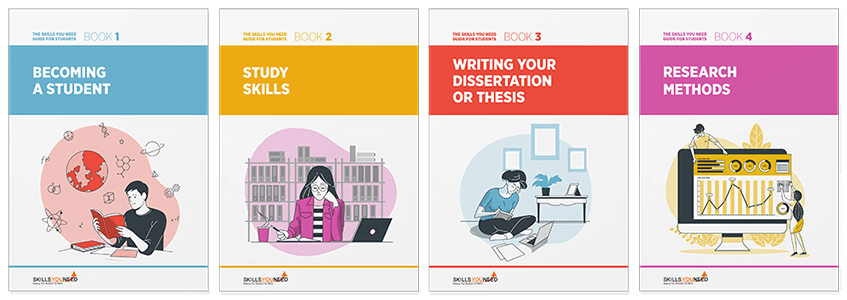
The Skills You Need Guide for Students

Develop the skills you need to make the most of your time as a student.
Our eBooks are ideal for students at all stages of education, school, college and university. They are full of easy-to-follow practical information that will help you to learn more effectively and get better grades.
About the Author
Dr. James Vale is a Senior Marketing Lecturer and former digital agency director with over 15 years of experience in consumer psychology and brand strategy. He specializes in helping university students bridge the gap between academic theory and practical, real-world campaign execution.