


The Transition from High School to College
Graduate Employability SkillsThe transition from high school or secondary education to higher education—whether you refer to it as college or university—is often full of surprises for the unprepared.
Although there is a foundational set of skills required across all levels of schooling, higher education demands that you master a significantly more challenging and mature repertoire. This includes understanding and analysing complex academic material, establishing strict personal boundaries, and independently managing both your schedule and your emotional wellbeing.
In previous years, your educational journey was likely guided by a robust, highly structured support system of teachers, parents, and daily timetables. At college, that safety net is largely removed. You are expected to become an independent, self-motivated learner. The responsibility for attending lectures, completing reading assignments, and meeting deadlines rests entirely on your shoulders.
The Core Challenge: Embracing Independence
Moving away from home and starting a new academic chapter is thrilling, but it can also be a daunting prospect. To succeed, you must make a conscious psychological shift. You are no longer just a pupil receiving instruction; you are a proactive scholar managing your own educational and personal development.
Although these principles are not strictly essential to survive high school, mastering them early on will set you up for unparalleled success when you finally step onto a university campus. By cultivating these transitional skills, you will not only improve your academic performance but also build a foundation for your future career.
7 Essential Skills for a Successful Transition
Advanced Academic and Study Skills
While there is a large amount of hand-holding in high school, once you reach higher education, you will be expected to exhibit highly independent study skills. This includes analysing dense academic papers, conducting thorough independent research, active listening, and advanced reading comprehension.
During secondary education, most essays or projects are relatively short and highly guided. In college, you may be handed a syllabus on the first day and expected to produce a lengthy research paper by the end of the term with minimal interim check-ins. Mastering these study skills early ensures that you can tackle high-stakes exams and long-term projects without feeling entirely overwhelmed.
Note-taking, in particular, becomes a vital survival skill. Many universities follow a lecture-based teaching model where you might be sitting in a vast auditorium with hundreds of other students. Note-taking must be intelligent, selective, and critical. You cannot write down every word the lecturer says; you must learn to identify core themes, synthesize arguments, and record meaningful notes that will guide your revision months later.
Time Management and Self-Discipline
During high school, you likely already needed solid time management to balance homework with extracurricular activities. However, the sheer volume of independent workload in higher education is a significant step up.
Learning to create proactive schedules and actually sticking to them is crucial. For efficient time management, you must learn to anticipate course bottlenecks—such as multiple essays due in the same week—and study well in advance to avoid burnout. Another practical skill that contributes to this is speed reading. Given how your study material will grow more difficult and lengthy, being able to read faster than average without sacrificing comprehension will save you a tremendous amount of time.
While not purely academic skills, self-motivation and self-discipline are the virtues that will keep you on track. When no one is taking attendance, the discipline to wake up for an early morning lecture must come directly from within.
Financial Autonomy and Literacy
For many students, entering college is the first time they are entirely responsible for their own finances. The transition from having expenses managed by parents to balancing a student loan, paying rent, and managing weekly grocery budgets is a massive learning curve.
Financial literacy is an essential transition skill. You must learn how to budget effectively, understand the terms of your student debt, and resist the temptation of high-interest credit cards or overdrafts that are heavily marketed to new students. Developing the discipline to track your spending and live within your means will severely reduce your stress levels, allowing you to focus your mental energy on your studies.
Mental Health and Emotional Resilience
The first year of university is notoriously challenging for mental health. You are adapting to a new environment, rigorous academic standards, and complex social dynamics, often while being far away from your traditional support networks.
Developing emotional resilience and knowing how to manage stress are non-negotiable skills. This includes recognising the early signs of burnout, understanding how to manage "imposter syndrome" (the persistent feeling that you do not belong or are not smart enough to be there), and knowing when and how to ask for help. Universities offer robust student support and counselling services, but it requires emotional maturity to seek them out proactively before a crisis hits.
Social Integration and Networking
Academic success is only one half of the college experience; the other half is social. In high school, friend groups are often formed by geographical proximity or shared classes over many years. In university, you are suddenly thrust into a massive pool of diverse individuals from all over the world.
Building a new social circle requires stepping out of your comfort zone. This means engaging in active communication, joining campus societies, participating in study groups, and introducing yourself to strangers. Furthermore, the connections you make in higher education often form the foundation of your professional network. Learning how to collaborate with people from different backgrounds and cultures is a massive advantage in the modern globalised workforce.
Digital Literacy and Information Management
The modern academic landscape is heavily reliant on digital technology. Moving beyond basic computer skills, university students must master virtual learning environments (VLEs), academic databases, and collaborative cloud-based software.
Crucially, modern students must also navigate the ethical and practical use of Artificial Intelligence (AI). Understanding how to use AI tools for brainstorming or structural formatting without breaching academic integrity or committing plagiarism is a vital new skill. Furthermore, knowing how to critically evaluate digital sources for bias and credibility is essential when constructing university-level arguments.
Domestic and Practical Life Skills
It is incredibly common for highly academic students to arrive at university without a firm grasp of basic domestic skills. When you are studying for a demanding degree, the last thing you want is the added stress of not knowing how to cook a nutritious meal, operate a washing machine without ruining your clothes, or maintain basic hygiene in a shared flat.
Living independently requires a baseline of practical knowledge. Taking the time to learn a few cheap, healthy recipes, understanding how to resolve minor flatmate disputes over chores, and establishing a healthy sleep routine are critical. Poor diet and lack of sleep will directly impact your cognitive function and academic performance. Mastering these basic life skills before you leave home provides a crucial layer of stability during a period of massive change.
Further Reading from Skills You Need
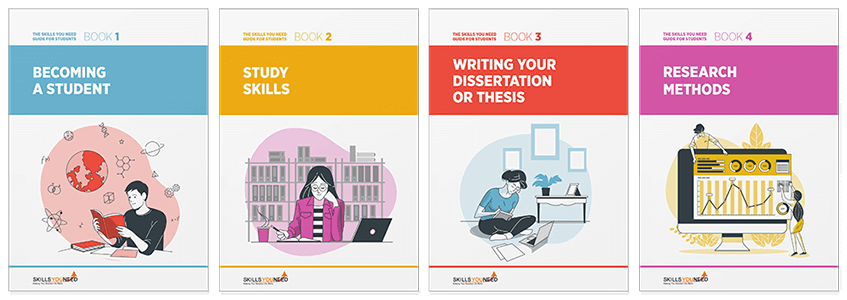
The Skills You Need Guide for Students

Develop the skills you need to make the most of your time as a student.
Our eBooks are ideal for students at all stages of education, school, college and university. They are full of easy-to-follow practical information that will help you to learn more effectively and get better grades.
Conclusion
These transitional skills are not only useful for surviving your first year of higher education; they are the exact competencies that modern employers look for in successful graduates. By mastering self-discipline, financial literacy, and advanced communication now, you are building the foundation of a highly productive professional life.
The key is to start early. Ask around your current school for any classes or seminars on note-taking, researching, and time management. Speak to current university students about their experiences. Remember that the transition to college is a marathon, not a sprint, and giving yourself the grace to learn these skills gradually is the true secret to academic success.
About the Author
Chassie Lee is an educational consultant and freelance writer. She specialises in creating actionable content that helps students develop effective study techniques, improve their communication abilities, and successfully navigate major academic and life transitions.