


Savouring Wellness on a Budget:
A Guide to Nutritious Meals
Without Breaking the Bank
See also: Food, Diet and Nutrition
There is a pervasive misconception in modern wellness culture that eating healthily requires a substantial financial commitment. When social media feeds are dominated by exotic superfoods, expensive organic supplements, and premium artisanal ingredients, it is easy to assume that good nutrition is a luxury reserved for the privileged. These highly marketed products can quickly add significant strain to an average household budget, leading many to believe that resorting to cheap, ultra-processed food is the only viable economic choice.
However, this narrative is fundamentally flawed. Savouring good health on a budget is not only possible, but it is also highly sustainable when approached with strategy and intention. The core principles of human nutrition rely on readily available macronutrients and micronutrients, not on specific brand names or exotic origins. By returning to culinary basics and adopting smarter purchasing habits, you can nourish your body effectively while simultaneously protecting your financial wellbeing.
Achieving this balance requires a shift in mindset. You must view grocery shopping not as a chore, but as an exercise in strategic resource management. In this comprehensive guide, we will explore actionable techniques for accessing the healthiest meals without compromising your financial goals, covering everything from smart shopping strategies and pantry management to inventive culinary ideas that maximise your nutritional yield.
7 Strategies for Healthy Eating on a Budget
Establish a Realistic Food Budget
Before you even step foot inside a supermarket, you must establish a clear financial strategy. Savouring wellness on a budget begins with knowing exactly how much capital you have to allocate. Review your monthly income and fixed expenses to determine a realistic grocery allowance. Be brutally honest with yourself about your spending capabilities, ensuring that your food budget does not compromise your ability to meet other essential financial obligations.
Having a firm understanding of your finances is the cornerstone of stress-free healthy eating. It enables you to make confident, informed choices rather than acting on impulse. Furthermore, the discipline of budgeting inherently restricts frivolous spending. When you are tracking your outgoings, you are far less likely to be swayed by clever marketing tactics or expensive, unnecessary impulse buys at the checkout counter.
To make this process easier, consider withdrawing your grocery budget in cash for the week, or using a dedicated digital spending pot. When the allocated funds are physically or digitally separated, it becomes much easier to monitor your remaining allowance and adjust your meal plans accordingly throughout the week.
Prioritise Whole Foods over 'Superfoods'
The term 'superfood' is largely a marketing construct designed to sell specific, often imported, ingredients at a premium. While items like acai berries, chia seeds, and spirulina are undeniably nutritious, they are not essential for a balanced diet. You can obtain identical, and sometimes superior, nutritional profiles from standard, inexpensive whole foods.
Instead of chasing trends, focus on building meals around accessible whole foods. For instance, ordinary blueberries offer comparable antioxidant benefits to expensive goji berries. Standard spinach and broccoli provide immense vitamin profiles at a fraction of the cost of powdered greens. Root vegetables, seasonal fruits, and standard cruciferous vegetables are the true, unsung heroes of a healthy, budget-conscious diet.
To maximise your nutritional return on investment, you must learn to read food labels effectively. Look past the packaging claims and focus on the ingredient list and nutritional breakdown. Often, you will find that a store-brand bag of frozen peas or carrots offers identical nutritional value to a heavily branded, premium alternative, allowing you to stretch your budget further without sacrificing your health.
Master Strategic Meal Planning
Meal planning is arguably the single most effective tool for eating healthily on a tight budget. When you walk into a grocery store without a plan, you are vulnerable to impulse purchases, disjointed ingredients, and ultimately, food waste. A well-constructed meal plan ensures that every item you purchase has a specific, intended use.
Begin by taking an inventory of what you already have in your fridge, freezer, and pantry. Design your weekly meals around these existing ingredients to minimise the number of new items you need to buy. Once you have a framework, create a strict shopping list and commit to sticking to it. If an item is not on the list, it does not go into the trolley.
When planning, design meals that share common ingredients. If you need half a cabbage for a stir-fry on Tuesday, ensure you plan a soup or a slaw for Thursday to use the remaining half. This cross-use of ingredients drastically reduces both your grocery bill and your household food waste. Remember to factor in busy days; plan quick, 15-minute meals or save leftovers to prevent the temptation of ordering expensive takeaway food.
Build a Budget-Friendly Pantry
A well-stocked pantry is the foundation of economical cooking. By filling your cupboards with cheap, nutrient-dense staples with long shelf lives, you ensure that you always have the building blocks for a healthy meal, regardless of how much fresh produce you have available.
Dried beans, lentils, and chickpeas are incredibly cheap, highly nutritious, and packed with protein and fibre. While tinned versions are convenient, dried legumes offer the absolute best value for money. Whole grains such as brown rice, oats, barley, and quinoa are equally crucial. They provide slow-release energy, are highly satiating, and cost mere pennies per serving.
Do not underestimate the power of tinned goods. Tinned tomatoes, tinned fish (like mackerel, sardines, and tuna), and tinned vegetables are often processed at the peak of freshness, locking in their nutrients. They are significantly cheaper than their fresh counterparts and have the added benefit of a multi-year shelf life. Finally, invest in a robust collection of dried herbs and spices; these low-cost flavour enhancers can transform basic, inexpensive ingredients into complex culinary delights.
Embrace Seasonal and Local Produce
The price of fresh fruits and vegetables fluctuates dramatically depending on the time of year. Purchasing strawberries in the middle of winter requires paying a premium for international shipping and greenhouse cultivation. Conversely, buying produce when it is naturally in season locally guarantees that supply is high, which naturally drives the price down.
Seasonal produce is not only cheaper, but it is also significantly fresher, tastier, and more nutritious, as it has not spent weeks deteriorating in international transit. Familiarise yourself with your local growing seasons and adapt your meal planning to incorporate whatever is currently abundant and inexpensive.
Whenever possible, visit local farmers' markets or greengrocers. Supermarkets often grade produce heavily on cosmetics, whereas local markets may sell slightly misshapen 'wonky' vegetables at a steep discount. These vegetables taste exactly the same and contain identical nutritional profiles, making them a perfect, budget-friendly option for soups, stews, and roasting.
Maximise Savings Through Bulk Buying
Purchasing non-perishable goods in large quantities is a classic strategy for reducing your overall grocery expenditure. Items like rice, oats, pasta, dried legumes, and cooking oils are significantly cheaper per hundred grams when bought in bulk. Look for wholesale retailers, bulk bins at health food stores, or ethnic supermarkets, which often sell staples in large, economical sacks.
However, bulk buying is only a financially sound strategy if you actually consume the products before they spoil. Avoid the temptation to buy huge quantities of highly perishable items unless you have a concrete plan to preserve them immediately. For dry goods, ensure you have adequate, airtight storage containers to protect your investment from pests and moisture.
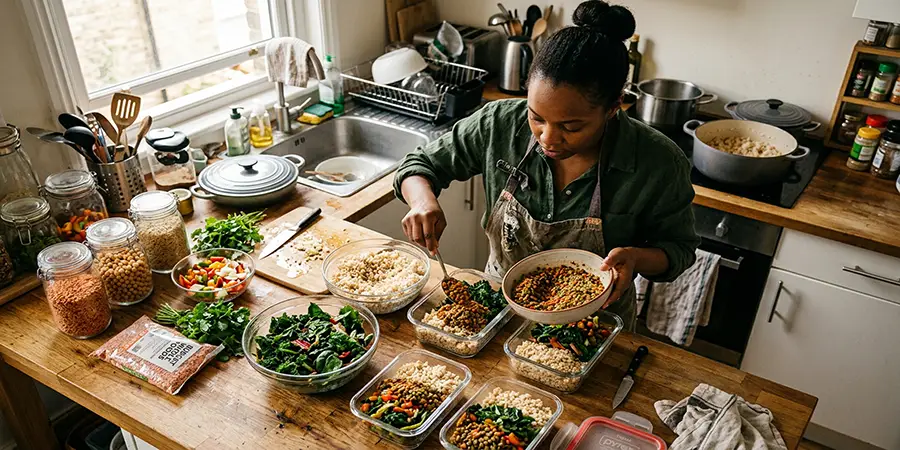
You can also apply this principle to batch cooking. When you prepare a meal, cook double or triple the required amount. Portion the surplus into airtight containers and freeze them. This bulk-cooking approach saves money on energy costs, reduces your reliance on convenience foods, and provides a stash of healthy, ready-to-eat meals for days when you lack the time or energy to cook from scratch.
Radically Reduce Food Waste
In many developed nations, a significant percentage of purchased food ends up in the bin. Throwing away food is quite literally throwing away money. To eat healthily on a budget, you must become militant about reducing your household food waste. This requires a combination of proper storage techniques and culinary creativity.
Learn how to store fresh produce correctly to extend its lifespan. Understand which fruits emit ethylene gas and should be kept separate, and which vegetables require high-humidity crisper drawers. Your freezer is your greatest ally against food waste. Almost anything can be frozen before it goes bad, including bread, milk, chopped vegetables, and even fresh herbs frozen in olive oil.
Finally, learn to repurpose leftovers and kitchen scraps. Vegetable peelings, herb stems, and onion skins can be saved in a freezer bag and boiled down to create a rich, free vegetable stock. Leftover roasted vegetables can be blended into pasta sauces or folded into omelettes. By ensuring every edible component is used, you maximise the nutritional and financial return on every item you purchase.

Further Reading from Skills You Need
The Skills You Need Guide to Life: Looking After Yourself
Based on some of our most popular content, this eBook will help you to live a happier, healthier and more productive life.
Learn how to look after your body and mind: the fundamental first steps to personal development.
This eBook, now in its third edition, with new and revised content, is designed to make life both easier and better.
Conclusion
Eating a highly nutritious, health-promoting diet does not require an endless grocery budget or an exclusive reliance on premium health food brands. By fundamentally changing how you approach grocery shopping and meal preparation, you can drastically reduce your monthly expenditure while simultaneously improving the quality of your diet.
The key to savouring wellness on a budget lies in the meticulous application of a few core habits: establishing a firm financial budget, prioritising accessible whole foods, planning meals strategically, and fiercely combatting food waste. When you view your pantry and your budget as tools to be managed rather than restrictions to endure, you will discover that profound physical and financial wellbeing are entirely within your reach.
About the Author
Samantha Jones is a registered dietitian and financial wellness coach who specialises in helping families bridge the gap between nutritional science and household economics. With over a decade of clinical experience, her focus is on making healthy living effortless, understandable, and deeply practical. When she isn't helping clients balance their macronutrients and bank accounts, Samantha enjoys urban gardening, fermenting seasonal vegetables, and foraging for local ingredients.