


8 Requirements You Need
to Pursue a Medical Career
See also: Careers in Healthcare
Pursuing a career in medicine is one of the most challenging and profoundly rewarding professional paths an individual can choose. It requires an extraordinary commitment to rigorous academic study, deep clinical immersion, and the continuous development of personal character. Whether your ultimate goal is to work in general practice, specialize as a neurosurgeon, or drive innovations in healthcare research, the foundational requirements remain universally demanding.
Before setting out on this arduous journey, prospective medical students must carefully plan their trajectory. The admissions process for medical schools is fiercely competitive, specifically designed to identify candidates who possess not only the intellectual capacity to handle the sheer volume of coursework but also the emotional resilience to care for patients in their most vulnerable moments. This comprehensive guide details the eight core requirements aspiring healthcare providers must fulfill to realize their ambitions in medicine and secure their place in medical school.
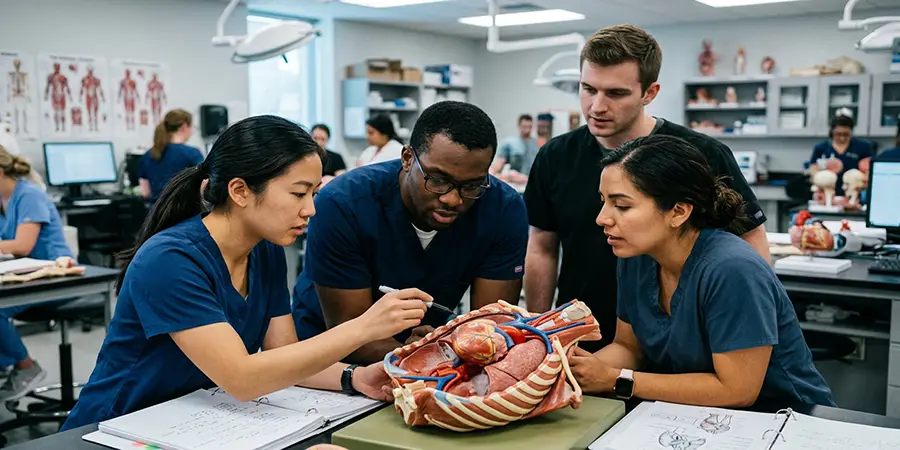
The 8 Core Requirements for Medical School Admission
Meeting the requirements for a medical career involves far more than simply checking boxes on a standardized application. Admissions committees view candidates holistically. Each requirement is designed to cultivate the specific competencies, knowledge bases, and interpersonal skills necessary for effective, compassionate patient care.
-
Demonstrate Academic Excellence
Academic excellence provides the absolute cornerstone for success in medical studies. At its core, academic excellence for a prospective medical student involves dedicating oneself to the mastery of fundamental sciences. Medical schools heavily weigh both your overall Grade Point Average (GPA) and your science-specific GPA (often referred to as the BCPM GPA: Biology, Chemistry, Physics, and Mathematics).
However, demonstrating excellence is not just about achieving high marks; it is about proving you can handle intense academic rigor. Admissions committees look for upward grade trends and a willingness to take challenging, upper-level science courses. Building highly efficient study habits early—such as utilizing active recall, spaced repetition, and robust time management techniques—is just as important as the grades themselves, as the volume of information in medical school is notoriously overwhelming.
-
Complete Pre-Medical Prerequisites
Regardless of your undergraduate major—whether you study English literature or molecular biology—medical schools require applicants to fulfill a strict set of pre-medical prerequisites. This typically includes a year of biology, general chemistry, organic chemistry, and physics, all with corresponding laboratory components. Most modern programs also require biochemistry, college-level mathematics (such as calculus or statistics), and introductory courses in psychology and sociology.
Fulfilling these prerequisites demonstrates fundamental competency in the core sciences essential for clinical training. For example, organic chemistry teaches complex spatial reasoning and multi-step problem-solving skills, while sociology provides the foundational context needed to understand how systemic inequalities impact public health outcomes.
-
Conquer the MCAT Exam
In North America, the Medical College Admission Test (MCAT) is the ultimate standardized gateway to medical school. Created by the Association of American Medical Colleges (AAMC), this grueling, multi-hour exam assesses far more than basic rote memorization. It measures your critical analysis, reasoning skills, and ability to apply scientific principles to complex biological systems.
The MCAT is as much a test of mental stamina as it is a test of scientific knowledge. Scoring exceptionally well on this examination is vital, as medical schools use it to objectively compare applicants from vastly different undergraduate institutions. Aspiring students must invest significant time—often hundreds of hours—into preparation, utilizing full-length practice tests under realistic, timed conditions to build the endurance required for test day.
-
Gain Meaningful Clinical Experience
Academic metrics only prove you can survive the classroom; clinical experience proves you can survive the hospital. Clinical exposure provides future healthcare providers with invaluable insight into the realities of patient care, the daily operational pace of healthcare facilities, and the emotional toll of the profession. Admissions committees want to see that you know exactly what being a doctor looks like—including the mundane and difficult aspects of the job.
There are two primary forms of clinical experience: passive and active. Passive experience involves shadowing physicians to observe clinical decision-making and bedside manner. Active experience involves direct patient contact, such as working as an Emergency Medical Technician (EMT), a Certified Nursing Assistant (CNA), or a medical scribe. Securing thousands of hours of hands-on experience demonstrates a profound, tested dedication to the field of healthcare.
-
Engage in Scientific Research
While not every physician will become a career scientist, a deep understanding of how medical knowledge is generated is critical. Engaging in research allows candidates to explore scientific inquiry, refine their critical thinking, and understand the rigorous process behind evidence-based medicine.
Whether it is "bench" research in a wet lab, clinical research with patients, or public health data analysis, participating in formal research projects demonstrates intellectual curiosity. Contributing to published papers or presenting findings at academic conferences significantly strengthens an application. Furthermore, working closely with principal investigators often leads to valuable mentorship opportunities and strong letters of recommendation.
-
Participate in Extracurricular Activities
Medical schools actively seek well-rounded applicants whose lives are not solely defined by textbooks and laboratories. Participating in extracurricular activities demonstrates an applicant's diverse interests, leadership capabilities, and dedication to their community. However, admissions committees vastly prefer depth over breadth; long-term commitment to one or two meaningful organizations is far more impressive than superficial membership in a dozen clubs.
Taking on leadership roles in student government, dedicating years to a specific community service project, or competing in collegiate athletics showcases an applicant's ability to balance academic pressure with social responsibility. These activities highlight vital soft skills, such as teamwork, altruism, and self-discipline.
-
Cultivate Cultural Competence and Empathy
In today's multicultural healthcare environment, clinical knowledge is useless if a physician cannot effectively communicate with their patients. Cultural competence is central to effective patient care. Healthcare providers must display a deep appreciation of diverse cultural backgrounds, socio-economic challenges, and the social determinants of health.
Activities that support diversity and inclusion—such as volunteering in underserved communities, working with immigrant populations, or acting as a crisis counselor—demonstrate a candidate's dedication to building an equitable healthcare environment. Medical schools rigorously evaluate an applicant's interpersonal skills and empathy during the interview process to ensure they possess the bedside manner required to build trust with vulnerable populations.
-
Commit to Lifelong Learning
A medical career extends far beyond graduating from medical school or finishing a residency program. The half-life of medical knowledge is shockingly short; treatments and protocols evolve rapidly. Therefore, a career in medicine requires a fundamental commitment to lifelong learning and professional growth.
Physicians must actively stay abreast of advancements in pharmacology, surgical technology, and care delivery models through Continuing Medical Education (CME) and board recertification. Admissions committees look for applicants who view learning not as a means to an end, but as a continuous, lifelong pursuit. Demonstrating a proactive thirst for knowledge guarantees that a candidate will remain a competent, innovative healthcare provider throughout the entirety of their career.
Conclusion
Embarking on a career in medicine requires meticulous planning, unwavering dedication, and a willingness to undergo intense personal and academic growth. Prospective doctors must strengthen their applications through a balanced combination of stellar academic metrics, meaningful clinical and research experience, and a demonstrated commitment to community service.
By conquering rigorous prerequisites and standardized tests, and by actively cultivating deep empathy and cultural competence, aspiring physicians can successfully navigate the daunting medical school admissions process. Ultimately, satisfying these eight core requirements prepares candidates for far more than an acceptance letter—it prepares them for a lifetime of making a profound, tangible difference in the lives of their patients.
About the Author
Conny Davies is a Medical Admissions Consultant and former attending physician with over a decade of experience in academic medicine. She specializes in mentoring pre-med students, helping them navigate the complexities of clinical experience, MCAT preparation, and the medical school interview process.