

Tips On Organising Great Meetings At Work
See also: Effective MeetingsIt’s quite common for corporations and other organisations to hold meetings on a daily basis. However, as we are all aware, not all meetings are as stimulating or as effective as they could be. For these reasons, therefore, it is vital to know what factors can help in organising a successful meeting.
All the helpful contributory factors on how to organise great meetings in a workplace are discussed below.
Get the Basics Right
Let’s start with the initial steps of arranging a great meeting. The foundation of any successful corporate gathering is meticulous planning and clear intent.
If you are the organiser of the meeting, determine what the core subject matter will be. Before sending out invitations, ask yourself: Is this meeting truly necessary, or could this objective be achieved via an email or a collaborative document? If a meeting is required, define a clear Return on Investment (ROI) for the time spent. Book a suitable room for the meeting and, once this is done, send out a calendar invite with all relevant details to the attendees.
Having a fixed time and date along with a definite location for the meeting will make your meeting much more efficient and organised. It’s also a great idea to organise beverages and sometimes food for the meeting to keep your audience engaged and motivated.
Define the Guest List Carefully
One of the most common mistakes in meeting organisation is inviting too many people. A meeting that is too large often results in passive participants and stifled discussion.
Adopt a strategic approach to your guest list. Consider the "Two-Pizza Rule," popularized by Jeff Bezos, which suggests that a meeting should be small enough that two pizzas could feed the entire group. Identify who the key decision-makers are, who has the necessary data to inform those decisions, and who will be responsible for executing the outcomes. If someone does not fit into one of these three categories, they likely do not need to attend and can simply receive a post-meeting summary instead.
Create and Distribute an Action-Oriented Agenda
An agenda is the roadmap for your meeting. Without one, discussions easily veer off-topic, leading to wasted time and frustrated colleagues.
Do not simply list discussion topics; instead, frame agenda items as questions that need to be answered or decisions that need to be made. Allocate specific time blocks for each item to maintain momentum. Furthermore, distribute the agenda at least 24 hours in advance, along with any necessary pre-reading materials. This allows participants to arrive prepared, shifting the focus of the meeting from sharing basic information to active problem-solving and collaboration.
Avoid Any Technology Related Failures
It's certainly not unusual for meetings to be delayed due to technological failures.
Without a doubt, this is something we’ve all faced at work. The best way to avoid this type of failure from occurring would be to set up the meeting room at least 10-15 minutes prior to the scheduled start time. This will allow you to have the presentation you’ve prepared up and ready for the attendees to see as you talk them through it without wasting any valuable time. This will definitely set a great example for your brand if it is a client meeting as it’s never a good idea to experiment with technology in front of your client.
After all, it’s true when they say that time is money! Alternatively, if you want to be extra tech-savvy then your business could consider in investing in a touch control panel system which controls practically everything in the room from lighting to desktop display all at once. This will surely go down well with everyone in the meeting room.
Ask yourself, does the room chosen fit with the agenda of your meeting?
This is a step you should take into consideration when booking a room for the meeting.
You need to judge for yourself what type of meeting this will be. For example, if it is a large client meeting then it’s always a good idea to book a meeting room with a large boardroom table and comfortable chairs. This would be ideal for lengthy meetings, ensuring everyone feels relaxed.
Alternatively, if it’s just a brief information sharing department meeting where everyone just listens to one or two speakers, then there will be no need to select a boardroom style meeting room.
Deliver an engaging and informative meeting
No matter what the nature of the meeting, it’s imperative to deliver an engaging and informative meeting.
This can be achieved by involving your attendees in the meeting and making the exchange of information more interactive.
When discussing your ideas, remain confident, talk at a steady pace and try to make the meeting flow. This can be achieved by having a positive mind frame at all times. Remind yourself that everyone present is likely to have been in the same position as you in the past so they will be fully aware of what a nerve-wracking experience it can be sometimes. There is really nothing to be afraid of.
Make the meeting punchy and to the point. It is very easy for people to get distracted so it’s essential that your main points are being communicated in a punchy but insightful way. For example, if your meeting is based on talking through a PowerPoint presentation then make sure it’s eye-catching but at the same time includes the main bullet points in each slide. However, last but not least, make sure the meeting serves the purpose that was set out in the first place.
Assign Roles and Capture Action Items
A meeting is only as valuable as the actions that follow it. To ensure accountability, it is crucial to assign roles during the meeting itself.
Designate a timekeeper to ensure the agenda stays on track, and appoint a note-taker to record key decisions and action items. Before the meeting adjourns, dedicate the final five minutes to summarizing the agreed-upon next steps. Clearly articulate what task needs to be done, who is responsible for completing it, and the deadline for completion. Sending out these minutes shortly after the meeting provides a clear record of accountability and keeps the project moving forward.
Give out handouts or free giveaways at the end of your presentation
Providing your audience with handouts on what’s just been covered greatly helps towards hosting a great meeting.
This is going the extra mile for your attendees and making the most of other resources to keep your attendees interested. It can also reinforce all the important points that have been discussed during your meeting so that your attendees can easily recall these later if they want.
Sometimes it’s also useful to handout free giveaways that are relevant to the subject of your meeting. For example, small items that are symbolic of your brand could be handed out at pitch meetings to businesses who are expressing an interest in working with you.
Further Reading from Skills You Need
The Skills You Need Guide to Interpersonal Skills eBooks.
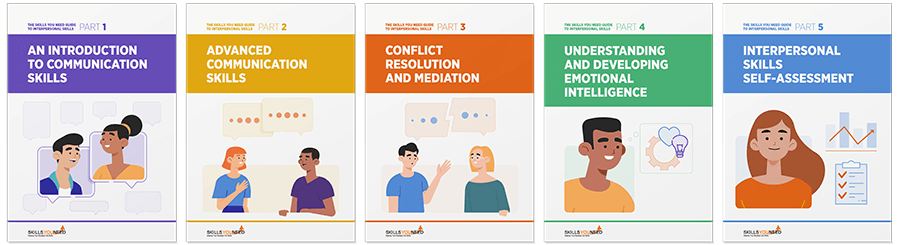
Develop your interpersonal skills with our series of eBooks. Learn about and improve your communication skills, tackle conflict resolution, mediate in difficult situations, and develop your emotional intelligence.
To conclude:
As seen from a variety of examples used throughout, there are a combination of factors that will assist when organising a great meeting. You have to always consider the start and finish of the meeting process. Perhaps it would be an excellent idea to have a checklist of all the typical to-dos listed above? It's evident that steps like getting the invite right, defining a clear agenda, booking a suitable room, and the confident delivery of the content all play an important part in achieving a successful outcome.
Meetings are a core part of most businesses and getting this aspect of the organisation right could certainly lead to superb results. Organising effective, purpose-driven meetings will not only mean your employers take your brand seriously, but also that you respect your colleagues' time, which is always good for business and workplace morale.

About the Author
Aarti Ohri is a communications and digital marketing professional with extensive experience managing teams and coordinating projects. She has worked across both global media agencies and in-house corporate environments, focusing on effective workplace collaboration, project management, and strategic planning.