


Careers that Require Strong
Non-Verbal Communication Skills
See also: Active Listening
In the modern professional landscape, having a clear line of verbal communication is often cited as the primary driver of workplace efficiency. However, the spoken word is only one component of human interaction. Non-verbal communication—the silent language of posture, facial expressions, and vocal tone—plays an equally decisive role in how messages are received and interpreted.
For many, non-verbal communication is an unconscious habit. Yet, in specific high-stakes professions, the ability to consciously manage and interpret these silent cues is not just a "soft skill" but a core technical competency. Careers in healthcare, education, and security require a sophisticated understanding of how an individual presents themselves through body language and gestures to build trust or maintain authority when verbal clarity is insufficient.
Understanding the impact of non-verbal cues is essential for navigating environments where emotions run high or where barriers to effective communication exist. Below, we explore the professions where non-verbal mastery is a non-negotiable requirement for success.
Healthcare Professionals: The Power of Therapeutic Presence
In clinical environments, a nurse's non-verbal repertoire is as critical as their medical knowledge. Patients are often at their most vulnerable, experiencing pain, fear, or confusion that makes verbal processing difficult. A nurse who can read a patient’s micro-expressions or subtle shifts in posture can identify discomfort or emotional distress that the patient may be unable to articulate.
Nurses must also be masters of their own non-verbal signals. Maintaining "open" body language—uncrossed arms, steady eye contact, and a relaxed facial expression—signals accessibility and safety. Furthermore, the use of "therapeutic touch," such as a hand on a shoulder, can convey empathy more effectively than a thousand words. These skills are heavily dependent on high emotional intelligence, allowing healthcare providers to adjust their presence to suit the immediate psychological needs of the patient.
Aged Care and Dementia Support
The reliance on non-verbal cues becomes even more pronounced in aged care, particularly when supporting patients with cognitive decline or dementia. When verbal language is lost, the individual communicates entirely through action and emotion. Aged care workers must be exceptionally sensitive to vocal tone and physical proximity (proxemics). If a carer approaches too quickly or uses a harsh tone, it can trigger a defensive "fight or flight" response. Success in this field requires a patient, rhythmic approach where gestures are slow, deliberate, and always congruent with a calm vocal delivery.
Education: Engagement Beyond the Lesson Plan
For teachers, the classroom is a stage where non-verbal communication is used to manage behaviour and stimulate learning. A good teacher uses their "room presence" to signal authority and enthusiasm. Through the use of scanning—maintaining intermittent eye contact with all areas of the room—a teacher can identify when a student is disengaged, confused, or bored long before a hand is raised.
Non-verbal cues also serve as a vital tool for reinforcement. A simple nod of encouragement or an expectant pause can prompt a student to expand on an answer, building their confidence without the need for constant verbal correction. Conversely, teachers must be aware of "negative leakage"—unconscious sighs or eye-rolls that can alienate students and create a hostile learning environment. In the classroom, what you do is often remembered far longer than what you say.
High-Stakes Interaction: Security and Law Enforcement
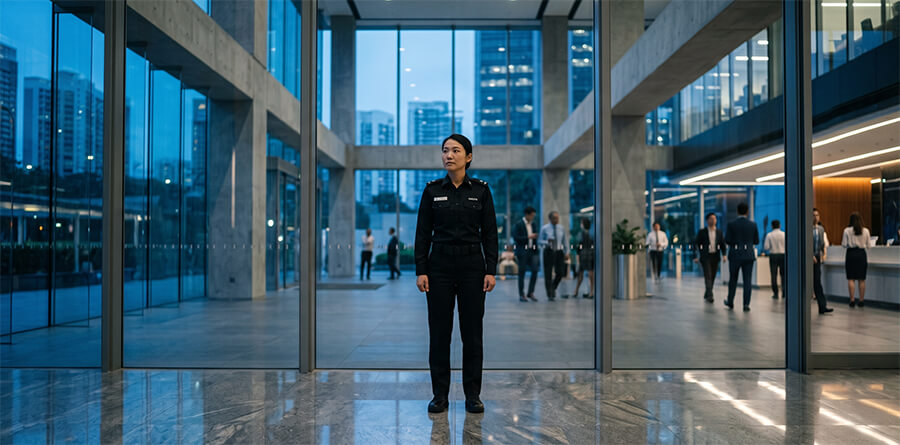
For security professionals, including retail security and close protection officers, mastering non-verbal cues is a matter of safety and de-escalation. These professionals use "Command Presence"—a combination of upright posture, direct (but not aggressive) eye contact, and controlled movements—to project an aura of authority that can deter misconduct without the need for physical intervention.
Equally important is the ability to read "pre-attack indicators." Shifting weight, clenched jaws, and rapid breathing are non-verbal signals that a situation is escalating toward conflict. By recognising these signs early, security personnel can use their own body language to diffuse the tension, increasing their physical distance or lowering their hand positions to appear less threatening. In this sector, non-verbal mastery is the first line of defence.
The Commercial Sector: Sales and Hospitality
In sales, the ability to build rapport quickly is the difference between a closed deal and a lost lead. Salespeople often use "mirroring"—the subtle, unconscious imitation of a client’s posture or speech patterns—to create a sense of familiarity and trust. By aligning their non-verbal signals with those of the customer, sales professionals reduce social friction and make the client feel more "heard."
This skill is deeply linked with negotiation and persuasion skills. A salesperson must know when a customer is leaning in (signalling interest) or leaning back (signalling a need for space or skepticism). Misreading these cues can lead to a "hard sell" that drives the customer away, while correctly interpreting them allows the professional to pivot their strategy in real-time.
Hospitality and Premium Service
In hospitality, non-verbal communication defines the "guest experience." A warm, genuine smile (a Duchenne smile) upon entry creates an immediate positive emotional anchor. Conversely, staff who project "busy-ness" through hurried movements and avoided eye contact signal to guests that they are an inconvenience. In high-end retail and service, the goal is "invisible service"—anticipating a guest's needs by observing their non-verbal signals, such as a wandering gaze or a closed menu, and intervening before the guest even has to ask.
Therapeutic Careers: Psychologists and Social Workers
For psychologists and social workers, non-verbal cues are primary data. A patient may say they are "fine," but their restless leg, avoided eye contact, and shallow breathing tell a different story. These professionals use their non-verbal skills to create a "holding environment"—a safe psychological space where the client feels free to share traumatic or difficult memories.
Social workers, in particular, must be experts at reading family dynamics during home visits. The physical positioning of family members and the way they look at (or avoid) one another can reveal more about domestic power structures or potential abuse than any formal interview. In these fields, the professional's ability to remain non-verbally neutral and non-judgmental is paramount to maintaining the therapeutic alliance and ensuring empathy is felt rather than just stated.
Further Reading from Skills You Need
The Skills You Need Guide to Interpersonal Skills eBooks.
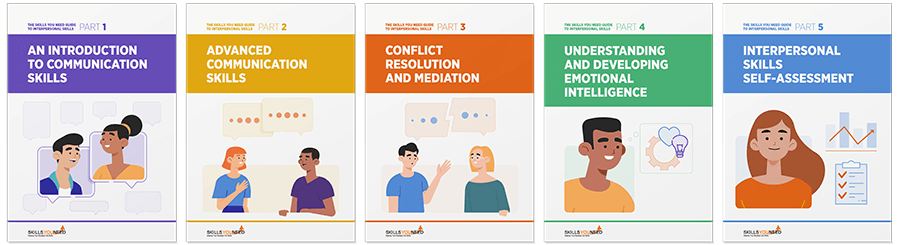
Develop your interpersonal skills with our series of eBooks. Learn about and improve your communication skills, tackle conflict resolution, mediate in difficult situations, and develop your emotional intelligence.
Conclusion
While formal education often focuses on literacy and verbal eloquence, the ability to master non-verbal communication is a universal requirement for professional excellence. Whether you are providing life-saving healthcare, managing a complex classroom, or closing a high-value business deal, your physical presence and silent cues act as a powerful multiplier for your words.
By developing a keen awareness of your own body language and learning to interpret the micro-signals of others, you build a foundation of deep empathy and unwavering authority. In an increasingly digital world, these human-centric, non-verbal skills remain the most durable assets in any career path.
About the Author
Dr. Julian Thorne is a Workplace Psychology Consultant and Career Coach with over twenty years of experience helping professionals master the art of non-verbal influence. He specializes in de-escalation training for high-stakes environments and has authored several papers on the impact of proxemics in leadership. When he isn't consulting, Julian enjoys coastal rowing.