


5 Tips for Negotiating a Pay Rise
from Your Boss
See also: Negotiating Within Your Job
Getting a raise at work isn’t always easy. While some people will be lucky enough to earn one as part of a promotion package, for most of us there’s no choice but to face the daunting prospect of actually asking for one outright.
Starting this conversation with your boss is scary enough in the first place, and successfully negotiating a salary that recognizes your true value as an employee is another obstacle to overcome. It is a process that relies heavily on soft skills: self-awareness, assertiveness, emotional intelligence, and, above all, clear communication.
The key is to reframe the conversation. You are not "asking for more money"; you are presenting a case that your contributions and market value have increased, and you are inviting your manager to align your compensation with that new reality. This requires preparation, career confidence, and a clear strategy.
To help out, here are five tips that will let you steer the negotiations in the direction you want them to go, rather than leaving you feeling frustrated.

-
Demonstrate Your Value Proactively
One of the best ways to get yourself a pay rise is to have a proven track record of value. This means you need to say ‘yes’ to the right opportunities. Embrace strategic opportunities that come your way, rather than steering clear of them because you feel that they are outside of the remit of your role.
This does not mean saying yes to everything, which leads to burnout. It means being strategic. This might mean taking on more responsibilities when asked, or proactively tackling persistent problems that are plaguing mission-critical processes. Have you identified a bottleneck in your team's workflow? Document it, propose a solution, and then offer to lead the implementation. This is far more powerful than simply being assigned an extra task.
Other ways to demonstrate value include:
Mentoring junior staff: This demonstrates leadership, patience, and a commitment to the team's overall growth.
Volunteering for cross-departmental projects: This shows you are a collaborator who understands the company's bigger picture, not just your own silo.
Solving problems before they escalate: Don't just be a doer; be a problem-solver. Show that you are thinking ahead and saving the company time, money, or resources.
Not every request from your boss has to be acquiesced to, of course. But should you feel the need to refuse an opportunity, it only makes sense to do this if you also have a valid reason, or a suggestion for an alternative strategy instead (e.g., "My plate is full with Project X right now, but I could take that on in the next quarter, or perhaps I could mentor Sarah to lead it?").
If you have proven yourself willing and capable by leaping at these chances, asking for a raise will feel like a natural next step, rather than a sudden request.
-
Do Your Research Thoroughly
You cannot negotiate effectively if you don’t know what you’re actually worth. This is the single most important piece of preparation. Your "worth" is a combination of your market value, your value to the company, and the company's current financial health.
First, research your market value. Keep tabs on job ads and, more importantly, official wage data for similar positions in other, equivalent organizations. Look at industry salary reports (many recruitment firms publish these annually) and sites like Glassdoor or Payscale. This will let you know whether or not your current salary is competitive. You can then use this as an evidence-based jumping-off point for negotiating.
Second, research your internal value. This means understanding the company's compensation philosophy (if one exists) and, if possible and appropriate, having open conversations with trusted colleagues. Asking colleagues about their remuneration might feel like an awkward conversation to have, but transparency over pay benefits everyone and can help identify internal inequities. However, be discreet and respectful of company policy and individual boundaries.
Third, research the company's health. There’s no point asking for a 20% raise if the business has just suffered a dip in profits or announced a hiring freeze. Conversely, if the company just announced record profits or a major new client, your timing is excellent. This shows you are commercially aware.
Armed with this data, you can decide on your "number." It's often wise to have a specific range in mind: an ideal number, a realistic "happy to accept" number, and a "walk-away" number. This gives you flexibility in the negotiation.
-
Have a Face-to-Face Meeting
As tempting as it might be to distance yourself from the process by putting the request in an email or chatting via instant message, it’s better to face the music and carry out the negotiations in person. This shows respect, seriousness, and confidence.
In the age of remote work, obviously this might not be a possibility. But negotiating in a video call via Teams or Zoom will serve just as well. The key is to have a real-time, face-to-face conversation. This allows you to read non-verbal cues and build rapport in a way that text-based communication simply cannot. It demonstrates that this is not some throwaway, spontaneous request, but rather something you have thought long and hard about.
Of course, that is not to say you should blindside your boss. It is sensible to provide them with a general sense of what you intend to talk about when arranging the meeting, so that they too have time to prepare. This avoids awkwardness and is good office etiquette.
When you book the meeting, be clear and professional. You could send an invite saying: "I'd like to book 30 minutes to discuss my performance and contributions over the past year, and to talk about my future compensation."
This simple agenda is professional, direct, and gives your boss a clear understanding of the topic, allowing them to review your file and any relevant budgets beforehand. This moves the conversation from a simple "ask" to a structured "review."
-
Focus on Achievements and Future Value
This is the core of your meeting. Anyone who asks for a raise needs to draw their boss’s attention to the things they have achieved which justify the request. This is where your preparation from Tip 1 pays off.
Do not simply list your job duties. Your boss knows what you do; you need to show them what you achieved. Create a "brag dossier" or "accomplishment log" for yourself. Throughout the year, make notes of your wins. When it's time to negotiate, you'll have a list of hard evidence. You can also map your strengths and development areas with a Personal SWOT Analysis to show exactly how you add value.
The most powerful evidence is quantifiable. Where possible, use numbers to frame your accomplishments:
Instead of: "I helped improve the sales process."
Say: "I redesigned the sales qualification worksheet, which contributed to a 15% increase in lead conversion this quarter."
Instead of: "I'm a good team player and I help others."
Say: "I successfully onboarded and mentored three new team members, all of whom were fully independent within 30 days, 10 days ahead of schedule."
You can frame these achievements using the SMART goals framework (Specific, Measurable, Achievable, Relevant, Time-bound). This shows you are not just a doer, but a strategic planner.
However, as well as looking back, you must also look to the future. Show that you see a bright future for yourself in the company and, more importantly, that you have a plan. This shows your boss their return on this new investment.
For example: "Based on these contributions and my market research, I am asking for my salary to be increased to £X. In the next six months, I plan to leverage this by taking the lead on the new product launch, which I forecast will..." This connects your raise to their future success.
-
Get the Timing Right (and Have a Plan B)
There are several factors that influence the way you time your raise request. First and most obviously, check to see if your business has specific points in the year when it offers raises to eligible employees. This usually coincides with the process of putting together budgets for each department, so take this into account. It's often best to have this conversation before the budgets are finalized.
Second, you need to be ready to strike when the right moment presents itself. Good times include:
After you have successfully completed a major project or delivered a significant win.
During your annual performance review (this is the most natural time).
If your role has fundamentally changed. For example, if a teammate has recently departed, it's a natural time to discuss role re-alignment. You can say: "As my role has now expanded to include [X and Y responsibilities], I'd like to discuss having my compensation reflect these new leadership duties."
Good timing is as much about knowing when to keep quiet as speaking out. There’s no point asking for a raise if the business has just suffered a dip in profits or when the performance of your team has fallen short of expectations.
Finally, what if the answer is "no"? The conversation isn't over. If your requests are turned down year after year, it may be time to move on. But if the "no" is due to budget freezes, don't just accept it. Use your negotiation skills. Ask: "I understand a financial increase isn't possible right now. Can we instead agree on a 6-month plan with clear, measurable goals, and revisit this conversation if I meet them?"
This shows resilience and a growth mindset. You can also negotiate for non-monetary benefits, such as a new job title, more flexible working hours, a dedicated training budget, or an extra week of annual leave. This demonstrates that you are a long-term, reasonable partner in the business's success.
Further Reading from Skills You Need
The Skills You Need Guide to Interpersonal Skills eBooks.
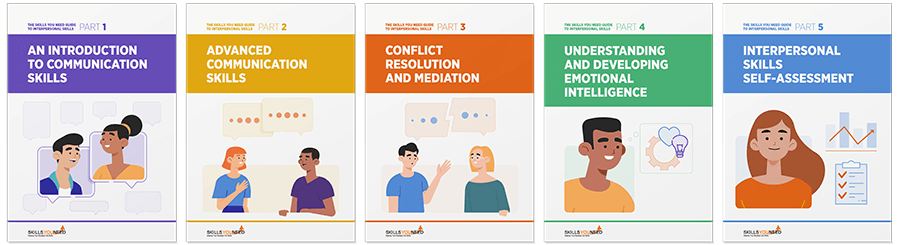
Develop your interpersonal skills with our series of eBooks. Learn about and improve your communication skills, tackle conflict resolution, mediate in difficult situations, and develop your emotional intelligence.
Conclusion
We all deserve a salary that reflects our contribution to our employer and puts us on a level pegging with colleagues and counterparts in similar roles elsewhere. Negotiating a pay rise is one of a professional's most challenging but necessary tasks, testing our assertiveness, communication, and strategic thinking.
By preparing thoroughly, doing your research, demonstrating your value with quantifiable evidence, and approaching the conversation as a professional, collaborative review, you can turn a daunting prospect into a successful outcome. Planning, research, and hard work will all assist you, and if your boss is convinced of your value and has the means to do so, getting a raise shouldn't be an impossible aim.
About the Author
Cristina Par is a content specialist with a passion for writing articles that bridge the gap between brands and their audiences. She believes that high-quality content can turn the tables for businesses small and large.