


How to Make Revision Easier
See also: Avoiding Distractions While RevisingExams can be stressful—they are important milestones in your educational journey, and naturally, you want to perform to the best of your ability. However, spending hours staring at a textbook doesn't always guarantee success. If you have ever received a mark in the past that did not accurately reflect your true knowledge or the amount of effort you put in, it might be time to reconsider how you actually process and review information.
Studying smarter, not just harder, is the key to reducing test anxiety and improving information recall. Follow these ten proven tips for making revision easier, so you can structure your study sessions more efficiently and approach your next exam with confidence:

10 Tips for Easier Revision
Gather Your Notes
The best way to prep for revising is to gather all your notes into one place for easy access. You have to start somewhere, and one of the most efficient ways to get into studying mode is by sorting your notes by topics. Once this is done, you will be able to rock out the rest of your studying.
Make a Revision Schedule
After your notes are sorted and you know which topics you need to focus on, craft a revision schedule. Jot down a rough idea of which topics you will revise and when. For example, you can revise maths from 10-11am and then take a short 10-minute walk before revising science from 11.15am-12.15pm.
You don’t want to plan a general schedule, saying you’ll study after school hours or all day Saturday. The odds are you will not get as much studying done this way as you will procrastinate and feel overwhelmed. A revision schedule can make revising easier because you have something tangible to follow, and you will know exactly when your next break will be.
Scheduling breaks for yourself is just as important as determining how long you will review each topic. Your brain can focus and retain information better when you study in short bursts and take occasional breaks. For students who want extra structure during the lead-up to exams, dedicated exam preparation support can help turn these revision techniques into a consistent routine.
Use Flashcards
One of the oldest tricks of the trade is using flashcards to help you remember information. Jot down keywords or questions to test yourself. Anytime you hesitate on a card, you’ll know to review that topic a little more. You can also speed up the process by using an AI flashcard maker, which automatically turns notes or study materials into interactive flashcards. To boost your retention of information, use coloured flashcards for different topics. Colour forces your brain to use more than one sense to remember information.
Practice Topics You Don’t Know
While revising for an exam, spend most of your time on the topics that you find hard. Factorising and surds making your head spin? Spend more time on these until it no longer feels daunting.
It can be a real morale booster studying the information you already know, but what good will that do you in the exam when it asks a question on a topic you’ve had trouble understanding? Search for the answers to your questions in the textbook and complete practice questions to make sure you have a good grasp on the topic before the exam. If you go beyond just reading a textbook, you’ll learn more and, therefore, be able to complete more questions by yourself, giving you more confidence for the exam!
Ask Questions and Use the Internet
Don’t be afraid to ask questions when something just isn’t clicking. Your teacher, parents, and friends are there to help! If they’re not available at the moment, you can go online and find high-quality revision resources. Often, you can even find example answers so you can understand the question and solution fully. YouTube is an excellent resource for revision. Many professionals, teachers, and students like yourself have posted tutorials of different topics that will help with studying—especially if you’re a visual learner!
Use Motions and Different Voices
Using different cues while revising can help you remember information when it comes time to sit the exam. Hand gestures and physical movements can trigger specific facts. If you’re an auditory learner, revising out loud can solidify information in your brain. Consider using different voices while studying your topics to avoid confusion between these topics. For example, you can speak in a higher voice for science and a lower voice for maths.
Treat Yourself
Celebrate hitting your revision goals by treating yourself to something special. When you reach your mid-day break after a few hours of revising, give yourself 20-30 minutes to watch some telly. At the end of a full day of prepping for an exam, go out with friends to take your mind completely off school. Having little rewards throughout your revision schedule will make the whole process more enjoyable and manageable.
Take a Practice Exam
Before the big exam, take a few practice exams to test your knowledge. Ask a friend to come up with some questions that you can try answering. Go online for exam questions: many sites even have mock exams, question banks, and video lessons to help you improve your knowledge. From maths revision to geography revision, online resources are available to help you succeed in your school exams.
Revise with a Friend (or Two)
Everyone has their strengths and weaknesses, and the same is true between two classmates. Your friend may understand something you don't and vice versa. Explaining things out loud will help both of you understand and remember the information. You may even learn a new way of thinking about the subject you hadn't thought of before.
Get Plenty of Sleep
The revision techniques mentioned above will not be helpful if you cram the night before an exam. Remember to give yourself plenty of time to revise to also have time to rest and sleep. Not only does sleep improve your recall of information, but it also puts you in a better mood, helps you feel more confident, and improves your focus. Make your Zzzz’s a priority—your exam marks will thank you for it.
Conclusion
Revising for an exam can sometimes be a challenge, but you can make the whole process easier and even enjoyable with the proper revision techniques!
Remember to make a revision schedule ahead of time, so you know how long to spend on each topic and when you'll get your next break. Focus on the topics you don't know and test your understanding of the topics with practice exams. Use revision resources available online to increase your knowledge. Most importantly, get plenty of sleep before the exam.
With these revision techniques, you'll boost your exam grade, setting yourself up for a brighter future.
Further Reading from Skills You Need
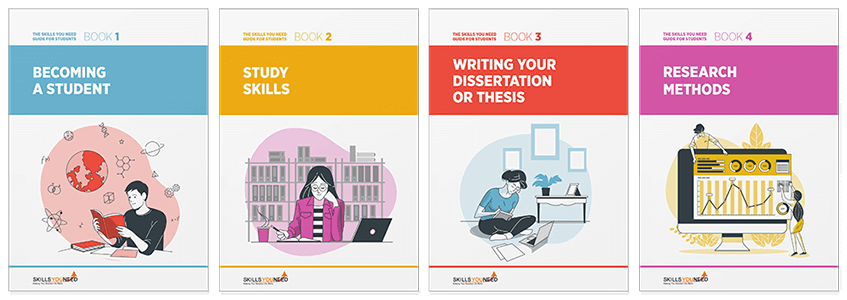
The Skills You Need Guide for Students

Develop the skills you need to make the most of your time as a student.
Our eBooks are ideal for students at all stages of education, school, college and university. They are full of easy-to-follow practical information that will help you to learn more effectively and get better grades.
About the Author
Dawn Geske is an experienced journalist, editor, and content strategist with over two decades of professional writing experience. Having worked closely with the Associated Press and served as editor-in-chief for numerous prominent publications, Dawn leverages her extensive background in communications to distill complex topics into clear, actionable advice. She is passionate about helping students and professionals alike develop essential learning skills to achieve their educational and career goals.