

10 Things to Add to Your Home
to Make Your Home Smarter
See also: Project Planning
Managing a modern household requires juggling dozens of small, repetitive tasks every single day. Between navigating career responsibilities, preparing meals, and managing family schedules, remembering to switch off every light, adjust the heating, and check the door locks can quickly lead to mental fatigue.
What if your living space could actively manage these routine responsibilities for you? Integrating automated, smartphone-enabled technology into your living environment transforms your property from a passive structure into an active partner in your daily routine.
Upgrading your property with smart technology is not about chasing the latest flashy gadgets; it is about reclaiming your time, lowering your monthly utility expenses, and reducing the cognitive load of household management. By automating your daily domestic tasks, you free up valuable mental energy to focus on your career, your family, and your personal well-being. Here are ten practical upgrades you can install to make your home smarter, safer, and far more efficient.
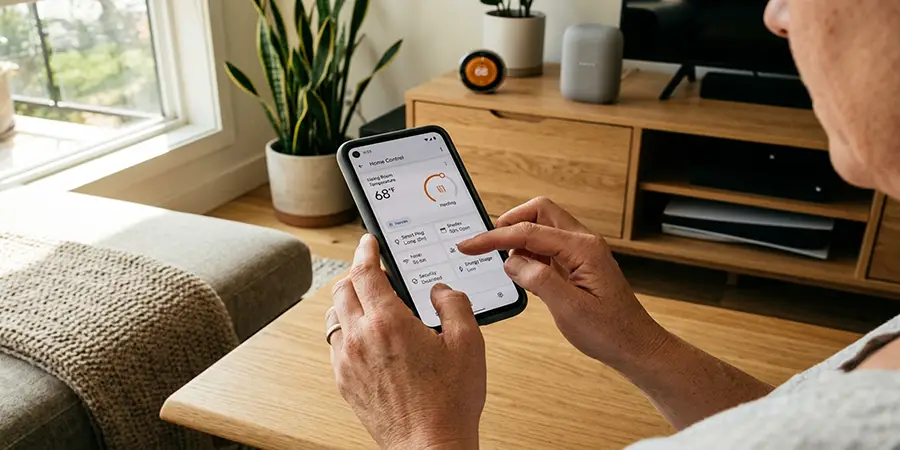
10 Practical Upgrades for an Automated Home
Automated Smart Lighting Systems
Returning home at the end of a long day only to realize you left the hallway and bedroom lights burning for ten hours is both frustrating and wasteful. Unnecessary lighting quietly inflates your monthly utility bills and shortens the lifespan of your fixtures. By replacing standard fittings with Wi-Fi-enabled smart bulbs or smart wall switches, you gain complete remote control over your home’s illumination.
Through a centralized smartphone application, you can group lights by room, set automated schedules that align with sunrise and sunset, and use motion sensors to ensure lights only activate when a room is occupied. Furthermore, adjustable color temperatures allow you to program bright, cool light during your morning work hours to boost focus, and warm, dimmed tones in the evening to support your natural circadian rhythm and prepare your mind for sleep.
Integrated Home Cinema and Display
Unwinding effectively after work is essential for long-term Stress Management, and you do not need to travel to a commercial theater to enjoy an immersive cinematic experience. Modern smart displays and media hubs allow you to synchronize your visual entertainment with the rest of your living room environment.
By linking your smart television or projector to your automated lighting and motorized window blinds, a single voice command or button press can trigger a customized “movie scene.” Within seconds, the blinds lower, the overhead lights dim to a soft ambient glow, and your surround sound system calibrates to the optimal audio profile. Consolidating multiple remotes into a single smartphone interface eliminates clutter and makes evening relaxation effortless.
Smart Programmable Thermostats
Heating and cooling account for the largest portion of domestic energy consumption in most households. A traditional thermostat operates blindly, heating an empty house to a fixed temperature unless you manually intervene. Upgrading to a smart thermostat is one of the most effective ways to start Saving Money on Household Bills while maintaining a comfortable living environment.
Smart thermostats learn your household’s daily routines over time and use geofencing technology via your smartphone to detect when the property is empty, automatically dropping the temperature to conserve fuel. When you begin your commute home, the system pre-heats the rooms you use most frequently. Multi-zone smart radiator valves also allow you to heat your home office during the day without wasting energy heating unoccupied guest bedrooms.
Zoned Wireless Air Conditioning
During the height of summer, stepping into a stiflingly hot house can ruin your evening recovery. However, leaving a traditional air conditioning unit running all day while you are at the office is financially and environmentally irresponsible. Smart wireless cooling units and smart AC controllers bridge this gap by giving you precise, remote climate control.
Using a smartphone app, you can monitor indoor humidity and temperature levels in real time and activate the cooling cycle twenty minutes before you walk through the front door. By installing smart controllers in individual rooms, you can establish zoned cooling—directing cold air exclusively to the living areas during the day and shifting entirely to the bedrooms at night, ensuring deep, uninterrupted sleep without astronomical electricity bills.
Connected Security and Access Control
True peace of mind requires knowing that your property and loved ones are secure, whether you are upstairs asleep, at the office, or traveling abroad. Modern smart security systems have evolved far beyond simple burglar alarms, offering comprehensive visibility and access management from anywhere in the world.
High-definition video doorbells and motion-activated perimeter cameras send instant notifications to your phone the moment someone approaches your property. Two-way audio allows you to speak directly with delivery drivers without opening the door, while smart deadbolts enable you to grant temporary, time-restricted access codes to trusted family members, cleaners, or tradespeople. When setting up these connected cameras and locks, it is vital to apply strong digital hygiene—such as two-factor authentication and encrypted networks—to ensure you are Protecting Yourself in the Digital World as well as the physical one.
Smart Indoor Air Quality Monitors and Purifiers
Indoor air can easily become polluted with dust mites, pet dander, cooking particulates, and volatile organic compounds (VOCs) from household cleaning products. For individuals who suffer from seasonal allergies, asthma, or respiratory sensitivities, poor indoor air quality directly degrades sleep quality and daytime cognitive performance.
Smart air purifiers equipped with laser particulate sensors continuously sample and analyze the air in your home. Rather than running at a loud, constant speed all day, these connected units remain in a quiet standby mode until they detect a spike in allergens, smoke, or odors. They then automatically ramp up filtration until the air is clean, logging historical air quality data in an app so you can identify and eliminate the root causes of indoor pollution.
Multi-Room Automated Audio Systems
Audio plays a powerful role in shaping the atmosphere of a home and supporting your daily routines. A multi-room wireless audio system allows you to distribute music, podcasts, news briefings, or guided meditations seamlessly throughout every room in your house without running complex speaker wire through the walls.
You can configure your speakers to gently wake you up with a morning news briefing and weather report in the bedroom, transition your favorite upbeat playlist to the kitchen while you prepare breakfast, and play ambient background soundscapes in your study while you work. Because these systems operate over your home Wi-Fi network rather than short-range Bluetooth, your audio will never cut out if you walk into another room or receive a phone call.
Weather-Adaptive Garden Irrigation
Maintaining a healthy garden, lawn, or greenhouse requires consistent watering, which can quickly become a chore during busy workweeks. However, standard mechanical timers are notoriously inefficient; they will happily run your sprinklers in the middle of a torrential downpour, waterlogging your plants and driving up your water bill.
A smart irrigation controller connects directly to local meteorological data and soil moisture sensors buried in your garden beds. The system automatically adjusts its watering schedule based on real-time rainfall, ambient temperature, and evaporation rates. This targeted approach keeps your plants thriving while helping you Reduce and Manage Your Waste by conserving thousands of gallons of water each year.
Connected Smoke, Fire, and Carbon Monoxide Detectors
Traditional smoke and carbon monoxide (CO) detectors have a major flaw: their piercing audible alarms only help if someone is physically inside the home to hear them. If an electrical fault sparks a fire or a faulty boiler begins leaking odorless carbon monoxide while you are away at work or on holiday, a standard alarm cannot alert you in time to prevent disaster.
Smart smoke and CO detectors solve this critical safety gap by pairing loud local sirens and visual strobe alerts with immediate smartphone notifications. If smoke or dangerous gas levels are detected, the system alerts every family member’s phone simultaneously, specifies which room triggered the alarm, and can even automatically shut down your smart thermostat’s fan system to prevent smoke from circulating through the ductwork.
Real-Time Smart Energy Monitors
Receiving an unexpectedly high utility bill at the end of the quarter can throw off even the most careful household budget. Without granular data, it is nearly impossible to tell which appliances are silently draining power in the background—a phenomenon known as “vampire power” or phantom load.
Installing a smart energy monitor in your electrical panel, or using individual smart plugs with built-in energy monitoring, gives you real-time visibility into your electricity consumption. Through an intuitive dashboard, you can see exactly how much each appliance costs to run per hour, identify aging refrigerators or heaters that are drawing excessive current, and set automated rules to cut power completely to entertainment centers and office equipment overnight. Pairing this real-time data with solid Budgeting Skills empowers you to take complete control of your household overheads.
Conclusion
Building a smarter home does not require renovating your entire property overnight or spending thousands of pounds on complex custom installations. The most effective approach is incremental: start by identifying the specific daily friction points that cause you the most stress or cost you the most money—whether that is an inefficient heating system, forgotten lights, or security concerns—and address them one device at a time.
When thoughtfully integrated, smart home technology fades into the background of your life. By automating repetitive chores, safeguarding your property, and optimizing your energy consumption, you create a calmer, more responsive living environment that actively supports your lifestyle and long-term financial goals.
About the Author
Suzie Finch is a Smart Home Integration Specialist and Residential Energy Consultant who helps homeowners design practical, secure, and energy-efficient connected living spaces.
With a background in sustainable building systems and domestic IoT security, Suzie focuses on selecting reliable automation tools that genuinely reduce household utility bills and daily mental clutter. When she is not auditing home energy networks or testing smart thermostats, Suzie enjoys practicing vinyasa yoga, experimenting with sourdough baking, and tending to her automated greenhouse.