

Getting Started in German:
Why You Need to Learn the Language
See also: Lifelong Learning
Intricate, complex, tricky, and exceptionally difficult to master—these are the most common stereotypes associated with the German language. It is easy to look at the formidable compound nouns and complex grammar rules and feel completely overwhelmed. However, if you are a native English speaker, or if you already possess a strong command of the English language, you are actually much closer to speaking German than you might realise.
Because both English and German belong to the West Germanic language family, they share a deep linguistic history. In fact, approximately forty percent of German vocabulary consists of cognates—words that look and sound remarkably similar to their English counterparts. For example, 'Haus' translates to 'house', 'Wasser' is 'water', and 'Freund' means 'friend'. Once you overcome the initial intimidation factor and brush up on your pronunciation and grammar, you will find that German is a highly logical and profoundly rewarding language to learn.
Whether you are a student, a professional looking to expand your horizons, or simply an avid traveller, the benefits of bilingualism are immense. Mastering German, in particular, offers a unique set of advantages that can significantly alter the trajectory of your personal and professional life. Let us explore exactly why you should consider learning German, and the most effective strategies for getting started.

The Strategic Advantages of Learning German
Deciding to learn a new language requires a significant investment of time, energy, and dedication. Naturally, you want to ensure that your efforts will yield a tangible return. While learning any language improves cognitive function and broadens your cultural perspective, German offers a distinct array of strategic, real-world benefits.
-
Unlocking Global Career Opportunities
Germany boasts the largest economy in Europe and the third-largest economy globally. It is an industrial powerhouse, deeply integrated into international trade and commerce. Consequently, German companies are major global players. Brands such as Siemens, Volkswagen, BMW, Adidas, and SAP have a massive international footprint and are constantly seeking highly skilled professionals who can navigate their corporate culture and communicate effectively in their native tongue.
By learning German, you instantly make yourself a highly competitive candidate in the global job market. Many multinational corporations consider German fluency a vital asset, particularly in sectors such as engineering, finance, manufacturing, and technology. Furthermore, if you are an entrepreneur or a business leader looking to import goods or establish partnerships within the European Union, being able to negotiate and network in German will immediately set you apart from your monolingual competitors. For further insight into this, consider exploring how to build foreign language skills for global jobs.
-
Accessing World-Class Higher Education
Germany has long placed a premium on accessible, high-quality education. The country is home to some of the most prestigious universities in the world, including the Technical University of Munich and the Ludwig Maximilian University of Munich. These institutions consistently rank among the top global universities and are renowned for producing groundbreaking research and highly sought-after graduates.
One of the most compelling reasons to learn German is the structure of the German higher education system. In many of the country’s federal states, public universities offer tuition-free education, even for international students. To take full advantage of these world-class, affordable academic programmes, a strong proficiency in the German language is typically required. By mastering the language, you open the door to exceptional educational opportunities that can form the foundation of a highly successful career without the burden of overwhelming student debt.
-
Engaging with Science, Research, and Innovation
Historically and presently, Germany is a global leader in scientific research, engineering, and technological innovation. From the pioneering work of Albert Einstein and Max Planck to modern advancements in renewable energy, automotive engineering, and pharmaceuticals, German thinkers have continually shaped the modern world.
Because of this rich legacy, German is currently the second most commonly used language in the global scientific community. If you are pursuing a career in STEM (Science, Technology, Engineering, and Mathematics), possessing a working knowledge of German grants you direct access to a vast repository of original research, academic journals, and technical publications. It also allows you to collaborate seamlessly with some of the brightest minds and most innovative research institutions across the globe.
-
Expanding Your European Network and Travel Experiences
While English is widely spoken across the continent, German is the most widely spoken native language within the European Union. It is the sole official language of Germany, Austria, and Liechtenstein, and it is a co-official language in Switzerland, Luxembourg, and Belgium. Furthermore, significant German-speaking minorities exist in regions of Italy, France, and Eastern Europe.
When you travel through Central Europe, speaking the local language fundamentally transforms your experience. It allows you to move beyond the typical tourist traps, interact authentically with locals, and gain a deeper, more nuanced understanding of the region's rich culture and history. In a professional context, it vastly expands your ability to build meaningful relationships, effectively breaking down language barriers that might otherwise hinder your networking efforts.
Practical Strategies for Getting Started
Understanding the immense value of the German language is only the first step. The true challenge lies in the acquisition process. Fortunately, with the right approach and a commitment to consistent practice, achieving fluency is an entirely realistic goal. Here are the most effective, actionable strategies for beginning your German language journey.
-
Immerse Yourself in the Language Daily
The most effective way to learn any language is through consistent, high-volume exposure. You do not need to move to Berlin to achieve this; you can create an immersive environment right in your own home. Begin by altering your daily media consumption. Watch German films and television series, initially using English subtitles, and eventually transitioning to German subtitles as your comprehension improves.
Listen to German podcasts, radio stations, and music during your daily commute or while completing household chores. This passive listening helps attune your ear to the unique rhythms, cadences, and pronunciation patterns of the language. Over time, you will naturally begin to absorb common vocabulary, sentence structures, and colloquial expressions without feeling like you are actively studying. Total immersion is a powerful tool; to explore this further, read about learning languages through total immersion.
-
Establish a Structured and Consistent Routine
Language acquisition is a marathon, not a sprint. Cramming for hours on the weekend is significantly less effective than dedicating twenty to thirty minutes to focused study every single day. You must integrate language learning into your daily routine until it becomes a habitual, non-negotiable part of your schedule.
Use structured learning resources to guide your progress. Whether you choose to enrol in a formal evening class, hire a private tutor, or leverage high-quality digital learning applications, you need a logical progression path that builds upon foundational concepts. Consistency is the key to moving information from your short-term memory into your long-term linguistic repertoire.
-
Focus on Practical Communication Over Perfect Grammar
One of the greatest pitfalls for new German learners is becoming paralysed by the complexity of the grammar. German features three grammatical genders, four noun cases, and a strict, somewhat rigid sentence structure. While understanding these rules is ultimately important, obsessing over grammatical perfection in the early stages will severely hinder your progress and damage your confidence.
Instead, focus primarily on acquiring practical vocabulary and developing your conversational fluency. The ultimate goal of language is communication. Native speakers will easily forgive incorrect adjective endings or the wrong definite article if they can understand the core message you are trying to convey. Prioritise speaking and listening over rote memorisation, and allow your grasp of the grammar to refine itself naturally through exposure and practice.
-
Connect with Native Speakers and Language Partners
You cannot learn to speak a language fluently if you only ever read it in a textbook. To truly master German, you must engage in active, spontaneous conversation with other people. If you do not have immediate access to native speakers in your local community, leverage the internet to find language exchange partners.
Numerous platforms exist that connect individuals who want to learn each other's native languages. You can offer to help a German speaker improve their English in exchange for them helping you practice your German. These conversational exchanges force you to think on your feet, improve your active recall, and teach you the modern, conversational slang that textbooks often overlook.
Further Reading from Skills You Need
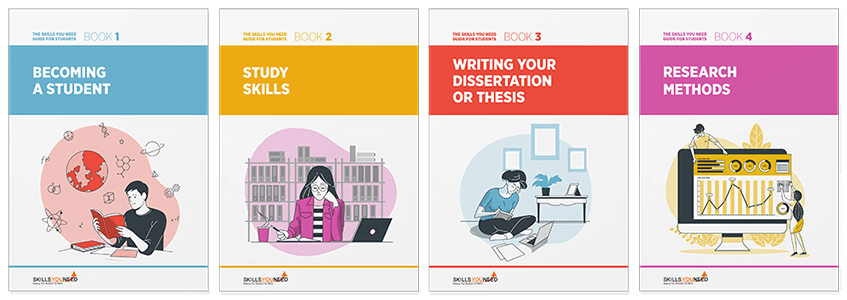
The Skills You Need Guide for Students

Develop the skills you need to make the most of your time as a student.
Our eBooks are ideal for students at all stages of education, school, college and university. They are full of easy-to-follow practical information that will help you to learn more effectively and get better grades.
Conclusion
Learning German is a profound investment in your future. While the initial stages of mastering the vocabulary and navigating the grammar may feel challenging, the rewards are exponential. From dramatically enhancing your global employability and accessing elite academic institutions to engaging deeply with the rich cultural tapestry of Central Europe, the German language opens doors that would otherwise remain firmly closed.
By treating the learning process as a daily habit, embracing immersive techniques, and prioritising practical communication over grammatical perfection, you can steadily build your proficiency. The journey of language acquisition is incredibly rewarding, fundamentally altering how you process information and interact with the world around you. So, take the first step, embrace the challenge, and unlock the myriad opportunities that await you.
About the Author
Dr. Clara Vogel is an applied linguist and language acquisition consultant who specialises in adult learning methodologies. With over fifteen years of experience teaching Germanic languages at the university level, she currently advises multinational corporations on cross-cultural communication and language integration strategies. When she is not actively developing new linguistic curricula, Clara enjoys hiking in the Bavarian Alps and baking traditional sourdough bread.