


What is Lean Six Sigma: A Complete Overview
See also: Management SkillsWhether you have heard it used as corporate jargon during project meetings or seen peers showcasing their new certifications on LinkedIn, understanding Lean Six Sigma is essential for modern professionals looking to drive operational excellence.
This comprehensive, pragmatic guide aims to demystify process improvement. By the end of this article, you will understand exactly what Lean Six Sigma is (beyond the boardroom buzzwords), how the famous DMAIC framework operates, the practical tools you can deploy today, and which certification belt aligns best with your career trajectory.

A Lean Bit of History
Motorola developed the original Six Sigma program in the 1980s to tackle traditional manufacturing practices that left much to be desired regarding quality control. Little did anyone know this would spur a new wave of corporate innovation and solidify an entirely new field of study: quality management. Motorola’s success—yielding billions in savings—proved to industries ranging from manufacturing to healthcare that rigorous quality control was a serious revenue protector.
Conversely, 'Lean' found its early beginnings in the assembly lines of Henry Ford’s automobile factories and was later perfected by Toyota. By utilizing interchangeable parts and moving conveyors, efficiency was designed directly into the production line. Lean systems focus heavily on achieving high-quality outcomes while meticulously keeping costs and time waste extremely low.
Today, these two distinct methodologies have been merged into 'Lean Six Sigma', combining the speed of Lean with the precision of Six Sigma.
The Difference Between Lean and Six Sigma
It is incredibly easy to conflate the two methodologies, but they target fundamentally different operational goals. When it comes to Lean, you must think of efficiency. All efforts in Lean practices are designed to actively minimize delays, eliminate redundant waste, and streamline flow.
On the other hand, Six Sigma concerns itself strictly with quality and consistency. Six Sigma tackles the issue of reducing defects and variation in a product or service. By analogy, while Six Sigma ensures that your favourite restaurant cooks your preferred dish exactly the same way every single time, Lean is the methodology that ensures the kitchen prepares and delivers it to your table faster and with less wasted food.
The DMAIC Framework Explained
Anyone even vaguely familiar with the subject of Lean Six Sigma will encounter the DMAIC acronym. DMAIC is the foundational, data-driven framework adopted by quality management professionals to improve, optimize, and stabilize corporate processes.
Here is a detailed breakdown of each sequential step:
Define
Identifying the scope, benefits, and costs whilst actively considering the problems and opportunities involved is the first step of the framework. This must be done from a business and customer perspective. You define the specific problem statement, the project goals, and the timeline required to achieve them.
Measure
Now that the feasibility and justification for beginning a new project have been established, it is time to set up tangible, measurable goals. Vague objectives such as "improving customer service" are useless in this methodology. Instead, you establish a baseline of current performance and set strict targets, such as "reducing assembly line delays by 15% within Q3." This requires you to collect reliable, objective data before making any changes.
Analyze
This phase is where rigorous brainstorming and root-cause analysis take place. The team reviews the data collected in the Measure phase to identify exactly why the defects or delays are occurring. Various potential solutions are posited, heavily scrutinized, and compared using statistical tools.
Improve
From hiring and training new human resources to acquiring upgraded equipment or restructuring standard operating procedures, this step is all about executing the solution finalized in the previous phase. Teams often deploy pilot tests to verify that the proposed improvements actually yield the expected results in a real-world environment.
Control
Assuming that the 'Improve' step is successful, the 'Control' phase ensures long-term maintenance. It guarantees that the improved process is thoroughly documented, standardized, and monitored. This prevents the team from slipping back into old, inefficient habits and ensures that any future deviations are immediately detected and corrected.
11 Essential Lean Six Sigma Tools
Trained Lean Six Sigma professionals have an exhaustive arsenal of tools at their disposal to navigate the DMAIC framework. While a deep dive into each is beyond the scope of a brief overview, here are eleven highly practical tools utilized across global industries:
Systems Mapping
This is a foundational tool used to map products and services as direct outputs from a given set of inputs. It visually traces how raw materials or raw data are transformed by business processes into a final, deliverable product.
SIPOC Diagrams
When initially embarking on a project, a SIPOC diagram (Suppliers, Inputs, Process, Outputs, Customers) helps a team visualize the entire lifecycle of a process from start to finish, ensuring all stakeholders are clearly identified early in the Define phase.
Voice of the Customer (VoC)
From online feedback and structured interviews to analyzing comments on digital platforms, the Voice of the Customer is meticulously analyzed to understand precisely what the consumer values. This ensures that process redesigns are aligned with actual market demands rather than internal assumptions.
Critical to Quality (CTQ) Trees
This tool translates broad customer needs into specific, actionable, and measurable performance requirements. It addresses what specifically drives the quality required to satisfy the customer and dictates the strict performance thresholds the process must meet.
Value Stream Mapping (VSM)
A highly effective graphical tool used to pay specific attention to the flow of materials and information. It is heavily utilized in Lean to visually spot bottlenecks, redundant steps, and delays incurred at each stage of a production or service pipeline.
Cost of Poor Quality (CoPQ)
This financial tool involves evaluating the actual monetary expenses incurred as a direct result of process failures. It calculates the hidden costs of returned goods, scrapped materials, rework, and the long-term tarnishing of brand reputation.
Multi-Vari Charts
While not wound up in overly complicated statistics, a multi-vari chart visually displays the mean and variation of specific processes. This acts as a quick, snapshot marker of a process's performance and highlights where the greatest inconsistencies lie.
Data Sampling
When measuring an entire population of data is impossible or cost-prohibitive, statistical sampling provides a method to gain a highly accurate ballpark measurement. When executed correctly, sampling gives a reliable reflection of total performance without requiring exhaustive data processing.
Statistical Process Control (SPC)
This is a means of ensuring that a process does not vary beyond acceptable upper and lower limits. It utilizes control charts to verify that the deviations of a process from its ideal form are actively measured and kept under strict, continuous control.
Failure Mode and Effects Analysis (FMEA)
FMEA is a proactive risk management tool all about creating contingency plans. It involves spotting potential mistakes, assessing their potential impact on the customer, and pre-emptively troubleshooting them before they ever occur in a live environment.
Design of Experiments (DoE)
From A/B testing digital interfaces to complex statistical combinations of variables, DoE provides structured ways of designing experiments. It tests multiple process changes simultaneously to elicit precise knowledge that helps leadership make data-driven decisions.
Further Reading from Skills You Need
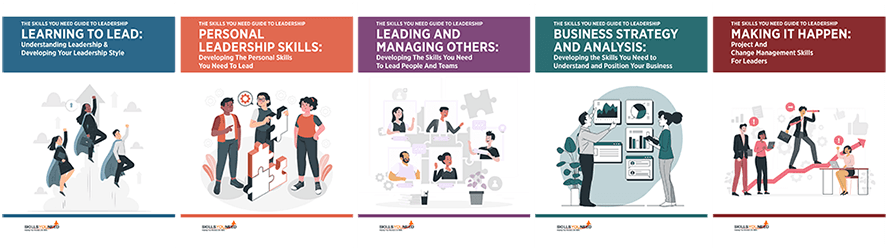
The Skills You Need Guide to Leadership eBooks
Learn more about the skills you need to be an effective leader.
Our eBooks are ideal for new and experienced leaders and are full of easy-to-follow practical information to help you to develop your leadership skills.
Lean Six Sigma Certifications Explained
When it comes to becoming a certified quality management professional, the industry uses a martial-arts-inspired belt system to denote expertise. There are four primary tiers of certification:
Yellow Belt: Achieving this foundational level allows you to understand basic methodologies and work competently as an assisting member of a team that uses Six Sigma.
Green Belt: This covers the core corpus of Six Sigma. Green Belts spend a portion of their time actively spearheading smaller improvement processes while working under the direct supervision of Black Belt professionals.
Black Belt: At this stage, you develop advanced proficiency in the complete Six Sigma body of knowledge, complex statistical analysis, and change management. Black Belts are full-time project leaders capable of managing cross-functional initiatives.
Master Black Belt: This is the pinnacle of certification. Master Black Belts train and coach lower-level belts, manage enterprise-wide portfolios of large-scale projects, and shape the organization's overarching quality strategy.
Which of these certifications should you pursue? There is no single correct answer. For an employee entirely new to business operations, the Yellow Belt is an excellent starting point. However, if you possess a strong analytical background and can dedicate the time, you can frequently bypass the Yellow and directly undertake Green Belt training. Attaining Black Belt status is a significant career commitment, heavily reliant on candidates executing highly successful, documented real-world projects.
Conclusion
Lean Six Sigma is far more than a set of buzzwords to drop in a corporate meeting; it is a proven, highly disciplined approach to fundamentally improving how a business operates. By seamlessly combining the waste-reduction strategies of Lean with the rigorous defect-elimination of Six Sigma, organizations can dramatically improve customer satisfaction while heavily protecting their bottom line.
Whether you choose to master the DMAIC framework independently or pursue formal belt certification, utilizing problem-solving tools like Value Stream Mapping and Root Cause Analysis will make you a highly effective and invaluable asset to any modern organization.
About the Author
Amelia Emma is a Certified Lean Six Sigma Master Black Belt and Senior Process Improvement Consultant with over a decade of experience optimizing operations in the tech and manufacturing sectors. She specializes in training corporate leadership teams on sustainable DMAIC frameworks and enterprise-wide quality control. When she is not mapping value streams, Amelia volunteers as a project management mentor for non-profit organizations and enjoys competitive rowing.